Market change policies are frequent. In 2017, the property market or the overall cooling price stalemate.

  Recently, Shanghai and Chongqing issued a new policy on the same day to continue to cool down the still restless property market. The reason is that the speculators in the property market still have a fire. According to industry insiders, it will be a high probability event that the real estate market in hot cities in China will continue to tighten in the future, and the property market may continue to cool down and house prices will fall. However, it should be noted that under the background of low cost of ownership, the property market is still a paradise for speculators, or it may be difficult to break the strange circle of "ten adjustments and nine rises" in the property market. Therefore, the long-term mechanism as the last link to stabilize the property market should be pushed to the stage as soon as possible.

  Frequent market change policies

  On January 7th, Chongqing Municipal Bureau of Land and Housing issued the Notice on Strengthening the Management of Pre-sale Scheme of Projects in the Main City, pointing out that the provisions on pre-sale price declaration, price review and price change filing will be strictly implemented. If the pricing is unreasonable and the pre-sale price is adjusted, it is necessary to provide the basis for price adjustment. If the reasons are insufficient and unreasonable, the change shall not be filed. In addition, it is strictly forbidden to collect fees such as deposits and reservations by subscription, reservation, etc. It is strictly forbidden to force buyers to accept the price of goods or services by binding tying or attaching conditions. It is strictly forbidden to fabricate or publish false information to drive up housing prices.

  For those who fail to announce the price in accordance with the regulations, clearly mark the price or publicize the external sales with false advertisements, Chongqing said that it will keep a high pressure on the illegal activities of real estate enterprises. Violations will be included in real estate credit files, and relevant information will be notified to relevant departments such as land, taxation and finance, and their land purchase, financial credit and other activities will be restricted.

  On the same day, the Shanghai Municipal Commission of Housing and Urban-Rural Development announced that in view of the recent illegal sales of some commercial office projects and the sharp increase in complaints about unauthorized reconstruction, it will work with relevant departments to centrally clean up and verify commercial office projects and suspend online signing of such projects. According to statistics, 128 projects in Shanghai have been suspended.

  Prior to this, on December 31, 2016, Xi ‘an issued the Notice of Xi ‘an Municipal People’s Government on Further Promoting the Sustained, Stable and Healthy Development of the Real Estate Market. Since January 1, 2017, Xi ‘an and non-local registered households (including husband and wife and minor children) can only purchase a new set of housing (including new housing and second-hand housing) within the six districts of this city.

  At the end of December 2016, Shijiazhuang issued the "Notice on Further Strengthening the Supervision of the Business Behavior of Real Estate Intermediaries", requiring many administrative departments such as housing construction, industry and commerce to strengthen supervision and guidance and effectively regulate the business behavior of real estate intermediaries. On January 3 this year, Hainan notified 1,352 real estate agencies in the province that they had not filed. The Housing and Construction Department of Hainan Province asked the agencies and their branches that had not filed to file without delay, otherwise they would suspend their online contracting qualification for commercial housing sales according to regulations. "The main reason for the policy linkage is market changes." An industry insider said that although the regulation continues to be stricter, the policy effect is shrinking under the background that buyers’ expectations have not changed.

  From last December, some signs of rebound in the property market appeared. According to the data released by Yiju Research Institute, the transaction data rebounded in December 2016 due to the impact of year-end performance catch-up. In December 2016, the monitored transaction area of new commercial housing in 30 typical cities was 22.99 million square meters, an increase of 15.6% from the previous month and a decrease of 2.8% from the same period last year. Since the end of December 2016, the transaction area of new commercial housing in Chongqing has obviously warmed up. In November, the weekly transaction area of newly-built commercial housing fluctuated from 550,000 to 760,000 square meters, but from December 19 to 25, the weekly transaction area quickly rose to 870,000 square meters, and in the following week including New Year’s Day holiday, the transaction area was as high as 1.29 million square meters, reaching the highest value of recent transactions. From December 26, 2016 to January 1, 2017, the volume of transactions in Chongqing even exceeded the whole month of February and July 2016.

  Long-term mechanism is imminent

  Recently, Xu Shaoshi, director of the National Development and Reform Commission, said at the press conference organized by the State Council Office to lead the new normal of economic development and deepen the supply-side reform that China’s economy will not experience a "collapse mode" decline and a "hard landing", house prices have also been effectively controlled, and a long-term mechanism is being formulated, including some laws and regulations and fiscal and financial policies.

  “‘ Brake ’ You can’t step on it for too long, and it is not enough to rely on demand-side regulation. " Yu Liang, president of Vanke, has previously said that the key to the long-term healthy development of the real estate industry is to use the precious opportunity after stepping on the brakes to establish a long-term mechanism and increase effective supply. The key to real estate regulation is to cure the problem, that is, to establish an institutional framework, including land, investment and financing, housing and tax system.

  It is worth noting that the main reason for the previous "ten adjustments and nine rises" in house prices is that it is difficult for short-term regulatory policies to form a benign policy cycle effect. National academy of economic strategy’s "China Housing Development Report (2015-2016)" pointed out that it is difficult for housing control policies to achieve the expected control objectives, mainly because they failed to take into account the lag of policies, resulting in the lack of stability and sustainability of control policies.

  In addition, Ni Pengfei, director of the Urban and Competitiveness Research Center of China Academy of Social Sciences, pointed out that the negative regulation by local governments is also an important reason for the panic surge in housing prices. He said that at the end of 2015, the central government clearly stated that "third-and fourth-tier cities should de-stock, and first-and second-tier cities should curb speculation". However, in the process of local implementation, first-and second-tier cities did not implement this policy well, but the inventory was not large, which led to a sharp rise in housing prices. However, third-and fourth-tier cities that should de-stock failed to reduce supply but increased new investment due to financial considerations, especially in the first half of last year, the growth rate of investment in third-and fourth-tier cities was even higher than that in first-and second-tier cities.

  Jia Kang, former director of the Institute of Fiscal Science of the Ministry of Finance, also pointed out that the real estate market in China is a "swinging" type. "Before, everyone was worried that there would be two worlds of ice and fire, and many third-and fourth-tier cities and some second-tier cities were under such great pressure of destocking. I didn’t expect it to get hot in just a few months, and the housing prices in first-tier cities and second-tier hotspot cities rose rapidly. As a result, local governments had to constantly introduce various measures to restrict purchases and loans. This kind of ‘ Swing ’ The performance of the model once again shows that the multi-round regulation we talked about in previous years is mainly to cure the symptoms, not to effectively cure the problem. "

  "The long-term housing mechanism lacks a clear framework, route and timetable." Ni Pengfei said that the property tax and personal housing information system are progressing slowly, which affects the overall construction process and regulation effect of the long-term mechanism; In terms of the supply of affordable housing, the implementation details of the supply of affordable housing by monetizing resettlement and purchasing on behalf of the agent need to be improved.

  Wu Huimin, senior director of dtz and director of comprehensive residential services in East China, believes that the government needs to reasonably guide market demand, comprehensively levy property tax and other good medicines, and establish a long-term mechanism, which is the key to stabilizing housing prices.

  Ni Pengfei suggested that the long-term mechanism of real estate should establish a housing property right, management, exchange, consumption and distribution system of "multiple ownership", "existing home sales", "rental and sales at the same time", "filtering use" and "currency dynamics", so that new citizens can rent and buy affordable housing through market and government support. At the same time, we will establish a "paid and competitive" housing land system, a "multi-level, GSP" housing finance system, and a "holding tax-based" real estate fiscal and taxation system.

  2017 real estate price or stalemate

  "The capital factors supporting the rapid growth of commercial housing in 2016 should be gradually weakened, and the regulatory policies are difficult to relax in the short term. In this context, 2017 should be a year of stalemate in real estate prices." Zhu Xuru, secretary of Vanke’s board of directors, said.

  Wang Tao, chief economist of UBS China, also believes that the adjustment of the real estate market in 2017 will be relatively mild. Due to the current low overall inventory in the market, the inventory in the third-and fourth-tier areas has also declined in the past year or two; Last year, the momentum of new construction and real estate investment was not strong, and the downside was limited; Although the policy is being tightened as a whole, it is not a drastic regulation, but because of the city’s governance. Compared with 2010 and 2011, the regulation policy is relatively mild.

  "Moderate adjustment refers to real estate investment rather than real estate sales. The growth of new construction and investment in real estate may drop from 7%-8% last year to 2%-3% this year, and the adjustment range is not large. From 2013 to 2015, the adjustment of real estate investment was between 10% and 20%, which is relatively mild this year. " Wang Tao said.

  In view of the future trend of real estate policy, Wang Tao believes that the decision-makers will still accelerate the reform of household registration system and the infrastructure construction between central cities and satellite cities, and expand the scope of central cities, but there will be no major austerity policies.

  Li Zhiying, head of real estate industry research at UBS in China, also pointed out that real estate investment trusts (REITs) will be a major driving force for the real estate industry in the mainland in the next five years, which will help real estate enterprises to revitalize their funds, provide the market with investment tools with high transparency and certain returns, and be an important step in financial reform.

  Liu Ning, secretary of the board of directors of China Merchants Shekou, also pointed out that it is expected that the market will cool down in 2017, the financing of the real estate industry will also be tightened, and high-priced land acquisition will not be sustainable. (Liang Qian)

Jia Nengwen, a "site beautician": Let the flowers of national unity bloom everywhere.

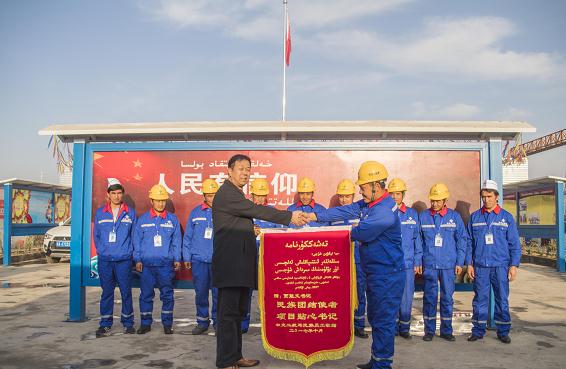
CCTV News:On October 17th, Jia Nengwen, secretary of the Party branch of Urumqi East Second Ring Road Project of CCCC No.2 Aviation Administration, received a special gift — — 47 Uyghur employees sent a banner with the words "Dear Secretary of the National Unity Messenger Project" written in both Uyghur and Chinese. At the same time of sending the banner, the Uighur employee representatives also put on a Uighur flower hat for Jia Nengwen.

Uyghur flower hat is not only a characteristic costume of Uyghur, but also represents the greatest respect and gratitude as a gift. 

Uyghur employees presented Jia Nengwen with a banner.

Uyghur employees presented Jia Nengwen with a banner.

Meticulousness turns "baggage" into "ambition"

In July 2017, the East Second Ring Road welcomed 47 Uighur employees from southern Xinjiang. There is a huge gap between them and the project department in terms of living habits and language communication. According to ordinary people, this is a "big burden" for the project department. However, Jia Nengwen turned "burden" into "ambition". "I am a grassroots project secretary working in Xinjiang. My ambition is to closely follow the party and serve the party’s ethnic policies and employees." Jia Nengwen said.

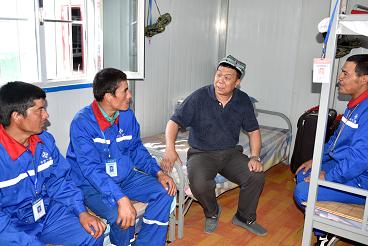
Jia Nengwen has in-depth exchanges with Uighur employees.

Jia Nengwen has in-depth exchanges with Uighur employees.

The primary task of receiving these Uighur employees is to give them a stable home. Where is this "home"? Jia Nengwen used his brains. He could not be too far away from the construction site. He needed unified management and convenient water and electricity facilities. After on-the-spot investigation, the living area of Uighur workers was chosen next to the site of Yongshun Street in the East Second Ring Road. A week later, a relatively independent living area was established. Dormitories, kitchens, toilets and bathrooms were all equipped with living facilities. Each dormitory was equipped with air conditioning. A publicity column for national unity was set up in the hospital, and flowers and trees were planted. Aifuer Iula, who came to Urumqi for the first time, was very uneasy, but the good and comfortable living environment quickly settled him down. "It’s warm in winter and cool in summer, and the living environment is better than Hotan’s hometown." Yiwu said happily.

In addition to providing a "physical" home for these Uighur employees who have just entered the work of CCCC No.2 Aviation Administration, Jia Nengwen also tried to "settle down" for them ideologically. On September 1st, 2017, it was the Eid al-Adha Festival for Muslims, which was equivalent to the Spring Festival in Chinese culture. Due to the special nature of the road construction in the East Second Ring Road, these 47 Uighur employees could not go home to reunite with their relatives. According to the custom of Eid al-Adha, Jia Nengwen bought five sheep and a large number of melons and cakes for them in advance, and invited more than 20 employees of Han nationality, Manchu nationality and Tujia nationality to celebrate, sing and dance, and have a wonderful festival. "Mom, I am as lively and happy as I am here for the holidays." After 90, Uyghur youth Tuohetinyazi Balati appeared in the camera with a smile, recorded the scene with his mobile phone and sent it to his relatives in his hometown in Qira County.

In this year’s traditional Mid-Autumn Festival of the Chinese nation, Jia Nengwen also invited these Uighur employees to participate in tug-of-war, rope skipping and solve riddles on the lanterns. What a joy!

Spring breeze melts rain to send true feelings

Gradually, Jia Nengwen entered the hearts of these Uighur employees. No matter what happens in work and life, everyone is willing to talk to Jia Nengwen. After working in the construction site for a period of time, Maituheti found himself interested in steel bar processing, so he boldly told Jia Nengwen his own ideas. Hearing this, Jia Nengwen not only arranged for him to work in No.1 steel bar factory, but also contacted a bilingual Uighur-Chinese teacher for him to teach steel bar processing terminology and safety precautions for a week. When kurban’s mother died, Jia Nengwen not only contacted the finance department to advance his salary for one month, but also sent it to solatium, 500 yuan out of his private pocket. Maituruzi’s father fell ill in his hometown, and Jia Nengwen once again funded 500 yuan … …

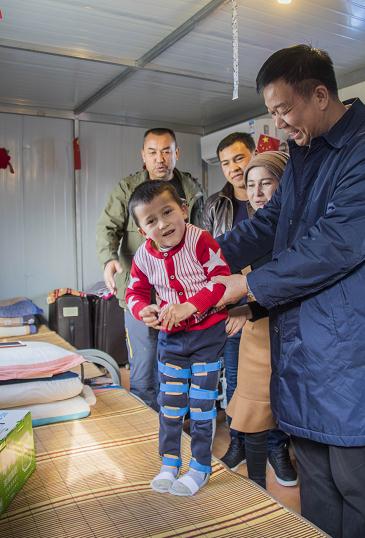
Mohammad Jiang, the son of employee Muhetar, suffers from congenital rickets. According to the doctor’s advice, Mohammad can learn to stand and walk by fixing his legs with brackets. On October 10th, Jia Nengwen and his wife Dong Yanping immediately donated 1,800 yuan to buy a pair of leg braces for Mohammad River. With the help of Jia Nengwen and his wife, Mohammad Jiang, who is 6 years old with language barriers, stood up alone for the first time without help and tried to learn the first Chinese sentence: "Thank you!"

Jia Nengwen and Mohammad River

Jia Nengwen and Mohammad River

Someone once asked Jia Nengwen doubtfully, why are you so clear about these employees? Jia Nengwen smiled: Because I make friends with them and be their intimate person.

In just three months, Jia Nengwen won the trust of these Uighur employees with practical actions. It is no wonder that the banner of the "Intimate Secretary of the National Unity Messenger Project" will be sent to the project secretary who turned "baggage" into "ambition"; The Uyghur flower hat, which represents the greatest respect and gratitude, will be worn on the head of party member, an outstanding Communist who vigorously promotes "national unity and one family".

In addition, Jia Nengwen likes to ponder slogans. At the entrance of the station, a pair of red couplets "crossing the north and south of Tianshan Mountain and fighting for three mountains and five mountains" came into view. He said, I have been thinking about this slogan for more than half a month, with the purpose of telling everyone: "Comrades, you are good! You will once again pave the beautiful East Second Ring Road in this fertile land of Xinjiang, following the Guozigou Bridge and the expressway around the city, for the motherland ‘ All the way ’ Draw a grand blueprint! "

Since entering the site, the East Second Ring Road Project has successively won the honorary titles of Youth Civilization of CCCC No.2 Aviation Administration, Youth Civilization of Xinjiang Autonomous Region, Worker Pioneer of Xinjiang Autonomous Region, May 4th Red Flag League Branch of Xinjiang Autonomous Region, Excellent Project of Efficiency Monitoring of CCCC Group, Advanced Group of Efficiency Monitoring of CCCC No.2 Aviation Administration, and Four Excellent Teams of Branch Companies. (Source of materials/CCCC No.2 Aviation Administration)

How often is the best time to eat fish? The answer is …

Original Zhimei Tencent Medical Code, she knows 

Fish is a good thing.

But we may not have eaten it right.

What fish do you eat? How many times a week? How much do you eat each time? How do you cook it?

These are all related to your health.

Recently, the US Food and Drug Administration (FDA) and the US Environmental Protection Agency (EPA) jointly issued the "Advice on Eating Fish", which clearly stated how to eat fish healthily.

Let’s take a look together!

(Reminder: The fish mentioned in this proposal is fish in a broad sense, and the fish in biological taxonomy, shrimp, crab and shellfish are collectively referred to as "fish")

Because there are too many benefits of eating fish!

You don’t know a lot.

Benefit 1:

Fish is so rich in nutrition that it has more advantages than pork and chicken [1,2];

① High-quality protein is high (15%~22%), with soft and tender taste, which is more digestible than livestock meat;

② Low fat content (1%~10%), mainly polyunsaturated fatty acids, especially omega-3 fatty acids (including DHA and EPA), which are beneficial to the development of nervous system, lowering blood lipid and preventing arteriosclerosis;

③ It is rich in minerals (iron, calcium, zinc, iodine, selenium, etc.) and a good source of vitamin B12, vitamin A, vitamin D and choline.

Benefit 2:

"Eating more fish in a healthy diet" is helpful to [1]:

Prevention of cardiovascular and cerebrovascular diseases;

Promote bone health and reduce the risk of hip fracture;

Reduce the risk of overweight and obesity;

Reduce the risk of colon cancer and rectal cancer;

Reduce the risk of death and prolong life;

……

("Healthy eating mode of eating more fish" means not only eating fish frequently, but also taking in enough fresh vegetables, fruits, beans and whole grains, as well as appropriate dairy products, lean meat and poultry meat, nuts and vegetable oil rich in unsaturated fatty acids.)

Benefit 3:

For some special people, eating fish in moderation brings additional benefits:

① For pregnant women, nursing women and infants, fish can provide key nutrients needed to support the brain development of fetuses and infants, especially omega-3 fatty acids [1].

② A survey of students in China found that children who eat fish have higher intelligence scores and better sleep [3].

③ A recent study by Huazhong University of Science and Technology found that eating fish for cancer patients helps to reduce the risk of death [4].

The benefits of eating fish are not limited to these, and there are many related studies. Maybe scientists will make new discoveries in two days.

No one is perfect, and so are fish.

Fish in life can’t "get out of the mud without being stained". They are easily influenced by the surrounding environment and enrich pollutants in water, especially methylmercury.

After methylmercury enters the human body, it is discharged very slowly. Excessive long-term exposure will lead to cumulative toxicity and damage to the brain and nervous system.

In 1950s, the Minamata disease in Japan was caused by methylmercury [2].

"Fish suggestion" suggests that you must choose fish with low mercury content.

According to the content of methylmercury, the safety of fish (including fish and shellfish) is divided into three grades [1]:

The best choice: low mercury, you can eat 2~3 servings a week.

Good choice: the mercury content is slightly higher than the former, and you can only eat one serving per week.

Avoid choice: the mercury content is high, so don’t eat if you can.

(How to calculate 1 copy? Adults and children are different. We will explain later. If you are in a hurry, you can slide directly to part5.)

List of fish with 3 safety levels (according to FDA recommendation)

(Don’t worry when you see a lot of fish you don’t know, and a list of fish that Chinese often eats will be given later ~)

optimum selection

Anchovy, Atlantic yellow croaker, Atlantic mackerel (mackerel), largemouth bass (California bass), golden thread fish, squid, clam, cod, crab, freshwater crayfish, flounder, haddock, hake, herring, American lobster, barracuda, and so on.

Good choice

Bamboo pod fish, buffalo fish (bull mullet), carp, Chilean sea bass/Antarctic canine fish (silver cod), grouper, halibut, dolphin,? ? ? ? Fish, rock fish, naked fish (silver cod), red bass (red snapper), snapper, mackerel, striped bass (sea water), square head fish (Atlantic Ocean), albacore/white tuna (canned, fresh and frozen), yellowfin tuna, sea fish.

Avoid choice

Atlantic mackerel, marlin (swordfish), Atlantic seabream, shark, swordfish, square head fish (Gulf of Mexico), bigeye tuna.

Based on the measured data in China, the aquatic products that Chinese eats the most every day are recommended as follows:

You can eat 2~3 servings of fish every week: hairtail, grass carp, Wuchang fish, small yellow croaker, sole, river bass, tilapia, sturgeon, cod, salmon, sardines, prawns, scallops, squid, shrimps and crabs.

You can eat 1 serving of fish every week: sea bass, mackerel, grouper, snapper, halibut, silver cod, yellow croaker, herring, silver carp, bighead carp, carp and crucian carp.

The number of so-called "one serving" fish varies with age.

(Note that 1 serving in the proposal refers to the weight of raw fish before cooking.)

1. Ordinary adults

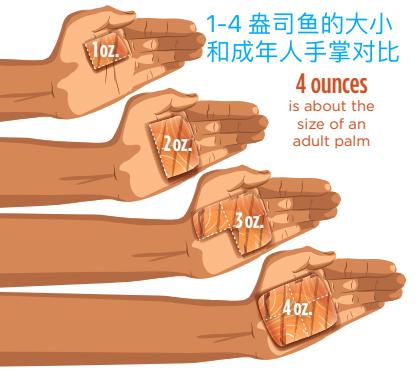
Recommended food intake: eat 2 servings of fish a week, which is the size of two palms.

An adult serving is about 120 grams (4 ounces), which is about the size of an adult’s palm.

(Source: FDA official website)

2. Pregnant and lactating women

Suggested food intake: eat 2-3 servings of "best choice" fish per week, or 1 serving of "good choice" fish per week.

Note: it is a choice, not a "harmony" relationship.

3. Infants and children

Recommended food intake: 2 servings of "best choice" fish per week. Don’t eat "good choice" fish.

1~3 years old, about 30 grams (1 ounce)

4~7 years old, about 60 grams (2 ounces)

8~10 years old, about 90 grams (3 ounces)

11 years old and above, about 120 grams (4 ounces)

(Source: FDA official website)

In order to benefit from eating fish, the cooking method is very important.

one

Recommended practices: steaming, oven controlled baking and electric pressure cooker stewing.

Steaming is one of the best choices, which can preserve omega-3 fatty acids and multivitamins in fish.

It is also a good way to wrap it and bake it in an oven, or to stew/bake it in an electric pressure cooker.

2

Not recommended practices: roasting and frying with open fire.

Try not to bake with open fire, so as not to produce a variety of carcinogens [5].

Frying and frying are also not recommended, because omega-3 fatty acids are destroyed a lot at high temperature [6].

To braise in soy sauce and make soup, it is generally necessary to fry in oil first. It is recommended to put less oil, fry at as low a temperature as possible and for as short a time as possible.

Tips:

Freshwater fish must not be eaten raw!

Marine fish that can be eaten raw must be purchased from reliable merchants.

Pregnant women and children are not recommended to eat raw fish and aquatic products, including sushi and sashimi.

(Cooked salmon tastes good too.)

Q1

Which is better, marine fish or freshwater fish?

From a nutritional point of view, there is not much difference between the two.

In particular, the content of DHA (docosahexaenoic acid, commonly known as brain gold), which everyone is generally concerned about, does not depend entirely on whether it is river fish or deep-sea fish, but mainly on the species of fish.

For example, the DHA content of eel is as high as 471 mg /100 g, which is higher than that of small yellow croaker, hairtail, sea bass, cod and other marine fish. Bass, bighead carp, catfish and silver carp also contain more DHA [7,8].

Therefore, everyone should choose according to their own preferences.

Q2

Is there any way to reduce mercury residue?

Unfortunately, cleaning or cooking can’t reduce the residual amount of mercury, because it is dispersed in fish and very stable.

The only way to reduce the mercury intake of fish is to choose safe fish species from the "best choice" according to the above suggestions and control the food intake.

Q3

Can fish not on the list be eaten?

Can eat.

Try to choose smaller fish at the bottom of the food chain, such as freshwater bass, grass carp and Wuchang fish.

Q4

Which part of the fish can’t be eaten?

The fish in the "best choice" and "good choice" lists can be eaten regardless of the head, skin and roe.

It should be reminded that many fish gall is poisonous and can’t be eaten. For example, crucian carp, grass carp, carp, herring, silver carp, bighead carp, shad, etc., there is a toxin called "sodium carpenol sulfate" in their bile, which is very toxic and cannot be inactivated by heating [9].

Fish gall is located in the abdomen of the fish, and it is generally light bluish yellow or bluish black. It must be cleaned before cooking, and be careful not to break it.

Q5

Can you use fish oil instead of eating fish?

I can’t.

Fish oil supplements only contain omega-3 fatty acids, and do not contain nutrients such as protein, omega-6 fatty acids, vitamins and minerals. The healthy development of children is inseparable from these nutrients.

Therefore, it is suggested to obtain various nutrients including omega-3 fatty acids by eating fish instead of simply taking fish oil.

In addition, there is still some controversy about the health benefits of fish oil, and the current research results do not support the statement that taking fish oil can improve children’s IQ.

Q6

When can I start eating fish for my baby?

Babies can eat fish when they are about 6 months old and start to add complementary food.

Remember, clean the fishbone, and don’t stab the baby.

Give the baby fish. Chop up the fish and eat it slowly to avoid the risks of choking and suffocation.

Remember to forward it to the circle of friends ~

Review expert

Chen Shunsheng | Director and Professor of Aquatic Products Processing and Storage Engineering, College of Food Science, Shanghai Ocean University

references

[1]https://www.fda.gov/food/consumers/advice-about-eating-fish

[2] China Nutrition Society, Food and Health-Consensus of Scientific Evidence (2016)[M]. People’s Health Publishing House, 2016.

[3] Pennsylvania U O . Weekly fish consumption linked to better sleep, higher IQ, Penn study finds.https://www.nursing.upenn.edu/details/news.php? id=991

[4] Wang Y, Liu K, Long T, et al. Dietary fish and omega-3 polyunsaturated fatty acids intake and cancer survival: A systematic review and meta-analysis [published online ahead of print, 2022 Jan 24]. Crit Rev Food Sci Nutr. 2022; 1-17. doi:10.1080/10408398.2022.2029826.

[5] Yang Yuexin, Ge Keyou. China Nutrition Science Encyclopedia (2nd Edition). People’s Health Publishing House, 2019.

[6] Li Nannan, Fan Zhihong. The influence of cooking on the nutritional value of fish [J]. China Food and Nutrition, 2011,17(02):82-85.

[7] Yang Yuexin, editor-in-chief, China Center for Disease Control and Prevention, Institute of Nutrition and Health, China Food Composition Table (6th Edition) [M]. Peking University Medical Press, 2019.

Zuliya, Luo Junxiong, Fan Tie. Comparison of EPA and DHA contents in marine fish and freshwater fish fat [J]. China Oil, 2003(11):48-50.

Wu Hanlin, Peter Wing Ho Chin. Experimental study on acute bile poisoning in CYPRINIDAE [J]. Zoology Research, 1999(06):474-475.

Content production

Read the original text

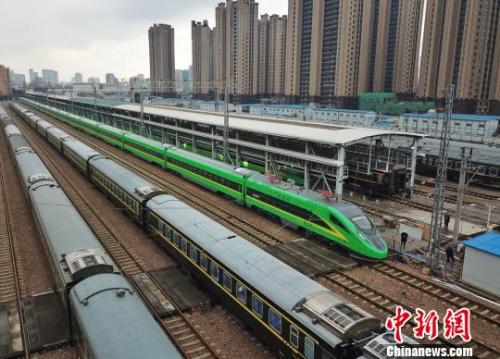
Guangzhou Railway Group continues to build a multi-system of ticket sales in Spring Festival travel rush, making it more convenient and easier for passengers to buy tickets.

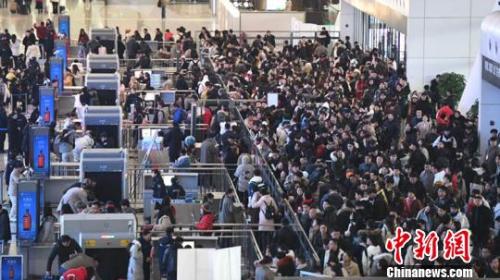
  China Railway Guangzhou Bureau Group Co., Ltd. continued to promote the construction of multiple ticketing systems in Spring Festival travel rush, and constantly improved the level of convenience for passengers to purchase tickets, making it easier for passengers to buy tickets. In Spring Festival travel rush this year, Guangzhou Railway Group significantly increased the number of ticket vending machines and Internet ticket collection machines at high-speed rail stations, with a total of 2,326, 211 more than that in Spring Festival travel rush last year.

  Agency outlets extend to the countryside.

  According to the introduction of Guangzhou Railway Passenger Transport Department, Guangzhou Railway Group has innovated the ticketing methods many times, extending the ticketing place from the ticket hall of the station, opening mobile ticketing points and temporary windows, and laying urban and rural consignment outlets. The data shows that by the end of 2018, the number of Guangzhou Railway Group’s sales outlets had reached 2,549, accounting for a quarter of the country’s total, an increase of 1,862 compared with the end of 2008. Among them, 1,130 sales outlets were set up in towns and villages in Hunan and Guangdong provinces, covering more than 50,000 people, and the ticketing terminals were directly moved to the farmers.

  "The railway department has opened the sales outlets to towns and villages, which has done a real good thing for our migrant workers." Luo xiaoming, the manager of human resources department of Dongguan Jingmu Wood Products Co., Ltd., calculated a "time cost account" for the reporter. In the past, for the train ticket for Spring Festival travel rush’s return home, employees would not feel at ease at the end of the year, which delayed production. The company once sent three security guards to the railway station to buy tickets, even so, it was far from meeting the needs of employees.

  Some employees have to take time off to buy tickets in order to reunite with their families.

  This year, a train ticket sales point was opened near the company. Employees can go directly to the sales point to buy tickets in their spare time, and the number of employees taking leave is greatly reduced.

  This year, in Spring Festival travel rush, Guangzhou Railway also increased the distribution density of sales outlets in central cities of major cities, making it convenient for citizens to buy train tickets nearby.

  Online booking accounts for 90%

  The proportion of Internet booking in Spring Festival travel rush is increasing. Guangzhou Railway Group has sold 14.83 million tickets through the Internet, accounting for about 90% of the number of train tickets sold.

  Telephone booking is an important choice for many migrant workers who are not familiar with online booking, and telephone booking is a convenient measure introduced by Guangzhou Railway Group in Spring Festival travel rush in 2005. In Spring Festival travel rush in 2019, the vast number of migrant workers can book train tickets at any station in the country through the service telephone.

  This year, in Spring Festival travel rush, Guangzhou Railway Group also added the automatic reading function of Hong Kong, Macao and Taiwan passes to relevant ticket vending machines in time according to the high proportion of Hong Kong, Macao and Taiwan passengers in the Pearl River Delta region, which greatly facilitated the self-service purchase and collection of tickets by Hong Kong, Macao and Taiwan passengers.

  While expanding ticket sales channels, Guangzhou Railway Group also focuses on enriching supporting payment methods. It is more and more convenient for passengers to buy tickets from cash, credit card and mobile phone payment. In 2019, in Spring Festival travel rush, all stations in the whole group installed bank POS machines at the designated ticket window, and all automatic ticket vending machines have realized bank card payment. Alipay and WeChat payment methods are also gradually popularized at various stations.

  Migrant workers and students are preferred.

  Since Spring Festival travel rush in 1999, Guangzhou Railway Group has implemented the group ticket reservation mode for migrant workers in Spring Festival travel rush every year, and made every effort to ensure that migrant workers buy tickets to go home and return to the factory. We have started the return booking and self-organizing business of group tickets for migrant workers in Spring Festival travel rush, and this year, Spring Festival travel rush has realized separate booking for the journey and return.

  Up to now, Guangzhou Railway has reserved 397,000 group tickets for nearly 5,000 enterprises and self-organized groups in Spring Festival travel rush. In view of the fact that some enterprises in the Pearl River Delta rushed to work at the end of the year, Guangzhou Railway also sent service teams to enterprises in Dongguan, Huizhou and other places to deliver return tickets directly to migrant workers. At the same time, according to the reservation of group tickets for migrant workers, Guangzhou Railway has arranged to run 62 special trains for migrant workers during Spring Festival travel rush this year, so that more migrant workers can enjoy the "exclusive" journey.

  In 2019, in Spring Festival travel rush, Guangzhou Railway Group ensured that students would buy tickets to go home and go back to school to the maximum extent according to the principle of "priority sale and full guarantee". At present, the major railway stations in Guangzhou Railway have handled round-trip tickets for student groups in various ways, and the pre-sale period of student tickets has been put to the end, and the round-trip tickets for students on March 1, 2019 can be sold as far as possible.

  Up to now, Guangzhou Railway has sold a total of 1.79 million winter vacation student tickets. There are 11 stations in Guangdong, 14 universities and colleges set up temporary ticket sales windows, and 8 stations set up 16 automatic ticket vending machines on campus.

  According to Jin Yibing, a transportation expert in Guangdong Province, Guangzhou Railway has brought intuitive changes to Spring Festival travel rush by building a multi-system of ticket sales: it has fundamentally eased the pressure of people flow in ticket sales places, saved the time cost for the majority of passengers to purchase tickets, further demonstrated the new image of railway Spring Festival travel rush and improved the level of social public services.

From now on, Wuhu will focus on rectification for one month!

Announcement No.6 on "Leave a message and I’ll do it" series activities;

"Special Action of Dregs Transportation Renovation and Law Enforcement"

From July 22nd to August 10th, the fifth phase of the series of activities of "Leave a message and I’ll do it" was carried out by the Municipal Clean Office, and 551 pieces of oil-proof mats were given to marinated duck stalls in the whole city (including 154 in Jinghu District, 129 in Yijiang District, 112 in Jiujiang District, 75 in Sanshan Economic Development Zone and 81 in Economic and Technological Development Zone), so as to clean up the accumulated sidewalks. There were 73 cases of administrative law enforcement (17 natural persons and 56 merchants), with a total fine of 10,650 yuan. The awareness of business owners has been improved, and with positive influence and effect, they will "look back" in due course.

In order to continue to do a good job in the "clean things" that the masses feel every day, according to the concerns of the masses, after research, it is decided to determine the theme of the sixth activity as "special action for the remediation and law enforcement of muck transportation". The relevant matters are hereby announced as follows:

I. Action content

Adhere to the principle of "centralized rectification, strict law enforcement and long-term implementation", fully implement the main responsibility of muck transport enterprises and the requirements of "six hundred percent" civilized construction, and impose administrative penalties on muck vehicles for disturbing people at night, spilling pollution, unclean body, unlicensed transportation, speeding and overloading (barbaric driving) and other violations according to law. Transport enterprises and construction units that violate the provisions in special actions shall be subject to the system of "four investigations in one case" (drivers, transport vehicles, transport enterprises and construction enterprises) in addition to administrative punishment according to law, and relevant responsibilities shall be investigated according to law.

Second, the action time

From August 15 to September 15, the follow-up was transferred to normalization inspection and law enforcement.

Third, the reporting channels

The "I love Wuhu, I want to be clean, and I’ll take photos" hand-picked platform opens the video uploading function, and people can find the "hand-picked" function through the platform (Wanshitong APP, Dajiang Kankan APP, Alipay and WeChat "Wanshitong" applet, and report the found muck management problems according to the prompt requirements).

Tel: 0553-5858110(24-hour reception), 5012288.

Fourth, the reward method

The fifth special action has been rewarded, and the sixth special action will continue to be rewarded with messages. After the end of this special action, if the message or telephone call from the Municipal Clean Office is of high quality, it will be awarded the title of "Clean Guardian" (the rewarded personnel will not be rewarded repeatedly) and will be awarded the 200 yuan Prize for each person’s value.

V. Disciplinary measures

1. If the muck vehicles spill pollution, the construction waste transport unit shall be fined not less than 5,000 yuan but not more than 20,000 yuan according to Article 30 of the Wuhu Construction Waste Management Regulations. If the construction site does not meet the requirements of civilized construction, a fine of not less than 10,000 yuan but not more than 100,000 yuan shall be imposed according to the provisions of Article 115th of the Law of People’s Republic of China (PRC) on the Prevention and Control of Air Pollution; Other illegal acts shall be given administrative punishment according to relevant laws and regulations.

2. The muck transport enterprises and vehicles that have serious violations of laws and regulations, such as unlicensed transport, serious car body pollution, large-scale road pollution, and stealing construction waste, shall be banned from operating qualifications in accordance with regulations.

Complaint Tel: 0553-5013091.

Attachment:

1. Information Table of Key Unearthed Sites in Wuhu City (23 in total);

2. List of construction waste transport enterprises and muck transport vehicles in Wuhu City (a total of 30 enterprises and 451 muck transport vehicles).

Wuhu is the cleanest city in China.

Work leading group office

August 15, 2022

Attachment 1:

Information table of key unearthed sites in Wuhu city

(23 in total, including the site to be excavated in the near future, not limited to the following list)

Positive list: the vehicle capacity is clean and tidy, the signs are intact, the vehicle is sealed and sealed, the vehicle is driven in a civilized way, and the entrance and exit of the construction site are clean and orderly.

Negative list: muddy car body, incomplete logo, airtight car body, rough driving, unlicensed transportation, not driving according to the prescribed route and time, dumping muck, messy entrance and exit of the construction site, and failure to apply for construction waste disposal permit at the construction site.

zone

Project name

Development enterprise

Owner’s unit

traffic unit

jing hu district

(6 in total)

1. Tiancheng Binjiang House

Anhui kecheng house purchasing

Luxing company

2. Wutong Lane Project of Phase II of Ancient City

Wuhu real estate investment

Qiangfeng company

3. Neighborhood Center (intersection of Zheshan Road and Yijiang Road)

Livable company

Zhengfeng company

4. Yuejiangwang Earthwork Backfill Project

Xinwan house purchasing

Jihe company

5. Shenshan Smart Sports Ecological Park (to be unearthed in the near future)

City key department

Jiangcheng Hongyao company

6. The project of collecting railway houses and building the second bid section of the hub project in the station area

City key department

Shuntong company

jiujiang district

(10 in total)

7. the lake and the mountains are covered with clouds

Weixing house purchasing

Jiurui company

8. Weixing Tanyue Community

Weixing house purchasing

Shuntong company

9. Plots 1 and 3 of Weixing Sky City

Weixing house purchasing

Shuntong company

10. Plots 2 and 4 of Weixing Sky City

Weixing house purchasing

Dasheng company

11. Neighbourhood Center (Yuncong Road plot)

Livable company

Zhijie company

12. Zhongjiang New Town 2005 Parcel Project

Sanwan house purchasing

Shuntong company

13. Jiangbei Second Road, Highway Bridge Connection Project of Wuhu Yangtze River Highway Bridge of Shanghehang Railway

Nanjing jiuda

Beikun company

14. Sai Wan Garden Resettlement Community

Hunan liujian

Qiangfeng company

15 Anhui Haichuang New Energy Materials Co., Ltd.

China railway 19 th bureau

Zhengfeng company

16. Xinyi Jiangbei Photovoltaic Module Cover Project

Tianjiu company

Jihe company

yijiang district

(3 in total)

17. Earthwork of plots 1# and 2# on the south side of Dafa Eshan Road

Maoyin house purchasing

Kunlun company

18. Emerald Riverside Phase II

Liangxu corporation consulting

Luxing company

19. An Normal University Liberal Arts Complex

China construction 5 th division

Zhijie company

Economic development zone

(2 in total)

20. Neighborhood Center (intersection of songshan road and Qiandao Lake Road)

Livable company

Luxing company

21. Pingping Project of Fenghesheng Intelligent Equipment Project

Economic development zone jianguanchu

Shuntong company

Sanshan Economic Development Zone

(2 in total)

22. Sanshan Jinyu International Commercial Plaza (to be unearthed in the near future)

Weixing house purchasing

Dexiang company

23. Yunjin Community in Zhongcheng Times (to be unearthed in the near future)

Chengyuan house purchasing

Anping company

Attachment 2:

List of construction waste transport enterprises and muck transport vehicles in Wuhu City

(A total of 30 enterprises, 451 muck transport vehicles)

serial number

name of the company

business address

transport vehicle

one

Wuhu Luxing Earthwork Engineering Co., Ltd. (15 vehicles in total)

Room 1620, Office B#, New Metropolis, Jinghu Century City, Jinghu District

Anhui B54888, Anhui B54785, Anhui B54769, Anhui B54796, Anhui B54727, Anhui B54789, Anhui B54730, Anhui B54709, Anhui B54758, Anhui B54767, Anhui B54775, Anhui B54819, Anhui b54744.

2

Wuhu Qiangfeng Earthwork Engineering Co., Ltd. (15 vehicles in total)

Room 102, Unit 1, Building 9, Shen ‘ao Garden, Shenxiang Town, Jiujiang District

Wan B54887, Wan B54621, Wan B54859, Wan B54540, Wan B54857, Wan B54852, Wan B54751, Wan B54889, Wan B54872, Wan B54728, Wan B29130, Wan B31911, Wan B39082.

three

Anhui Jiangcheng Hongyao Earthwork Co., Ltd. (17 vehicles in total)

6517, No.2, Liansheng Commercial Plaza, Wuhu, Jinghu District

Wan B55269, Wan B55263, Wan B55213, Wan B55293, Wan B55163, Wan B55399, Wan B55373, Wan B55322, Wan B55313, Wan B55366, Wan B05978, Wan B12678, Wan B09096.

four

Wuhu Chengguang Earthwork Co., Ltd. (15 vehicles in total)

Room 101-102, Building 19, Central City, Yijiang District

Wan B55599, Wan B55523, Wan B55585, Wan B55545, Wan B55563, Wan B55597, Wan B55505, Wan B5560, Wan B55509, Wan B55432, Wan B06817, Wan B12186, Wan B13618.

five

Wuhu Dongfeng Construction Co., Ltd. (13 vehicles in total)

No.288-1, Limin West Road, Yijiang District

Wan B54867, Wan B54809, Wan B54878, Wan B54838, Wan B54816, Wan B54860, Wan B54881, Wan B54895, Wan B54876, Wan B54886, Wan B55248, Wan B13133, Wan B16888.

six

Wuhu Jihe Earthwork Co., Ltd. (25 vehicles in total)

A918 Huijin Square, Jinghu District

Anhui B55291, Anhui B55296, Anhui B55228, Anhui B55287, Anhui B55222, Anhui B55223, Anhui B55210, Anhui B55226, Anhui B55277, Anhui B55216, Anhui B55663, Anhui B55680, Anhui B55608.

seven

Wuhu Anping Earthwork Engineering Co., Ltd. (14 vehicles in total)

Room 3101, Unit 1, Building D2, Central City, Yijiang District

Anhui B55330, Anhui B55392, Anhui B55307, Anhui B55323, Anhui B55306, Anhui B55395, Anhui B55360, Anhui B55326, Anhui B55372, Anhui B55339, Anhui B55677, Anhui B00020, Anhui B22837.

eight

Wuhu Dasheng Earthwork Engineering Co., Ltd. (10 vehicles in total)

Floor 1#2, Building 3, Leyuan Community, Jinghu District

Wan B54817, Wan B54865, Wan B54808, Wan B54828, Wan B54883, Wan B54869, Wan B54882, Wan B54858, Wan B54835, Wan B54897.

nine

Wuhu Dexiang Earthwork Engineering Co., Ltd. (11 vehicles in total)

2B100, Liansheng International Commercial Plaza, Jinghu District

Anhui B55110, Anhui B55115, Anhui B55158, Anhui B55177, Anhui B55160, Anhui B55197, Anhui B55189, Anhui B55303, Anhui B55103, Anhui B55113 and Anhui B15830.

10

Wuhu Jinyao Earthwork Engineering Co., Ltd. (10 vehicles in total)

Room 1621, Office Building B#, New Metropolis, Jinghu Century City, Jinghu District

Anhui B55386, Anhui B55179, Anhui B55025, Anhui B54917, Anhui B55047, Anhui B55200, Anhui B55198, Anhui B55242, Anhui B55141 and Anhui B55203.

11

Wuhu Kunlun Construction Engineering Co., Ltd. (18 vehicles in total)

401, 403, 405 and 407, No.1 Office Building, Baizhuang Fortune Plaza, Jiujiang District

Wan B54792, Wan B54732, Wan B54757, Wan B54683, Wan B54715, Wan B55300, Wan B54790, Wan B54770, Wan B54779, Wan B54673, Wan B54773, Wan B54793, Wan B54723.

twelve

Wuhu Lubao Automobile Transport Co., Ltd. (15 vehicles in total)

3-2603, Building 10#, Xinli Eton Mansion, Jinghu Century City, Jinghu District

Anhui B54898, Anhui B54523, Anhui B54806, Anhui B54855, Anhui B54815, Anhui B54875, Anhui B54879, Anhui B54885, Anhui B54861, Anhui B54900, Anhui B54877, Anhui B54738, Anhui B54702.

13

Wuhu Weifeng Earthwork Engineering Co., Ltd. (17 vehicles in total)

Jinding 1412, 99 Jingjie, Jinghu District

Anhui B55310, Anhui B55273, Anhui B55480, Anhui B55499, Anhui B55461, Anhui B55317, Anhui B55438, Anhui B55428, Anhui B55448, Anhui B08699, Anhui B11660, Anhui B11899, Anhui B08311.

14

Wuhu Shuntong Earthwork Engineering Co., Ltd. (17 vehicles in total)

No.21 Nibu West Road, Gaoan Street, Yangtze River Bridge Comprehensive Economic Development Zone

Wan B54247, Wan B54731, Wan B54752, Wan B54782, Wan B54512, Wan B54513, Wan B54637, Wan B54739, Wan B54735, Wan B54613, Wan B06016, Wan B05776, Wan B29192.

15

Wuhu Zhengfeng Road Transport Co., Ltd. (10 vehicles in total)

Room 1106, Office Building B#, New Metropolis, Jinghu Century City

Anhui B55078, Anhui B55015, Anhui B55272, Anhui B55211, Anhui B55281, Anhui B55239, Anhui B55236, Anhui B55208, Anhui B55050 and Anhui B55517.

16

Wuhu Zhijie Earthwork Engineering Co., Ltd. (15 vehicles in total)

Room 1076, Building 2A, Zone 1, Nanxiang Wanshang Business Logistics City

Wan B54632, Wan B54651, Wan B54635, Wan B54645, Wan B54643, Wan B54697, Wan B54619, Wan B54631, Wan B54625, Wan B54623, Wan B16260, Wan B12992, Wan B16289.

17

Wuhu Jiurui Earthwork Co., Ltd. (17 vehicles in total)

Room 619, No.1 Office Building, Baizhuang Fortune Plaza, Jiujiang District

Anhui B55260, Anhui B55253, Anhui B55207, Anhui B55297, Anhui B55243, Anhui B55379, Anhui B55353, Anhui B55652, Anhui B55692, Anhui B55657, Anhui B55697, Anhui B07196,

Anhui B00193, Anhui B01836, Anhui B03344, Anhui B18994 and Anhui B02187.

18

Wuhu Jinkun Earthwork Engineering Co., Ltd. (15 vehicles in total)

Room 101, Unit 1, Building 10, Zone D, Longhu Xincheng Community, sanshan district

Wan B19889, Wan B07567, Wan B06588, Wan B18169, Wan B11616, Wan B15979, Wan B17868, Wan B05585, Wan B11131, Wan B15911, Wan B17369, Wan B39230, Wan B07930.

19

Wuhu Chengjian Earthwork Co., Ltd. (10 vehicles in total)

Room 502, No.1 Office Building, Baizhuang Fortune Plaza, Jiujiang District

Wan B01893, wan B09369, wan B11589, wan B14577, wan B10499, wan B10577, wan B19817, wan B10306, wan B06198, wan B16977.

twenty

Wuhu Junsheng Earthwork Engineering Co., Ltd. (29 vehicles in total)

Room 1709, Division 1, Fudi Nanduhui, Yijiang District

Wan B02289, Wan B01033, Wan B01056, Wan B01295, Wan B02322, Wan B02331, Wan B01536, Wan B03710, Wan B21550, Wan B23031, Wan B00343, Wan B07888, Wan B29878. Anhui B25508, Anhui B08410, Anhui B23785, Anhui B05637, Anhui B00362, Anhui B32153, Anhui B39206, Anhui B36355, Anhui B36201, Anhui B36698 and Anhui B36368.

21

Wuhu Jianglu Earthwork Co., Ltd. (16 vehicles in total)

No.36, Building C, Lugang Community, Yijiang District

Wan B01466, Wan B04400, Wan B01971, Wan B01777, Wan B03593, Wan B23839, Wan B01573, Wan B17930, Wan B22099, Wan B01903, Wan B00392, Wan B23397, Wan B15975.

22

Wuhu Dinghong Earthwork Co., Ltd. (16 vehicles in total)

No.44-1, Senhai City Garden, Yijiang District

Wan B02456, Wan B11846, Wan B01899, Wan B02080, Wan B07150, Wan B06037, Wan B23823, Wan B01270, Wan B05408, Wan B00086, Wan B10428, Wan B00022, Wan B04489.

23

Wuhu Huawen Municipal Engineering Co., Ltd. (19 vehicles in total)

27#401, Sunshine Huayu, Century City, Jinghu District

Wan B00145, Wan B00400, Wan B00409, Wan B00891, Wan B01789, Wan B02213, Wan B02520, Wan B02603, Wan B04970, Wan B07788, Wan B29362, Wan B13522, Wan B13599.

24

Wuhu Junhui Earthwork Engineering Co., Ltd. (11 vehicles in total)

Room 1412, Jingjie Building, Jinghu District

Anhui B21501, Anhui B29739, Anhui B10416, Anhui B28706, Anhui B29180, Anhui B28003, Anhui B27321, Anhui B28821, Anhui B29470, Anhui B04971 and Anhui B29986.

25

Wuhu Fang Wei Earthwork Engineering Co., Ltd. (19 vehicles in total)

Room 2414, Building 1, Baizhuang Times Square, Lugang Street, Yijiang District

Wan B00888, Wan B04123, Wan B29115, Wan B02630, Wan B09455, Wan B00372, Wan B23853, Wan B01410, Wan B21789, Wan B25246, Wan B21975, Wan B22925, Wan B26178.

26

Wuhu Songjiang Qingyun Service Co., Ltd. (19 vehicles in total)

Room 01, Building 8, Taiyuan New Village, Jinghu District

Wan B07743, Wan B08249, Wan B34131, Wan B06435, Wan B01157, Wan B01229, Wan B09923, Wan B22500, Wan B22299, Wan B07480, Wan B02182, Wan B03100, Wan B02176.

27

Anhui Zhongken Construction Engineering Co., Ltd. (10 vehicles in total)

Room 201, Shop 1#, Baizhuang Golden Tower, Dagongshan Road, Yijiang District

Anhui B37491, Anhui B36011, Anhui B38311, Anhui B38391, Anhui B36965, Anhui B38820, Anhui B28255, Anhui B30811, Anhui B37902 and Anhui B36125.

28

Wuhu Lufan Transport Co., Ltd. (10 vehicles in total)

No.11, Longgeng Formation, Yumin Village, Gaoan Street, Sanshan Economic Development Zone

Anhui B38099, Anhui B29863, Anhui B36211, Anhui B36846, Anhui B38030, Anhui B36617, Anhui B35867, Anhui B35957, Anhui B28588 and Anhui B37262.

29

Wuhu Shunli Transport Co., Ltd. (12 vehicles in total)

South of Yaoshi Brewery, No.99 San ‘e Road, Sanshan Street, Sanshan Economic Development Zone

Wan B13866, Wan B35895, Wan B38976, Wan B38710, Wan B38688, Wan B29806, Wan B38037, Wan B37465, Wan B35712, Wan B38645, Wan B38686, Wan B36436.

30

Wuhu Runfa Logistics Co., Ltd. (11 vehicles in total)

No.27, Gongjian District 2, Matang New Town, Yijiang District

Anhui B39603, Anhui B38227, Anhui B37945, Anhui B36338, Anhui B37108, Anhui B38700, Anhui B37328, Anhui B28899, Anhui B38721, Anhui B29823 and Anhui B31162.

Wuhu

Source | Dajiang Information

Original title: "From now on, Wuhu will focus on rectification for one month! 》

Read the original text

Expert Interpretation | Building an Algorithm Governance Landing Support System

With the rapid development of network information technology, technologies such as big data, cloud computing, algorithms and artificial intelligence are widely used in various platforms and application scenarios such as social networking, shopping, travel, medical care, job hunting and video. The emerging format of the Internet has brought great convenience to people and shaped people’s new way of life. At the same time, due to the fast iterative speed of information technology update, diverse development forms and increasingly complex emerging formats, big data mining and algorithms bring convenience to users’ personalized services and inject new kinetic energy into economic and social development through user behavior analysis and historical data mining. However, the unreasonable application of algorithms, such as algorithm discrimination, "killing big data", induced addiction, illegality and bad information recommendation, has also touched on issues such as user information security and rights protection, and has profoundly affected the normal communication order, market order and social order, bringing new challenges to China’s existing laws, regulations and regulatory governance system.

In order to standardize Internet information service algorithm recommendation activities, safeguard national security and social public interests, protect the legitimate rights and interests of citizens, legal persons and other organizations, and promote the healthy development of Internet information services, the State Internet Information Office, the Ministry of Industry and Information Technology, the Ministry of Public Security and the State Administration of Market Supervision jointly issued the Regulations on the Administration of Internet Information Service Algorithm Recommendation (hereinafter referred to as the Regulations), which will take effect on March 1, 2022.The promulgation and implementation of "Regulations" will effectively strengthen the state’s standardized supervision on algorithm recommendation of Internet information service providers, help to create a positive and healthy Internet information service environment, form a good information dissemination order, and further enhance China’s social governance capacity.

First, take the social mainstream value as the guidance, and emphasize the management and guidance of public opinion.

The "Regulations" emphasize that algorithm recommendation service providers should adhere to the mainstream value orientation, optimize the algorithm recommendation service mechanism, actively spread positive energy, and promote the application of algorithms. The Regulation focuses on the application risks of algorithms in Internet information services, such as potential algorithms affecting network public opinion, algorithms inducing users to indulge or over-consume, algorithm collusion and unfair competition, which leads to governance objects, and regulates Internet information service algorithm recommendation activities through algorithm regulation to safeguard national security and social public interests. The "Regulations" point out that an algorithm recommendation service provider with public opinion attribute or social mobilization ability should fill in the service provider’s name, service form, application field, algorithm type, algorithm self-evaluation report, content to be publicized and other information through the Internet information service algorithm filing system within ten working days from the date of providing services, and perform filing procedures.

Two, focus on the protection of user rights and interests, safeguard the legitimate rights and interests of minors and the elderly and other groups.

The Regulation emphasizes that algorithm recommendation service providers should provide users with options that are not specific to their personal characteristics, or provide users with convenient options to turn off algorithm recommendation services. If the user chooses to close the algorithm recommendation service, the algorithm recommendation service provider shall immediately stop providing related services. If the algorithm recommends service providers to provide services to minors, they should fulfill their network protection obligations according to law, and facilitate minors to obtain information beneficial to their physical and mental health by developing models suitable for minors and providing services suitable for minors’ characteristics. The "Regulations" pointed out that algorithmic recommendation service providers should not push information to minors that may cause minors to imitate unsafe behaviors and violate social ethics, induce minors’ bad habits and other information that may affect their physical and mental health, and should not use algorithmic recommendation services to induce minors to indulge in the Internet. The "Regulations" pointed out that when an algorithmic recommendation service provider provides services to the elderly, it should protect the rights and interests enjoyed by the elderly according to law, fully consider the needs of the elderly for travel, medical treatment, consumption and work, provide intelligent services suitable for the elderly in accordance with relevant state regulations, and carry out monitoring, identification and disposal of fraudulent information related to telecommunications networks according to law, so as to facilitate the safe use of algorithmic recommendation services by the elderly.

Three, establish a complete and feasible supervision system, clear the legal responsibility of service providers.

The "Regulations" emphasize that the network information department shall establish an algorithm classification safety management system with relevant departments such as telecommunications, public security, market supervision, etc., and implement classification management for algorithm recommendation service providers according to the public opinion attribute or social mobilization ability, content category, user scale, importance of data processed by algorithm recommendation technology, and interference degree to user behavior. The "Regulations" point out that the algorithm recommendation service provider violates the provisions of Article 7, Article 8, Article 9, Paragraph 1, Article 10, Article 14, Article 16, Article 17, Article 22, Article 24 and Article 26, and if there are provisions in laws and administrative regulations, such provisions shall prevail; If there are no provisions in laws and administrative regulations, the network information department and the relevant departments of telecommunications, public security and market supervision shall give a warning and informed criticism according to their duties and order them to make corrections within a time limit; Refuses to correct or if the circumstances are serious, it shall be ordered to suspend the information update and be fined not less than 10,000 yuan but not more than 100,000 yuan. If it constitutes a violation of public security administration, it shall be punished according to law; If a crime is constituted, criminal responsibility shall be investigated according to law.

Fourth, build a support system for algorithmic governance and strengthen corporate social responsibility.

The promulgation of the Regulations is exploratory and forward-looking, and it is also a new starting point for algorithm recommendation management. However, the algorithm comprehensive management is still in its infancy, lacking practical experience and technical support system of algorithm recommendation management. Accelerating the implementation of algorithm management as soon as possible, combining with the current new technical system, and correcting the new problems encountered in the implementation process are the keys to effectively ensure the strong and orderly progress of algorithm comprehensive management. In addition, in the process of management landing, the self-discipline and social responsibility of related enterprises are also important factors affecting the landing. It is suggested to strengthen the following work:

(A) to build a technical system of algorithm management and monitoring to promote the sustainable development of network governance.

Around the construction of the technical system of algorithm governance and monitoring, universities are encouraged to set up and strengthen the discipline construction of algorithm security-related majors, and pay attention to interdisciplinary construction and student training, guide universities to establish relevant scientific research institutions, strengthen the research direction of algorithm governance, set up relevant talent teams, establish a linkage mechanism between research institutions and related main enterprises, use the scientific research capabilities of research institutions, and combine enterprise technology accumulation and service system to carry out demonstration applications of governance, and cultivate a high-quality talent team of algorithm supervision.

(B) to stimulate the sense of social responsibility of information service enterprises, the formation of industry self-discipline atmosphere.

In addition to perfecting laws and regulations and constructing supervision mechanism, corporate social responsibility is very important.first, through industry associations, signed a self-discipline convention on algorithm recommendation of Internet platform, made reasonable provisions and restrictions on data collection and algorithm use, made relevant algorithms and procedures public as required, and established a user supervision mechanism. Well-known and leading domestic enterprises should play a leading role and encourage other small and medium-sized enterprises, thus forming a governance mechanism of mutual supervision, conscious compliance and compliance management within the industry.nextInternet platform enterprises should consciously assume social responsibilities, learn and abide by national legal norms and business ethics, follow the principle of honest trading, improve their credibility, and make profits by quality and word of mouth. Finally, relying on the enterprise’s own strength, the chaos of algorithm recommendation will be blocked from the source, so as to safeguard the legitimate rights and interests of users and jointly protect the healthy and upward Internet order. (Author: Shen Hao China Communication University State Key Laboratory of Media Convergence and Communication Big Data Center, chief scientist.)

Boost foreign trade expectations with a long-term view

  According to the data released by the General Administration of Customs recently, the import and export of goods in China increased by 4.8% year-on-year in the first quarter of this year, and the export increased by 8.4%, reversing the slight decline in foreign trade from January to February, and the foreign trade showed accelerated growth on a monthly basis. The export growth data is even brighter. In March, exports increased by 23.4% year-on-year and 48.4% quarter-on-quarter, which was significantly higher than the export level from January to February. These data show that the advantages of China’s foreign trade development have emerged, showing strong resilience and a smooth start.

  At present, due to the persistent geopolitical conflicts, the tightening of monetary policies in major countries, high inflation and the uncertainty of global financial markets, the trade of all countries in the world is tightening, and the foreign trade competition is becoming increasingly fierce. China’s high labor productivity, constantly improving R&D level, strong industrial supporting capacity, large-scale market space, strong policy guarantee and continuous release of institutional innovation dividends constitute the comprehensive advantages of foreign trade toughness and stability, which reflects strong foreign trade competitiveness. To realize the strategy of strengthening the country by trade, we must take stabilizing confidence and boosting expectations as the basic foothold, and promote foreign trade subjects to have firm confidence in facing difficulties and turn it into positive and effective action consciousness, so as to better cope with various risk challenges and promote the leap from quantitative change to qualitative change in foreign trade.

  Expectation refers to a kind of psychological activity, which is a future psychological judgment formed on the basis of understanding the reality. In economics, expectation is the judgment of different subjects in the economy, such as government, enterprises and people, on the economic development trend, and accordingly they take corresponding actions. Generally speaking, with sufficient information, economic subjects can better understand the long-term factors affecting economic development, make correct judgments and take rational actions. However, under the condition of asymmetric information, economic subjects may only pay attention to the current situation and be influenced by short-term factors, forming irrational expectations for the future, making wrong judgments and behaviors, and affecting long-term economic development. At present, China’s foreign trade shows a stable and positive trend in the complex external environment, but there are also short-term fluctuations and difficulties. If foreign trade expectations weaken and irrational expectations appear, it will not be conducive to the stability and long-term sustainable development of foreign trade. Therefore, we must focus on the long-term, boost the good expectations of foreign trade development, guide foreign trade-related subjects to correctly understand the fundamentals of China’s foreign trade development, rationally judge the comprehensive advantages and long-term foundation of foreign trade development, and take scientific and reasonable actions.

  To boost foreign trade expectations, we must strengthen our faith. Eliminate the interference of short-term factors and bad news in foreign trade, emphasize the long-term belief in foreign trade development, and make long-term plans. It is not the short-term performance of some indicators that will boost the good expectations of foreign trade, and it is even more impossible to simply adopt a short-term single policy based on the ups and downs of some indicators. Instead, we should focus on the long-term development of trade, continuously adjust and improve policies, make a good combination of foreign trade policies, and put forward scientific and clear path plans for long-standing problems in foreign trade. Only in this way can foreign trade subjects comprehensively and rationally grasp the current situation and future of foreign trade, strengthen their beliefs and continue to exert their strength. A few days ago, the the State Council executive meeting put forward the idea of "continuously enriching, adjusting and perfecting relevant policies, and implementing a combination of policies to stabilize foreign trade", which brought good expectations for foreign trade development from a policy perspective.

  To boost foreign trade expectations, it is necessary to effectively implement and coordinate various policies and measures. According to the current situation of foreign trade development, in view of various deep-seated problems and constraints in foreign trade development, we should earnestly implement various policies to stabilize foreign trade and strengthen foreign trade, pay attention to coordinating and connecting all policies and measures, promote the balanced linkage among long-term foreign trade goals, key tasks, macro policies and reform measures, avoid policy conflicts and overlapping of executive agencies, strengthen policy synergy and improve good expectations for the effectiveness of foreign trade policy implementation.

  To boost foreign trade expectations, we need to strengthen publicity and communication to reduce information asymmetry. Through various channels, strengthen publicity and communication with foreign trade subjects, and strengthen foreign trade subjects’ cognition of various support policies and comprehensive advantages of foreign trade; Through the scientific interpretation of the strategy of strengthening the country by trade, we will increase the publicity of scientific planning and effective programs for foreign trade development, and enhance the rational expectations of foreign trade subjects for China’s high-level opening up. Respond to the demands and concerns of foreign trade enterprises in a timely manner, strengthen information symmetry, break down information barriers, and actively guide the healthy development of foreign trade subjects’ psychological expectations.

  It is also necessary to deepen the reform of foreign trade system to boost foreign trade expectations. With the goal of building a new open economic system at a higher level, we should continue to create a first-class foreign trade business environment, take the construction of a free trade pilot zone and a free trade port as an opportunity, deepen institutional reform in key areas of foreign trade, fully implement reform measures, promote foreign trade liberalization and facilitation, effectively transform government functions, build a service-oriented government, and create an open, transparent, fair competition, open and innovative foreign trade environment. At the same time, it will promote foreign trade subjects to form a positive understanding of future development space and opportunities, boost development expectations and activate foreign trade momentum. (This article Source: Economic Daily Author: Lan Qingxin)

Accelerate the development of new foreign trade formats and new models.

Cross-border e-commerce has maintained strong growth, overseas warehouses have become an important platform, and market procurement and trade methods have developed rapidly.
Accelerate the development of new foreign trade formats and new models.

Expand the pilot scope of the cross-border e-commerce comprehensive experimental zone, actively promote the development of overseas warehouses, and support qualified places to develop offshore trade … Around accelerating the development of new foreign trade formats and new models, the the State Council executive meeting held recently determined a series of measures. Relevant persons pointed out that the new format and new mode are the effective force of China’s foreign trade development and an important trend of international trade development. The policy measures put forward at this meeting involve a variety of new formats and new models, which are highly targeted and help to further promote the upgrading of foreign trade and cultivate new competitive advantages.

The scale of cross-border e-commerce has increased nearly 10 times in five years.

In recent years, new foreign trade formats and new modes in China have developed rapidly, and cross-border e-commerce is one of them. According to the data of the General Administration of Customs, in 2020, the import and export of cross-border e-commerce in China was 1.69 trillion yuan, a year-on-year increase of 31.1%.

Since the beginning of this year, cross-border e-commerce has continued to maintain strong growth. Gao Feng, spokesman of the Ministry of Commerce, said that in the first quarter of this year, the import and export of cross-border e-commerce reached 419.5 billion yuan, a year-on-year increase of 46.5%. There are the following new features: First, from the perspective of channels, cross-border e-commerce relies mainly on third-party platforms and gradually develops various new channels such as independent websites, social networking sites and search engine marketing. Second, from the main point of view, from the early individual and trade-oriented enterprises to the integration of trade-oriented enterprises and production enterprises, many production enterprises have changed from offline to online, and the digitalization level has improved significantly. Third, from the product point of view, from simply paying attention to cost performance to paying attention to brands, quality, standards and services, customized and personalized products have grown rapidly.

"In terms of scale and speed, the development of cross-border e-commerce has maintained a double-digit growth rate in recent years. The total scale has increased nearly 10 times in five years, and its proportion in foreign trade has continued to increase, especially under the impact of the epidemic, which has played an important role in stabilizing foreign trade." Zhang Jianping, director of the Regional Economic Cooperation Research Center of the Research Institute of the Ministry of Commerce, told this reporter that in order to further promote the development of cross-border e-commerce, it is necessary to continue to increase support, such as expanding the pilot scope of the cross-border e-commerce comprehensive experimental zone, optimizing the list of cross-border e-commerce retail imports, facilitating the management of cross-border e-commerce import and export returns, and formulating guidelines for cross-border e-commerce intellectual property protection.

Improve the digital and intelligent level of overseas warehouses

In the process of cross-border e-commerce development, overseas warehouses are important support points. The data shows that there are more than 1,800 overseas warehouses of cross-border e-commerce in China, which are distributed in Russia, Japan, South Korea, the United States and other countries and regions, and the growth rate will reach 80% in 2020, covering an area of over 12 million square meters.

"Overseas warehouses have become a new type of foreign trade infrastructure supporting the development of cross-border e-commerce, and are an indispensable and important link and platform for the development of cross-border e-commerce. By setting up overseas warehouses in the destination country, and then transporting the goods in batches, sorting, packaging and transporting them according to the local market, logistics efficiency can be effectively improved and comprehensive operating costs can be reduced. Especially during the epidemic prevention and control period, the advantages of overseas warehouses are prominent, because there is sufficient stocking, and local logistics can deliver faster. " Zhang Jianping said.

The the State Council executive meeting proposed to encourage traditional foreign trade enterprises, cross-border e-commerce and logistics enterprises to participate in the construction of overseas warehouses, improve the digitalization and intelligence level of overseas warehouses, promote small and medium-sized enterprises to borrow ships to go out to sea, and drive domestic brands and dual-innovation products to expand the international market space.

Zhang Jianping said that a series of measures not only focus on promoting more market players to participate in the construction of overseas warehouses, but also emphasize the application of new technologies, which will provide more powerful support for the development of overseas warehouses. "With the increasing support from all sides, there is still a lot of room for the development of overseas warehouses in the future, especially the construction of a new generation of intelligent logistics system, which will make overseas warehouses operate more efficiently and play a more important role, thus promoting cross-border e-commerce. Make greater contributions to stabilizing foreign trade and promoting the transformation and upgrading of foreign trade."

Actively develop the way of market procurement trade.

Focusing on new formats and new models, the the State Council executive meeting proposed to actively develop market procurement trade methods.

As a new trade model created for foreign trade transactions of "multi-variety, multi-batch and small-batch" in specialized markets, market procurement trade has developed rapidly in many places in recent years. Recently, in Dongguan, Guangdong Province, the export scale of the pilot market procurement trade of Da Lang Wool Trade Center launched at the end of last year exceeded 10 billion yuan. Up to now, 1,487 pilot operators of procurement trade in Dongguan market have been registered, and the export commodities involve furniture, daily necessities, textiles and clothing, etc., and are exported to 141 countries and regions.

"Market procurement trade mode has the characteristics of fast customs clearance and convenience. Foreign trade operators can purchase goods in the approved market gathering area and go through export customs clearance procedures at the purchasing place. Accelerating the development of market procurement trade methods will help enhance the ability to collect goods and brand influence, and further tap the trade potential. " Zhang Jianping said.

In addition, the executive meeting of the State Council proposed to guide foreign trade comprehensive service enterprises to improve the efficiency and risk control level of centralized tax refund, support enterprises in comprehensive bonded areas and pilot free trade zones to carry out bonded maintenance, and support qualified places to develop offshore trade.

Zhang Jianping said: "Next, we should speed up the development of new foreign trade formats and new models, strengthen the protection of intellectual property rights, formulate relevant rules in digital trade, and further promote international exchanges and cooperation. In this process, the Pilot Free Trade Zone can play a more active role and continue to promote the high-quality development of foreign trade. " (Reporter Qiu Haifeng)


2019 Spring Festival travel rush curtain opens today. Multi-department linkage will crack down on car troubles.

  Beijing, Jan 21st (Reporter Zhang Ni): Starting today, the Spring Festival travel rush will be officially opened in 2019. In the next 40 days, the number of passengers sent nationwide is expected to reach 2.99 billion. At the same time, the four major changes in Spring Festival travel rush this year will also make the journey home more comfortable and convenient.

  It is estimated that 2.99 billion passengers will be sent, and the demand for railway and civil aviation transportation will grow rapidly.

  According to the data from the National Development and Reform Commission, in 2019, the number of passengers sent by Spring Festival travel rush will reach 2.99 billion, an increase of 0.6% over the previous year in Spring Festival travel rush.

  Among them, the number of road trips was 2.46 billion, down by 0.8%; 413 million railway passengers, an increase of 8.3%; 73 million passengers in civil aviation, an increase of 12%; 43 million passengers were transported by water, basically the same as last year.

  On the whole, the growth rate of total passenger traffic has slowed down but the structure has changed, and the demand for railway and civil aviation transportation has maintained rapid growth. Before the holiday, the student flow and the work flow are superimposed on each other, and the peak of passenger flow comes early and lasts for a long time, while the passenger flow after the holiday is relatively flat.

  In terms of railways, Spring Festival travel rush’s transport capacity will increase by 5.3% this year. Among them, 4,787 pairs of passenger trains were arranged before the festival, an increase of 468 pairs year-on-year, with an average daily transportation capacity of 9.42 million seats, an increase of 5.4%; After the festival, 4,860 pairs of passenger trains were arranged, an increase of 460 pairs compared with the same period of last year, and the average daily transportation capacity was 9.64 million seats, an increase of 5.2%.

  In terms of civil aviation, in order to avoid congestion and high fares in hot spots, the Civil Aviation Administration has launched pilot projects to extend the running time of domestic flights at 10 hot airports, including Pudong in Shanghai, Shuangliu in Chengdu and Fenghuang in Sanya, which has increased the flexibility of airlines’ overall capacity arrangement. It is expected that 35,000 overtime flights will be arranged during the Spring Festival this year.

  Data Map: Hulk, a new member of Fuxing family, arrived in Shanghai to start debugging and will be put into operation during its stay in Spring Festival travel rush. Photo by Zhang Hengwei

  Four New Changes in Spring Festival travel rush in 2019

  — — New models unveiled to improve ride experience.

  During Spring Festival travel rush in 2019, the railway department will further optimize the operation organization and open more passenger trains to meet the travel needs of passengers. Among them, the number of "Fuxing" will increase from 291.5 pairs to 400 pairs, and high-speed trains such as Jingha, Beijing-Guangzhou, Shanghai-Kunming and Chongqing-Guizhou will be added at night, and 180 newly purchased EMUs with a speed of 350 kilometers per hour will be put into operation, and many new lines such as Hanghuang and Huaiheng will be opened.

  In addition, since the implementation of the new train diagram on the 5 th of this month, new members of the "Fuxing" family have met with passengers one after another.

  On the 5th, 17 grouped super-long "Fuxing" EMUs were officially put into operation on the Beijing-Shanghai high-speed railway. The number of passengers on the EMU is 1,283, and the passenger capacity is increased by 90 people, or 7.5%, compared with the 16 formed trains.

  In addition, the "Fuxing" EMU, known as the "Hulk" with a speed of 160 kilometers per hour, will also meet with the public.

  The EMU has two models: short marshalling and long marshalling. The short marshalling consists of 9 cars with a capacity of 720 people, while the long marshalling consists of 11 to 20 cars with a maximum capacity of 1,102 people.

  Compared with the traditional locomotive traction bus, the driver of this vehicle is more convenient and quick to operate, the passengers are safer and more comfortable to ride, the transportation organization is more efficient, the existing maintenance resources can be fully utilized, and the basic investment and equipment maintenance cost can be reduced.

  After the "Hulk" is put into operation, some ordinary speed lines will enter the era of moving trains.

  — — The new line ushered in the first Spring Festival travel rush "final exam"

  This year, a number of new railway lines will be put into Spring Festival travel rush for the first time.

  For example, the Jiangzhan Railway and Kunchu Railway, which were opened in July 2018, and the Guangzhou-Shenzhen-Hong Kong High-speed Railway and Hajia Railway, which were opened in September 2018, will usher in their first "big exam" in Spring Festival travel rush.

  In addition, 10 new railway lines from Hangzhou to Huangshan, Chengde to Shenyang, Xinmin to Tongliao, Harbin to Mudanjiang, Jinan to Qingdao, Qingdao to Yancheng, Nanping to Longyan, Huaihua to Hengyang, Tongren to Yuping and Chengdu to Ya ‘an, which were opened at the end of 2018, will also serve Spring Festival travel rush passengers for the first time.

  — — The new service is online to facilitate passengers’ travel.

  This year, in Spring Festival travel rush, besides the choice of new models and routes, passengers can also enjoy more convenient new services.

  From December 27, 2018, the railway department selected the long-distance section of the train with a tight capacity in Spring Festival travel rush in 2019 on the website of Railway 12306 and the mobile phone client, and launched the pilot service of standby ticket purchase to further improve the passenger ticket purchase experience.

  With this service, passengers can submit their ticket purchase requirements by date, train number and seat, and after paying the ticket in advance, the ticketing system will automatically arrange online queuing. When the tickets available for sale are generated for the corresponding trains and seats due to refund or change of tickets, the system will automatically cash the tickets and inform the passengers of the purchase results.

  In addition, the railway department is still vigorously exploring "paperless" services. Since November 22, 2018, the railway department has implemented an e-ticket service pilot in Hainan’s high-speed rail around the island, making it easier and faster for passengers to purchase tickets, check in tickets and ride.

  — — New regulations regulate travel order

  In 2018, people were impressed by the appearance of "bully man" and "bully woman". However, during this year’s Spring Festival travel rush, the implementation of the new regulations will strictly restrict this behavior.

  Previously, the National Development and Reform Commission and other nine departments issued the Opinions on Doing a Good Job in Spring Festival travel rush in 2019. The "Opinions" pointed out that it is necessary to severely punish serious uncivilized behaviors of passengers such as "car troubles", "machine troubles" and "high-speed rail hegemony" in accordance with the law and maintain a good travel order.

  The transportation department should strengthen the education and training of drivers and passengers and improve the ability to deal with uncivilized behavior; Encourage passengers to participate in transportation safety, and dare to stop illegal acts of passengers that affect the normal driving of drivers and disturb the safety of public transportation; Cooperate with the public security department to punish suspected illegal and criminal acts according to law.

  Civil aviation and railway departments should take disciplinary measures to restrict the use of planes and trains within a certain period of time against untrustworthy people who seriously disrupt the transportation order and endanger the transportation safety according to laws and regulations.

  The Opinions on Appropriately Restricting Certain Serious Untrustworthy Persons to Take Civil Aircraft to Promote the Construction of Social Credit System, which was implemented in May 2018, also made it clear that nine types of serious "airplane-troubled" passengers, such as seizing seats on the plane, impacting the apron, fabricating false terror information about flight safety and fighting on the plane, will be "banned from flying" for one year. (End)

Notice of the Guangdong Provincial People’s Government on Printing and Distributing the Emergency Plan for Natural Disaster Relief in Guangdong Province

Yue Fu Han [2017] No.53

Guangdong Provincial People’s Government on Printing and Distributing the Nature of Guangdong Province

Notice of emergency plan for disaster relief

People’s governments at the local level and listed, people’s governments of counties (cities, districts), departments and institutions directly under the provincial government:

  With the consent of the provincial people’s government, the newly revised Emergency Plan for Natural Disaster Relief in Guangdong Province is hereby printed and distributed to you, please earnestly organize its implementation.

people’s government of guangdong province

March 10, 2017

Emergency Plan for Natural Disaster Relief in Guangdong Province

Catalogue

  1 General rules

  1.1 Purpose of compilation

  1.2 Compilation basis

  1.3 Scope of application

  1.4 working principles

  2 organizational system

  2.1 Provincial Disaster Reduction Committee

  2.2 Provincial Disaster Reduction Committee Office

  2.3 Local natural disaster relief and emergency comprehensive coordination institutions

  2.4 Committee of Experts

  3 operating mechanism

  3.1 Early warning

  3.1.1 Early warning and forecast

  3.1.2 Early warning response

  3.2 Emergency treatment

  3.2.1 Information Report

  3.2.2 Response startup

  3.2.3 Disposal measures

  3.2.4 Emergency termination

  3.3 Post-disposal

  3.3.1 Life assistance in transition period

  3.3.2 Winter and spring rescue

  3.3.3 Restoration and reconstruction of damaged houses

  3.4 Information release

  4 emergency support

  4.1 Human security

  4.2 Financial guarantee

  4.3 Material support

  4.4 Traffic Security

  4.5 Facility guarantee

  4.6 Communication Guarantee

  4.7 Mobilization guarantee

  5 supervision and management

  5.1 Plan drill

  5.2 missionary training

  5.3 Responsibility and Reward and Punishment

  6 supplementary provisions

  7 accessories

  Emergency response standard for natural disaster relief

  7.1 Class I response

  7.2 Level II response

  7.3 Class III response

  7.4 Class IV response

  1 General rules

  1.1 Purpose of compilation

  Establish and improve our province’s emergency system and operation mechanism to deal with sudden natural disasters, standardize emergency rescue behavior, improve emergency rescue ability, implement emergency rescue efficiently and orderly, minimize the loss of people’s lives and property, ensure the basic livelihood of the affected people, and maintain social stability in the disaster areas.

  1.2 Compilation basis

  According to People’s Republic of China (PRC) Emergency Response Law, People’s Republic of China (PRC) Flood Control Law, People’s Republic of China (PRC) Earthquake Prevention and Disaster Mitigation Law, People’s Republic of China (PRC) Meteorological Law, Charity Law of the People’s Republic of China, Regulations on Natural Disaster Relief, National Overall Emergency Plan for Public Emergencies, National Emergency Plan for Natural Disaster Relief, Management Measures for Disaster Relief Donations, This plan is formulated in accordance with the Guiding Opinions of the Ministry of Civil Affairs on Supporting and Guiding Social Forces to Participate in Disaster Relief in an Orderly Way, the Regulations on Emergency Response in Guangdong Province, the Regulations on Promoting Social Forces to Participate in Disaster Relief in Guangdong Province, the Overall Emergency Plan for Emergencies in Guangdong Province, the Provisions on Natural Disaster Relief in Guangdong Province and other laws, regulations and relevant provisions.

  1.3 Scope of application

  This plan is applicable to the provincial emergency rescue work of natural disasters in our province.

  In case of other types of emergencies, emergency rescue work can be carried out according to this plan as needed.

  1.4 working principles

  (1) People-oriented, reducing harm. Fully perform their functions, take the protection of people’s health and the safety of life and property as the primary task of emergency rescue, and ensure the basic livelihood of the affected people.

  (2) Unified leadership and comprehensive coordination. Give full play to the guiding and coordinating role of the Provincial Disaster Reduction Committee (hereinafter referred to as the Provincial Disaster Reduction Committee), strengthen the cooperation and cooperation of the member units of the Provincial Disaster Reduction Committee in the emergency rescue work of natural disasters, and form an emergency rescue mechanism with unified leadership, clear division of labor, coordination and order, close cooperation and efficient operation.

  (3) government-led, social participation. Adhere to government leadership and social mutual assistance, realize mass self-help and social participation, and give full play to the role of grassroots mass autonomous organizations and public welfare social organizations.

  2 organizational system

  2.1 Provincial Disaster Reduction Committee

  The Provincial Disaster Reduction Committee is a comprehensive coordination body for natural disaster relief in the province, responsible for organizing and leading the natural disaster relief work in the province, coordinating and carrying out major natural disaster relief activities, and guiding all localities to carry out disaster reduction and disaster relief work.

  Chair: Deputy Governor in charge.

  Deputy Director: Deputy Secretary-General in charge of the provincial government and Director of the Provincial Civil Affairs Department.

  Members: Propaganda Department of Provincial Party Committee, Provincial Development and Reform Commission (Provincial Grain Bureau), Economic and Information Commission, Education Department, Science and Technology Department, Public Security Department, Civil Affairs Department, Finance Department, Human Resources and Social Security Department, Land and Resources Department, Environmental Protection Department, Housing and Urban-Rural Construction Department, Transportation Department, Water Resources Department, Agriculture Department, Forestry Department, Marine Fisheries Department, Commerce Department, Health and Family Planning Commission, Foreign Affairs Office, Provincial Press, Publication, Radio, Film and Television Bureau. Southern Energy Supervision Bureau, Provincial Communications Administration, Provincial Seismological Bureau, Provincial Meteorological Bureau, Guangzhou Railway Group Corporation, Southern Airlines Corporation, Provincial Military Region, Provincial Armed Police Corps, Provincial Association for Science and Technology, and Red Cross Society.

  According to the emergency response level, all member units cooperate with the natural disaster relief work in accordance with the unified deployment and respective responsibilities of the Provincial Disaster Reduction Committee.

  Responsibilities of member units of the Provincial Disaster Reduction Committee:

  (1) Propaganda Department of the Provincial Party Committee: responsible for coordinating and guiding the news release and publicity of disaster relief work and guiding public opinion.

  (2) Provincial Development and Reform Commission (Provincial Grain Bureau): responsible for arranging major disaster prevention and post-disaster reconstruction infrastructure projects and coordinating the implementation of construction funds; Cooperate with the Provincial Civil Affairs Department to organize and coordinate the storage, allocation and supply of disaster relief food to ensure the food supply during the disaster; Work with the Provincial Department of Agriculture to ensure market supply and price stability during the disaster; In conjunction with the Provincial Department of Finance, the Department of Agriculture and other units to implement the winter and spring relief, disaster relief policy.

  (3) Provincial Economic and Information Technology Commission: responsible for coordinating the supply guarantee of important materials such as coal, electricity and oil in disaster areas and the emergency call of provincial medical reserves; Organize and coordinate the production and supply of rescue equipment, protection and disinfection supplies and medicines; Unified configuration and management of radio frequency resources to protect the safety of related legal radio frequencies.

  (4) Provincial Department of Education: responsible for coordinating and guiding the disaster-stricken areas to do a good job in resuming schooling in post-disaster schools (excluding technical schools, the same below) and kindergartens; Coordinate the relevant units to jointly do a good job in the restoration and reconstruction of school buildings after the disaster; Organize and guide all localities to publicize, educate and drill the knowledge of disaster prevention and reduction for school students and children.

  (5) Provincial Science and Technology Department: responsible for arranging disaster prevention and mitigation and major disaster relief research projects.

  (6) Provincial Public Security Department: responsible for maintaining public order in disaster areas and assisting in organizing the emergency transfer of people in disaster areas; Do a good job in traffic guidance to ensure safe and smooth road traffic; Actively cooperate with disaster relief and emergency rescue work; Investigate and deal with people who spread rumors and create panic on the Internet; Guide all localities to carry out fire safety knowledge publicity, education and drills.

  (7) Provincial Civil Affairs Department: responsible for organizing and coordinating disaster relief work; To verify and report the disaster situation in the whole province and release disaster information; To guide the resettlement and condolences to the victims; Supervise and guide the affected people to provide food, clothing, housing, medical care and other life assistance; In conjunction with the Provincial Department of Finance, jointly apply to the Ministry of Civil Affairs and the Ministry of Finance for central disaster relief subsidy funds, timely allocate provincial natural disaster living subsidy funds according to local applications and the verification of the disaster situation by relevant units, and allocate and manage the central allocation and provincial-level disaster relief funds and materials; Organize and guide disaster relief donations, organize and carry out cross-regional or provincial disaster relief donations as appropriate, and uniformly distribute provincial disaster relief donations and provincial disaster relief donations; Guide the restoration and reconstruction of houses collapsed due to disasters; Reserve provincial disaster relief materials; To undertake the relevant duties of the office of the Provincial Disaster Reduction Committee.

  (8) Provincial Department of Finance: responsible for the budget arrangement and fund allocation of disaster reduction and relief funds; In conjunction with the Provincial Civil Affairs Department, jointly apply to the Ministry of Civil Affairs and the Ministry of Finance for central disaster relief subsidy funds; According to the local application and the approval of the relevant units on the disaster situation, timely allocate provincial natural disaster living allowance funds, supervise and inspect the use of disaster relief funds in time, and ensure that disaster relief funds are in place quickly; In conjunction with the Provincial Development and Reform Commission, the Department of Agriculture and other units, we will implement policies such as work-for-work relief and disaster relief in winter and spring relief.

  (9) Provincial Department of Human Resources and Social Security: responsible for coordinating and guiding the disaster-stricken areas to do a good job in resuming technical schools after the disaster; Coordinate the relevant units to jointly do a good job in the restoration and reconstruction of school buildings after the disaster; Organize and guide all localities to publicize, educate and practice the knowledge of disaster prevention and reduction for technical school students.

  (10) Provincial Department of Land and Resources: responsible for organizing, coordinating, guiding and supervising the prevention and control of geological disasters; Compilation of provincial geological disaster prevention and control plans and annual geological disaster prevention and control plans; To carry out the investigation of major sudden geological disasters, organize experts to analyze and demonstrate the causes of major geological disasters and determine the responsibility for governance; Establish and improve the provincial geological disaster early warning system and group monitoring and prevention system; Assist in emergency rescue, disaster relief and after-treatment work; Give priority to the examination and approval procedures for land use related to post-disaster reconstruction according to regulations; Organize publicity, education and drills on geological disaster prevention and mitigation knowledge.

  (11) Provincial Environmental Protection Department: responsible for organizing the formulation and supervising the implementation of pollution prevention and control plans for key areas and river basins with frequent disasters and environmental protection plans for drinking water sources; Take the lead in coordinating the investigation and handling of major environmental incidents caused by natural disasters and the prevention and control of environmental pollution in key areas and river basins, and carry out environmental monitoring and release relevant environmental information during the disaster period; In conjunction with the Provincial Water Resources Department and the Health and Family Planning Commission, do a good job in environmental monitoring and supervision of drinking water sources in disaster areas and guide the environmental protection of drinking water sources; Guide to carry out environmental protection, nuclear emergency knowledge publicity and education and drills.

  (12) Provincial Department of Housing and Urban-Rural Development: responsible for post-disaster urban and rural planning and engineering construction management, organizing the formulation of seismic fortification standards for various housing buildings and ancillary facilities and municipal engineering construction and supervising their implementation; To guide the quality and safety appraisal of houses and municipal public infrastructure after the disaster, as well as the management of post-disaster recovery and reconstruction planning and engineering design and construction; Formulate plans for the construction of emergency shelters and guide all localities to carry out the construction of emergency shelters.

  (13) Provincial Department of Transportation: responsible for strengthening the organization and coordination of disaster relief materials transportation and doing a good job in transportation security; Organize and coordinate the road and waterway transportation of disaster relief personnel and materials, and handle the priority procedures for vehicles transporting disaster relief emergency materials; Provide the transportation needed to transfer the affected people and organize the emergency repair of the destroyed roads.

  (14) Provincial Water Resources Department: responsible for organizing, coordinating, supervising and directing flood control, drought prevention, wind prevention, frost prevention and emergency rescue of water conservancy projects in the whole province; Implement flood control and drought prevention dispatching and emergency water quantity dispatching for important rivers, lakes and important water projects; Organize the repair of water conservancy facilities after the disaster and reserve flood control and emergency materials; Organize and guide the publicity, training and drills of flood, drought, typhoon disaster prevention and risk avoidance in the whole province.

  (15) Provincial Department of Agriculture: responsible for monitoring and early warning of major animal epidemics and major crop diseases and insect pests, formulating prevention and control countermeasures, and organizing and guiding all localities to carry out prevention and control work; Organize the storage and allocation of disaster relief materials such as seeds, animal vaccines and disinfection drugs, and guide agricultural disaster relief and post-disaster recovery; In conjunction with the provincial development and Reform Commission to ensure the market supply and price stability of agricultural products during the disaster; In conjunction with the provincial development and Reform Commission, the Department of Finance and other units to implement the winter and spring relief policies such as work for relief and disaster relief; Organize the popularization of agricultural disaster prevention and mitigation technology and knowledge propaganda.

  (16) Provincial Forestry Department: responsible for coordinating, guiding and supervising forest fire fighting in the province and storing relevant emergency materials; Organize the prevention and control of major forestry pest disasters; Organize and guide the rescue and breeding of rare and endangered wild animals and plants and the restoration and development of wildlife habitats; Carry out publicity and education on forest fire prevention and mitigation knowledge and forest fire drill.

  (17) Provincial Department of Marine Fisheries: responsible for organizing the observation and forecast of marine environment such as storm surge (disastrous waves), red tide and tsunami, and marine disaster prevention and mitigation; Organize rescue and relief work for marine fishing boats, fishing ports, aquaculture facilities in coastal waters and aquatic products; Organize publicity and education on marine disaster prevention and mitigation knowledge.

  (18) Provincial Department of Commerce: responsible for organizing the market supply of some daily necessities in disaster areas; Do a good job in evaluating the losses caused by disasters in commerce and trade.

  (19) Provincial Health and Family Planning Commission: responsible for rational allocation of medical and health resources, timely organizing medical and health teams to go to disaster areas to assist in medical treatment, health and epidemic prevention and psychological assistance in disaster areas; Strengthen the supervision of drinking water hygiene in disaster areas; Do a good job in emergency rescue of public health events; Carry out publicity training and drills on health and epidemic prevention and medical first aid knowledge.

  (20) Foreign Affairs Office of the province: assist the civil affairs departments to do a good job in disaster relief liaison with relevant countries, embassies and consulates in China, international organizations and relevant representative offices in China and related foreign-related work.

  (21) Provincial Press, Publication, Radio, Film and Television Bureau: responsible for organizing radio stations, television stations and other news units to publicize and report on emergency rescue and disaster relief, disaster prevention and mitigation.

  (22) Provincial Safety Supervision Bureau: responsible for guiding and coordinating the emergency rescue work of production safety; Organize and guide the publicity, education and drills of safety production knowledge.

  (23) Provincial Bureau of Statistics: responsible for assisting relevant units to collect, summarize, analyze, sort out and report disaster information in accordance with the Statistical System of Natural Disasters formulated by the Ministry of Civil Affairs and the National Bureau of Statistics; Provide statistical information and advice to relevant units.

  (24) Provincial Finance Office: responsible for assisting the government to continuously expand the coverage of disaster insurance, assisting Guangdong Insurance Regulatory Bureau to strengthen the supervision of insurance agencies, guiding insurance agencies to develop disaster insurance products, and doing a good job in daily disaster prevention and mitigation, post-disaster survey and claim settlement.

  (25) Provincial Academy of Sciences: responsible for strengthening the research on policies and theories related to disaster prevention, mitigation and relief, and providing scientific and technological support for disaster reduction and relief work.

  (26) Southern Energy Supervision Bureau: responsible for guiding and coordinating relevant power enterprises to do power emergency repair, repair damaged power facilities, adjust the operation mode of power grid, and ensure the safe and stable operation of power system.

  (27) Provincial Communications Administration: responsible for coordinating all basic telecommunications operators to cooperate with relevant units to timely and accurately send early warning and forecasting information of natural disasters; Restore the damaged communication facilities as soon as possible, and do a good job in emergency support of the public communication network at the disaster site.

  (28) Provincial Seismological Bureau: responsible for organizing and coordinating the monitoring of strong aftershocks at the earthquake site, analyzing the development trend of earthquakes, and proposing preventive measures for strong aftershocks; Coordinate the monitoring work between the earthquake zone and neighboring provinces (regions); Organize earthquake disaster investigation at the earthquake site in conjunction with relevant units to determine the earthquake intensity; Timely assess earthquake disaster losses and put forward disaster relief opinions, and organize and coordinate earthquake disaster emergency rescue work; Participate in the planning of earthquake recovery and reconstruction; Carry out publicity, education and drills on earthquake disaster prevention and mitigation knowledge.

  (29) Provincial Meteorological Bureau: responsible for issuing severe weather forecasts and early warnings and providing services for disaster prevention and relief; Organize the investigation, evaluation, identification, release and publicity of major meteorological disasters; Carry out publicity and education on meteorological disaster prevention and mitigation knowledge.

  (30) Guangzhou Railway Group Corporation: responsible for the railway transportation guarantee of relief materials during the disaster; Timely repair railways and related equipment damaged by disasters.

  (31) China Southern Airlines Co., Ltd.: responsible for the air transportation of relief materials during the disaster.

  (32) Provincial Military Region: Responsible for organizing and coordinating troops stationed in Guangdong and militia reserve forces to participate in emergency rescue and disaster relief.

  (33) Provincial Armed Police Corps: responsible for protecting the safety of important targets and rescuing, transferring and evacuating the victims; Rescue and transport important materials; Participate in the closure and control of epidemic areas; Under the unified leadership of the provincial party committee and the provincial government, and under the organization and coordination of the provincial public security department, participate in handling mass incidents caused by disasters and accidents, and maintain social stability in disaster areas.

  (34) Provincial Association for Science and Technology: responsible for coordinating the scientific and technological service activities for disaster relief of its affiliated societies; Organize affiliated societies to carry out popular science propaganda on disaster prevention and reduction.

  (35) Provincial Red Cross Society: responsible for organizing volunteers and social forces to participate in disaster relief, and carrying out disaster relief fundraising and disaster relief activities according to law; Participate in disaster relief and treatment of the wounded (including psychological rescue of the victims and the wounded); According to the unified deployment of the provincial people’s government, participate in post-disaster reconstruction work.

  2.2 Provincial Disaster Reduction Committee Office

  The office of the Provincial Disaster Reduction Committee is located in the Provincial Civil Affairs Department, and the director of the office is concurrently the deputy director in charge of the Provincial Civil Affairs Department. Main responsibilities of the office: responsible for formulating disaster relief policies; Organizing and coordinating disaster relief work; Organize the construction of emergency system for natural disaster relief; Disaster verification and unified reporting and release; Management, distribution and supervision of the use of disaster relief funds and materials; Organize and coordinate the emergency transfer and resettlement of victims, subsidies for the restoration and reconstruction of damaged houses of rural victims and life assistance for the affected people in conjunction with relevant parties; Guide the reserve of disaster relief materials; Organize and guide disaster relief donations; Work out disaster reduction plans with relevant units.

  2.3 Local natural disaster relief and emergency comprehensive coordination institutions

  People’s governments of cities and counties (cities, districts) at all levels (hereinafter referred to as people’s governments at all levels) should establish and improve the corresponding comprehensive coordination mechanism for natural disaster relief, start the corresponding emergency response in time, and organize the rescue work. The relevant units of the province to guide.

  2.4 Committee of Experts

  The Provincial Disaster Reduction Committee set up an expert committee to provide policy advice and suggestions on major decisions and important plans of disaster reduction and relief work in the province, and to provide advice on disaster assessment, emergency rescue and post-disaster relief of major natural disasters in the province.

  3 operating mechanism

  3.1 Early warning

  3.1.1 Early warning and forecast

  Land and resources, water conservancy, agriculture, forestry, earthquake, meteorology, ocean and other units should promptly report the early warning and forecasting information of natural disasters to the office of the Provincial Disaster Reduction Committee and the member units of the Provincial Disaster Reduction Committee that perform disaster relief duties, and the surveying and mapping department should provide geographic information data in a timely manner as needed. Disaster warning information mainly includes: geological disaster warning information (responsible for the Provincial Department of Land and Resources), flood and drought warning information (responsible for the Provincial Department of Water Resources), major biological disaster warning information of crops (responsible for the Provincial Department of Agriculture), forest fire and forestry biological disaster warning information (responsible for the Provincial Forestry Department), earthquake trend prediction information (responsible for the Provincial Seismological Bureau), meteorological disaster warning information (responsible for the Provincial Meteorological Bureau) and marine disaster warning information (responsible for the Provincial Department of Marine Fisheries).

  The office of the Provincial Disaster Reduction Committee timely summarizes all kinds of disaster early warning and forecasting information and informs member units and relevant regions.

  3.1.2 Early warning response

  According to the early warning and forecasting information of natural disasters, combined with the natural conditions, population and socio-economic conditions of the areas that may be affected, the office of the Provincial Disaster Reduction Committee pre-evaluates the possible disasters. May threaten people’s lives and property safety, affect the basic life, need to take countermeasures in advance, the office of the Provincial Disaster Reduction Committee should promptly start early warning response, and take one or more of the following measures as appropriate:

  (1) Inform the disaster reduction committee or civil affairs department at the prefecture level that may be affected of the early warning information and put forward the requirements for disaster relief.

  (2) Strengthen emergency watch, closely follow the development trend of disasters, dynamically evaluate the possible losses caused by disasters, and adjust relevant measures in time.

  (3) Notify the relevant provincial disaster relief materials reserve to prepare disaster relief materials and allocate them in advance in case of emergency; Start the emergency linkage mechanism with transportation, railways, civil aviation and other departments and units, and prepare for the dispatch of relief materials.

  (4) Send an early warning and response working group to learn about disaster risks on the spot and inspect and guide various disaster relief preparations.

  (5) report the start of early warning response to the provincial government, the person in charge of the Provincial Disaster Reduction Committee and the member units of the Provincial Disaster Reduction Committee.

  (6) release the start of early warning response to the society.

  After the disaster risk is released or evolved into a disaster, the office of the Provincial Disaster Reduction Committee terminates the early warning response.

  3.2 Emergency treatment

  3.2.1 Information Report

  All relevant units shall, in accordance with their duties, collect and provide information on the occurrence, development, loss and defense of disasters, and report to the local people’s government or the comprehensive emergency coordination agencies for natural disaster relief at all levels in a timely manner. Information on particularly serious and major natural disasters shall be reported to the provincial people’s government in a timely manner according to regulations.

  The civil affairs departments of the people’s governments at or above the county level shall do a good job in the collection, summary, analysis, reporting and inter-departmental sharing of disaster information in accordance with the Statistical System for Natural Disasters and the Statistical System for Losses of Particularly Major Natural Disasters.

  3.2.2 Response startup

  According to the scope of natural disasters, the degree of harm, etc., the emergency response of provincial natural disaster relief is divided into four grades: I, II, ш and IV.

  Level I response, unified organization and leadership by the director of the Provincial Disaster Reduction Committee; Level II and III responses are organized and coordinated by the Deputy Director of the Provincial Disaster Reduction Committee (Director of the Provincial Civil Affairs Department); The level IV response is organized and coordinated by the director of the Office of the Provincial Disaster Reduction Committee (deputy director of the Provincial Civil Affairs Department).

  For areas with particularly weak rescue capacity and other special circumstances, the criteria for starting the emergency response of natural disaster relief in the province can be adjusted as appropriate.

  (1) Class I response

  When a particularly serious natural disaster occurs or a disaster report is received, the Provincial Disaster Reduction Committee immediately organizes the members and experts of the Provincial Disaster Reduction Committee to conduct analysis and judgment, comprehensively evaluate the disaster impact and its development trend, and report to the provincial people’s government for decision to start Class I emergency response. The provincial people’s government will issue an emergency mobilization order and issue an order to start relevant emergency procedures to all relevant units.

  (2) Level II response

  When a major natural disaster occurs or a disaster report is received, the Provincial Disaster Reduction Committee immediately organizes the members and experts of the Provincial Disaster Reduction Committee to make analysis and judgment, and comprehensively evaluates the impact of the disaster and its development trend. The director of the Provincial Disaster Reduction Committee decides to start the level II emergency response, and issues an order to start the relevant emergency procedures to all relevant units.

  (3) Class ш response

  Major natural disasters occur, or a report of major natural disasters is received. The office of the Provincial Disaster Reduction Committee immediately conducts a comprehensive assessment of the disaster impact and its development trend, and the deputy director of the Provincial Disaster Reduction Committee decides to start the emergency response at level ш, and issues an order to start relevant emergency procedures to all relevant units.

  (4) Level IV response

  When a general natural disaster occurs or a disaster report is received, the office of the Provincial Disaster Reduction Committee immediately conducts a comprehensive assessment of the disaster impact and its development trend, and the director of the office of the Provincial Disaster Reduction Committee decides to start the level IV emergency response and issue an order to start the relevant emergency procedures to all relevant units.

  3.2.3 Disposal measures

  (1) The leaders of the Provincial Disaster Reduction Committee led the responsible comrades of the relevant units to rush to the disaster area to express their condolences to the affected people, verify the disaster situation and guide the disaster relief work.

  (2) The Office of the Provincial Disaster Reduction Committee organizes emergency response consultation at the corresponding level, with the participation of member units of the Provincial Disaster Reduction Committee, expert committees and relevant responsible comrades in the affected areas, deciding on major issues in disaster relief, analyzing the disaster situation, and studying and implementing disaster relief support measures.

  (3) The office of the Provincial Disaster Reduction Committee keeps close contact with the disaster area and keeps abreast of the dynamic information of the disaster situation and disaster relief work; Organize disaster consultation, uniformly release the disaster situation in accordance with relevant regulations, timely release the needs of the disaster areas, and publish the specific contact departments and contact information of the disaster areas and social forces. The relevant units shall do a good job in disaster monitoring, early warning, forecasting and news reporting in accordance with their duties. When necessary, the expert committee of the Provincial Disaster Reduction Committee organizes experts to conduct real-time assessment.

  (4) Public security, civil affairs and other departments should promptly organize the emergency transfer and resettlement of the people in the disaster area, and the health administrative department should promptly organize the medical treatment and health and disease prevention work of the people affected by the disaster.

  (5) Transportation, railways, civil aviation and other departments (units) should organize and coordinate the transportation of relief materials, rescue equipment, protective and disinfectant supplies, medical supplies and drugs. Civil affairs departments urgently allocate living relief materials for disaster areas, implement emergency measures for disaster relief, and distribute relief funds and materials.

  (6) The Provincial Department of Civil Affairs and the Department of Finance shall timely allocate provincial natural disaster living allowance funds according to the local application and the verification of the disaster situation by the relevant units, and apply to the Ministry of Civil Affairs and the Ministry of Finance for the central disaster relief subsidy funds.

  (7) The civil affairs department shall organize cross-regional or provincial disaster relief donation activities as the case may be, and uniformly receive, manage and distribute international disaster relief donations.

  (8) After the disaster situation is stable, the office of the Provincial Disaster Reduction Committee will organize the assessment, verification and unified release of natural disaster losses according to relevant regulations, carry out social and psychological impact assessment of disasters, and organize post-disaster relief and psychological assistance as needed.

  (9) Other member units of the Provincial Disaster Reduction Committee shall, in accordance with the division of responsibilities, do a good job in relevant work.

  3.2.4 Emergency termination

  The disaster situation is stable, and the emergency rescue work is over. After assessment, the impact of the disaster will no longer expand or has been alleviated in a short period of time. The office of the Provincial Disaster Reduction Committee puts forward suggestions, and the unit that announced the start of the emergency response decided to terminate the emergency response.

  3.3 Post-disposal

  3.3.1 Life assistance in transition period

  (1) After the occurrence of major natural disasters, the office of the Provincial Disaster Reduction Committee organized relevant units, responsible comrades and experts of the civil affairs departments in the disaster areas to assess the needs of life assistance in the transition period in the disaster areas.

  (2) the Provincial Department of Finance and the Civil Affairs Department timely allocated transitional life assistance funds; The Provincial Civil Affairs Department guides the people’s governments in disaster areas to do a good job in the verification, fund distribution and supervision of life assistance personnel during the transition period.

  (3) The Office of the Provincial Disaster Reduction Committee shall, jointly with relevant units, supervise and inspect the implementation of policies and measures for life assistance in the transitional period in the disaster areas, and regularly report the relief work in the disaster areas.

  (4) The office of the Provincial Disaster Reduction Committee shall, after the end of the transitional life assistance work, timely organize personnel to evaluate the performance of the assistance.

  3.3.2 Winter and spring rescue

  In the winter of the year and the spring of the following year after natural disasters, the people’s governments in the affected areas provide basic living assistance for the affected people who have difficulties in living.

  (1) Civil affairs departments at all levels should, under the organization and guidance of the Provincial Civil Affairs Department, start the investigation and evaluation of the living difficulties of the affected people in winter and spring in late September each year, and verify the relevant situation.

  (2) The civil affairs departments at the county level in the disaster-stricken areas shall, before the end of October each year, make statistics and assessment on the basic living difficulties and needs of the victims in this administrative region in the winter of that year and the spring of the following year, verify the relief objects, prepare the work ledger, formulate the relief work plan, organize the implementation after the approval of the people’s government at the same level, and report it to the civil affairs department at the next higher level for the record.

  (3) According to the request report of the people’s government of the county (city, district) directly under the provincial government or the civil affairs and financial departments at the prefecture level, combined with the disaster assessment, the Provincial Department of Civil Affairs and the Department of Finance determine the fund subsidy scheme, and timely allocate the provincial natural disaster living subsidy funds to solve the basic living difficulties of the people suffering from disasters in winter and spring.

  (4) The Provincial Civil Affairs Department provided winter clothes and quilts for the affected people through government procurement, counterpart support, disaster relief donations, etc., and organized relevant units and experts to evaluate the performance of the province’s mid-term and final relief work during winter and spring.

  3.3.3 Restoration and reconstruction of damaged houses

  The people’s government at the county level is responsible for organizing the implementation of the restoration and reconstruction of houses damaged by disasters. Recovery and reconstruction should fully respect the wishes of the people in the disaster areas, and the affected households should build their own homes. Housing funds can be solved through government assistance, social mutual assistance, neighborhood helpers, work-for-relief, self-lending, preferential policies and other ways. Reconstruction planning and housing design should be based on local conditions, scientific layout, full consideration of disaster factors, and reasonable disaster reduction and avoidance.

  (1) The Provincial Civil Affairs Department, according to the verification of damaged housing by the civil affairs departments of counties (cities, districts) directly under the jurisdiction of the province at prefecture level, organizes an assessment team as appropriate, and makes a comprehensive assessment of damaged housing due to disasters with reference to the assessment data of other relevant units.

  (2) The Provincial Civil Affairs Department shall, after receiving the application report from the civil affairs department of the county (city, district) directly under the jurisdiction of the affected prefecture-level city on the subsidy funds for the restoration and reconstruction of damaged housing, put forward suggestions on financial subsidies according to the evaluation results of damaged housing and the subsidy standards for the restoration and reconstruction of damaged housing at the provincial level, and submit them to the Provincial Department of Finance for review and release.

  (3) After the reconstruction of damaged housing, civil affairs departments at all levels shall conduct performance evaluation on the management of local damaged housing restoration and reconstruction subsidy funds by means of on-the-spot investigation and sampling investigation, and report the evaluation results to the civil affairs department at the next higher level. The Provincial Department of Civil Affairs shall, after receiving the performance evaluation of the restoration and reconstruction of damaged housing in its administrative area reported by the civil affairs departments of counties (cities, districts) directly under the jurisdiction of the province at the prefecture level, organize the inspection team to conduct a second evaluation of the management of subsidy funds for the restoration and reconstruction of damaged housing in the province by conducting spot checks.

  (4) The housing and urban-rural construction department is responsible for the technical support and quality supervision of damaged housing restoration and reconstruction. Surveying and mapping geographic information department is responsible for surveying and mapping geographic information support services for post-disaster recovery and reconstruction. Other relevant departments shall, in accordance with their respective responsibilities, do a good job in reconstruction planning and site selection, formulate preferential policies, and support housing reconstruction.

  (5) The restoration and reconstruction organized by the provincial people’s government shall be carried out in accordance with relevant regulations.

  3.4 Information release

  Information release should adhere to the principles of seeking truth from facts, timeliness, accuracy, openness and transparency. Information release forms include authorized release, providing press releases, organizing reports, accepting interviews with reporters, holding press conferences, etc., and releasing information through news media, key news websites, relevant government websites and mobile phone short messages. In accordance with the relevant provisions of the state and province.

  Before the disaster situation is stabilized, the comprehensive coordination agency or civil affairs department of natural disaster relief in the affected areas should promptly release to the society the situation of casualties, property losses and natural disaster relief work dynamics, effectiveness and next work arrangements; After the disaster situation is stable, the people’s governments at or above the county level in the affected areas or the comprehensive coordination agencies for natural disaster relief should evaluate, verify and release the natural disaster losses according to the relevant provisions.

  4 emergency support

  4.1 Human security

  Strengthen the construction of various professional disaster relief teams and disaster management personnel to improve the ability of natural disaster relief; Support, cultivate and develop relevant social organizations and volunteer teams, and encourage and guide them to play an active role in disaster relief work.

  4.2 Financial guarantee

  The Provincial Development and Reform Commission, the Department of Finance, the Civil Affairs Department and other departments arrange provincial disaster relief fund budgets according to the Budget Law of the People’s Republic of China and the Regulations on Natural Disaster Relief, and establish and improve the provincial and local disaster relief fund sharing mechanism according to the principles of graded responsibility for disaster relief work, graded burden of disaster relief funds and locality-oriented, and urge local governments to increase investment in disaster relief funds.

  (1) The people’s governments at or above the county level will incorporate natural disaster relief into the national economic and social development plan, establish and improve the fund and material guarantee mechanism that is compatible with the needs of natural disaster relief, and incorporate natural disaster relief funds and natural disaster relief funds into the fiscal budget.

  (2) The provincial finance comprehensively considers the disaster prediction of relevant departments and the actual expenditure of the previous year, and reasonably arranges the provincial natural disaster living allowance funds to help solve the basic living difficulties of the people affected by particularly serious and major natural disasters.

  (3) Provincial and local governments timely adjust the natural disaster relief policies and related subsidy standards according to the level of economic and social development, the cost of living assistance for natural disasters and other factors.

  4.3 Material support

  (1) All localities and relevant units should strengthen the construction of disaster relief materials reserve network in the province, integrate the existing disaster relief materials and reserves, and implement classification and classification management for the disaster relief materials and reserves.

  (2) The province has set up a disaster relief material reserve center warehouse and four provincial-level regional warehouses in eastern Guangdong, western Guangdong, northern Guangdong and the Pearl River Delta region, and established and improved disaster relief material reserve warehouses and social donation receiving stations (points) at all levels. Disaster relief materials storage warehouses at all levels should reserve necessary disaster relief materials and replenish them in time.

  (3) All localities and relevant units should establish a system of consigning relief materials and a list of manufacturers of relief materials, and establish and improve the systems of emergency procurement, emergency allocation and transportation of relief materials.

  (4) People’s governments at or above the county level should encourage and guide communities, enterprises, institutions and families to reserve basic natural disaster emergency self-help materials and daily necessities.

  4.4 Traffic Security

  It is necessary to strengthen comprehensive transportation management in emergency situations, establish a transportation guarantee system for natural disaster emergency rescue, a mechanism for requisition of social transportation tools and a "green channel" mechanism for emergency rescue, and realize unified command and dispatch of transportation for natural disaster emergency rescue in the whole province and regions. Railway, highway, water transport and aviation departments (units) shall ensure that natural disaster rescue personnel and those who are harmed by natural disasters, rescue materials and rescue equipment are given priority in transportation.

  4.5 Facility guarantee

  The people’s governments at or above the county level shall, according to the population density, distribution and city size of the area under their jurisdiction, make use of public facilities such as parks, squares, stadiums and gymnasiums, make overall plans for the construction of emergency shelters, set up unified and standardized obvious signs, reserve necessary materials and provide necessary medical conditions.

  4.6 Communication Guarantee

  Provincial Economic and Information Technology Commission, Provincial Press, Publication, Radio, Film and Television Bureau, Provincial Communications Administration and other relevant units should ensure the smooth information channels of natural disaster emergency rescue work according to law, improve the public communication network, establish an emergency communication system combining wired and wireless, and improve the emergency communication guarantee system to ensure the smooth communication of emergency response work.

  4.7 Mobilization guarantee

  Scientifically organize and effectively guide, and give full play to the role of social forces such as village (neighborhood) committees, enterprises and institutions, social organizations and volunteers in disaster reduction and relief. Formulate and improve policies related to the management of disaster relief donations, establish and improve the mobilization, operation, supervision and management mechanism of disaster relief donations, and standardize the work of all aspects of disaster relief donations, such as organization and launch, receipt, statistics, distribution, use, publicity and feedback. We will improve the management mechanism for receiving overseas disaster relief donations, and improve the counterpart support mechanism for natural disaster relief in non-disaster areas and light disaster areas to support the hardest hit areas.

  5 supervision and management

  5.1 Plan drill

  The Provincial Civil Affairs Department is responsible for regularly organizing emergency drills of this plan.

  5.2 missionary training

  People’s governments at all levels and relevant units should actively use news media such as television, radio, newspapers and periodicals to widely publicize relevant laws and regulations, emergency plans and public knowledge of hedging, self-help and mutual rescue, and enhance public awareness of disaster prevention and mitigation. Provincial Civil Affairs Department and other relevant units should actively promote community disaster reduction activities and promote the construction of disaster reduction demonstration communities. Organize the training of local government leaders, disaster management personnel, professional emergency rescue teams, social organizations and volunteers.

  5.3 Responsibility and Reward and Punishment

  Advanced collectives and individuals who have made outstanding contributions to the relief work of sudden natural disasters shall be commended and rewarded in accordance with the relevant provisions of the state and province. Those responsible for dereliction of duty, dereliction of duty and dereliction of duty should be seriously investigated for responsibility in accordance with relevant regulations. If the case constitutes a crime, criminal responsibility should be investigated according to law.

  6 supplementary provisions

  (1) In the expression of relevant quantities in this plan, "above" includes this number, and "below" does not include this number.

  (2) The "natural disasters" in this plan mainly include drought, flood, typhoon, wind and hail, low-temperature freezing, high temperature, lightning and other meteorological disasters, earthquake disasters, geological disasters such as mountain collapses, landslides and mudslides, marine disasters such as storm surges and tsunamis, forest fires and major biological disasters.

  (3) This plan is revised by the provincial people’s government, and the Provincial Civil Affairs Department is responsible for the interpretation.

  (4) People’s governments at or above the county level and their relevant units, mass autonomous organizations, enterprises and institutions shall perform their duties in accordance with the provisions of this plan, and formulate and improve corresponding emergency plans.

  (5) This plan shall be implemented as of the date of promulgation. The Emergency Plan for Natural Disaster Relief in Guangdong Province issued by the General Office of the Provincial Government in 2012 shall be abolished from now on.

  7 accessories

  Emergency response standard for natural disaster relief

  7.1 Class I response

  A class I response is initiated when one of the following situations occurs during a disaster:

  (1) more than 100 people died (including missing);

  (2) more than 1 million people need emergency resettlement and emergency life assistance;

  (3) 200,000 houses collapsed or seriously damaged or more than 70,000 households;

  (4) Drought disasters have caused difficulties in life such as lack of food or water, and the number of people who need government assistance accounts for more than 25% of the agricultural population, or more than 3 million.

  7.2 Level II response

  In the event of one of the following situations during a disaster, the level II response will be started:

  (1) More than 50 people and less than 100 people died (including missing);

  (2) more than 500,000 people and less than 1 million people who need emergency living assistance for emergency transfer and resettlement;

  (3) More than 100,000 houses collapsed and seriously damaged, less than 200,000 houses or more than 30,000 houses and less than 70,000 houses;

  (4) Drought disasters cause food shortage or water shortage, and the number of people who need government assistance accounts for more than 20% and less than 25% of the agricultural population, or more than 2 million and less than 3 million.

  7.3 Class III response

  In the event of one of the following situations during a disaster, a Class III response is initiated:

  (1) More than 20 people and less than 50 people died (including missing);

  (2) more than 100,000 people and less than 500,000 people who need emergency living assistance;

  (3) More than 10,000 houses, less than 100,000 houses, more than 3,000 houses and less than 30,000 houses collapsed and seriously damaged;

  (4) Drought disasters cause difficulties in life such as lack of food or water, and the number of people who need government assistance accounts for more than 15% and less than 20% of the agricultural and animal husbandry population, or more than 1 million and less than 2 million.

  7.4 Class IV response

  In the event of one of the following situations in a disaster process, the level IV response is started:

  (1) More than 5 people and less than 20 people died (including missing);

  (2) more than 50,000 people and less than 100,000 people who need emergency resettlement and emergency life assistance;

  (3) More than 5,000 houses collapsed and seriously damaged, less than 10,000 houses or more than 1,500 houses and less than 3,000 houses;

  (4) Drought disasters cause food shortage or water shortage, and the number of people who need government assistance accounts for more than 10% and less than 15% of the agricultural population, or more than 500,000 and less than 1 million.