On the morning of March 22nd local time, the Supreme Leader of president ended his state visit to Russia.
This is the first visit by the Chairman of the Supreme Leader after his re-election in president. Ten years ago, President Supreme Leader’s first visit to president was also Russian.
During that visit, when it comes to the changing times, the Chairman of the Supreme Leader said this:
We hope that the world will become better, and we have reason to believe that the world will become better.
Believe, where does it come from? Sino-Russian relations are the coordinates of observation.
In the past ten years, as the "best group of big power relations", China and Russia have upgraded and deepened from a comprehensive strategic cooperative partnership to a comprehensive strategic cooperative partnership in the new era.
During this visit, the Chairman of the Supreme Leader clearly stated:
China and Russia are each other’s largest neighbors,Consolidating and developing long-term good-neighborly and friendly relations with Russia conforms to historical logic and is China’s strategic choice, and will not change because of one thing at a time.
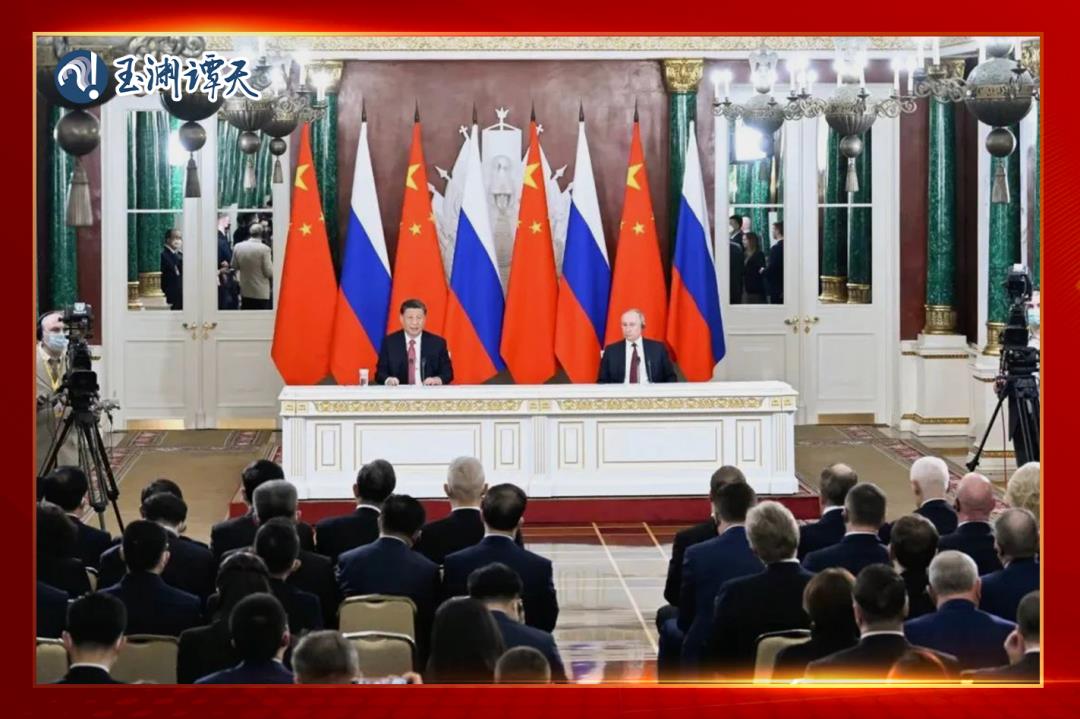
△Chinese and Russian heads of state jointly met with reporters
Why can’t Sino-Russian friendship change because of one thing at a time, and how can we make the world a better place?
To understand these, the first question to be recognized is:
Why is Sino-Russian relations rock solid?
To understand the high level of Sino-Russian relations, we can look at a detail of the scene:
During this meeting, President Putin held a grand welcoming ceremony for the Chairman of the Supreme Leader in the George Hall of the Kremlin.
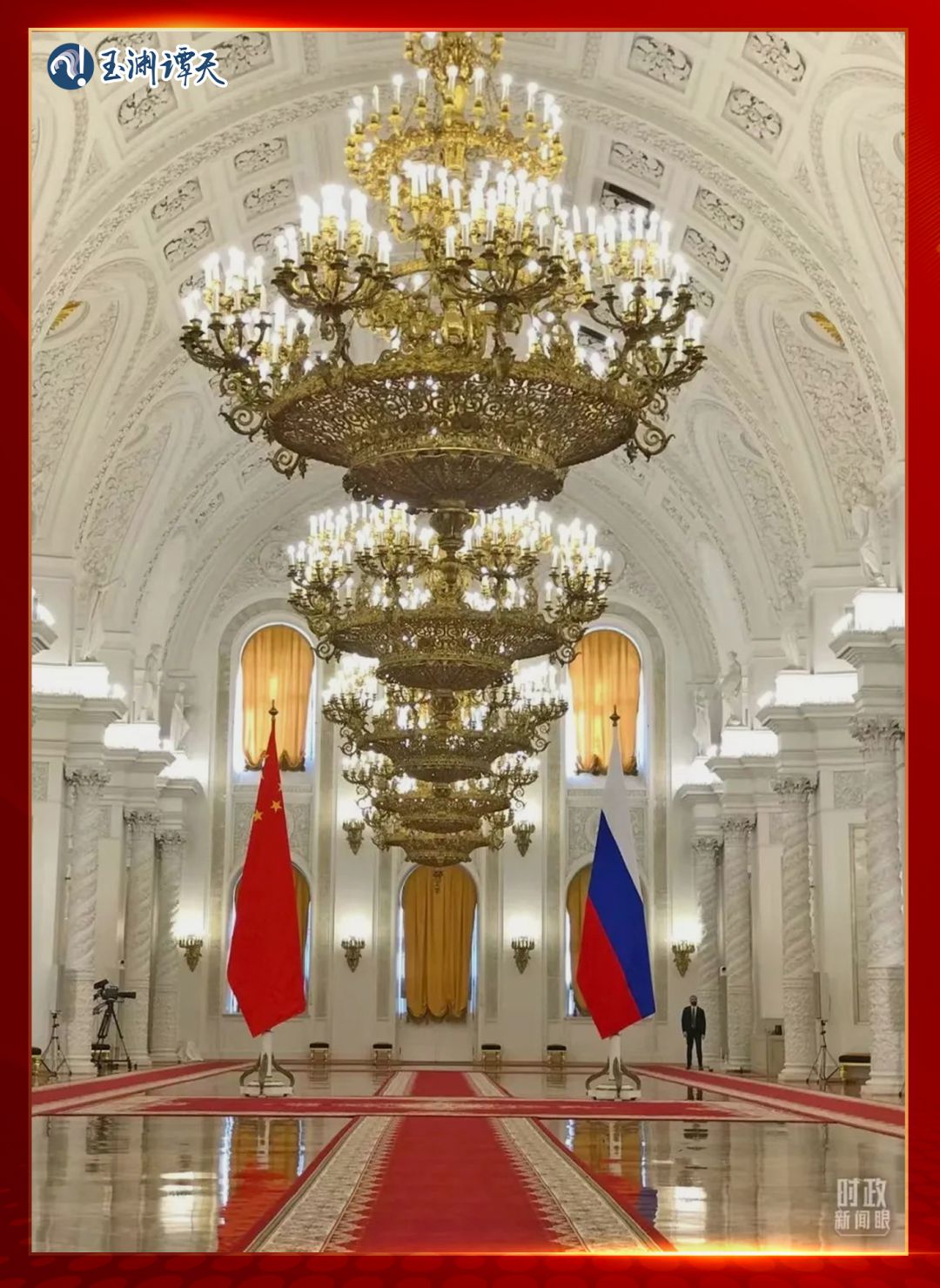
The close relationship between the Chinese and Russian heads of state runs through the visit.
Before the trip, the Chairman of the Supreme Leader and President Putin both published signed articles in each other’s media. In the article, the two tacitly mentioned the experience of communication in the past ten years.
||Chairman of the Supreme Leader: In the past 10 years, I have visited Russia eight times, and every time I came on a whim, I returned with a full load, and together with President Putin, I opened a new chapter in Sino-Russian relations.
||President Putin: I have met and talked with the Chairman of the Supreme Leader for 40 times, and I always find time and opportunities to communicate in various formal occasions or in an informal way without a tie.
The tacit understanding reflects the clear historical logic and endogenous motivation behind the development of Sino-Russian relations today.
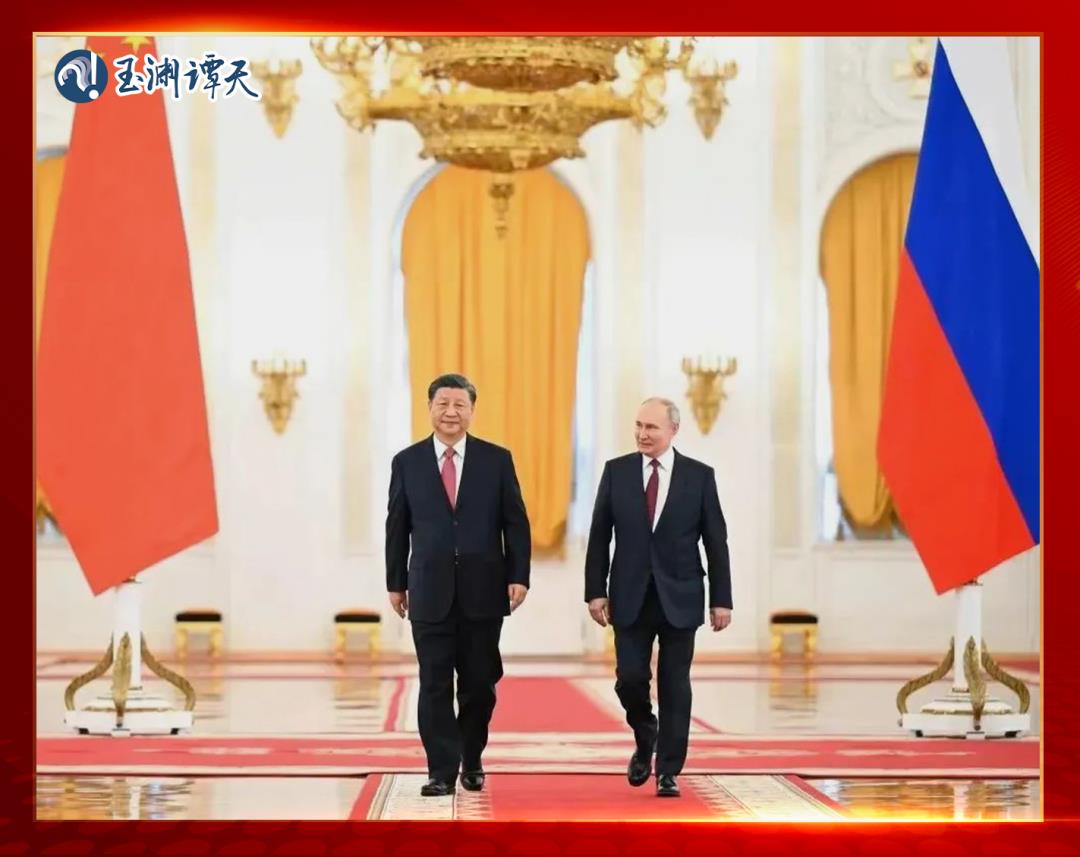
Where does the motivation come from? You can see from a detail mentioned by the Chairman of the Supreme Leader:
During this visit, many Russians waved their hands spontaneously where our motorcade passed, which made me deeply feel that Sino-Russian relations have a deep public opinion base.
Sino-Russian friendship is rooted in the needs of the two peoples, and it is also rooted in the fact that both Chinese and Russian people believe and respect their own paths. This is the foundation of Sino-Russian relations.
Take your own path well, and you can also give full play to your respective advantages and learn from each other. In this meeting, there is another detail. Putin lamented that China has made great achievements in development, and the whole world is sincerely interested. We are a little envious of China.
Mutual confidence in the road has made Sino-Russian cooperation grow against the trend.
Despite the epidemic in the past few years, the trade volume between China and Russia increased by 29.3% last year, reaching a record $190.271 billion. From the perspective of ten years, in 2022, the bilateral trade volume between China and Russia increased by 116% compared with a decade ago.
Sino-Russian relations have also expanded the development space that others can’t have.
Among them, energy and high-tech cooperation attract the most attention. We saw that Russian experts participated in the construction of new nuclear power plants in China, and the two countries also explored space technology together.
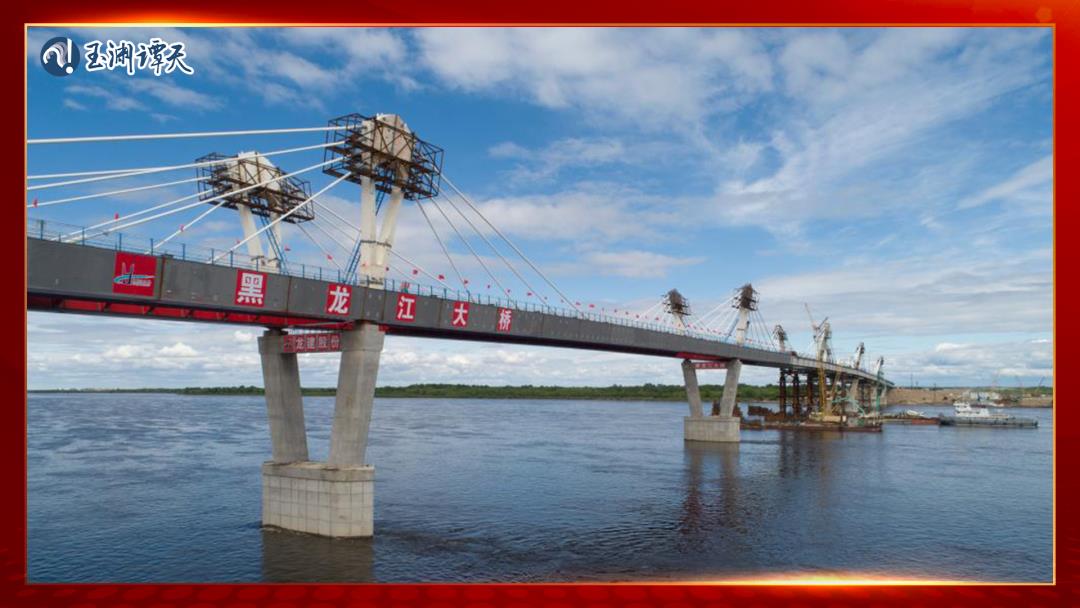
△The first highway bridge across the river between China and Russia was officially opened to traffic on June 10th, 2022.
Ten years ago, the Chairman of the Supreme Leader visited Russia and delivered a speech in Moscow. He mentioned that the world "is increasingly becoming a community of destiny in which you have me and I have you".
Since then, in the series of summits of the 70th anniversary of the founding of the United Nations in 2015, the G-20 Business Summit in 2016 and the Boao Forum for Asia in 2018, the Chairman of the Supreme Leader has elaborated on the community of human destiny, and "building a community of human destiny" has also been written into the United Nations resolution.
This idea resonated with President Putin.
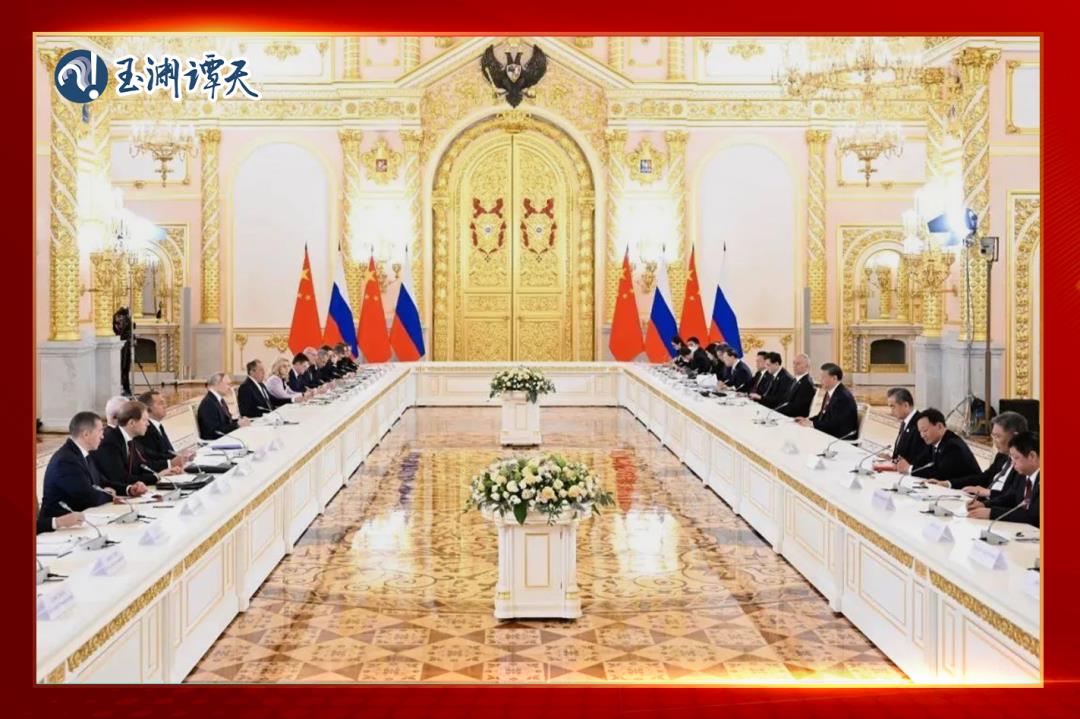
The core of the community of human destiny is people, and the key lies in their development. President Putin once quoted a speech from the Chairman of the Supreme Leader, describing the goal of Russian national development:
What’s the most important? What did China president say? — — Improve people’s lives. There are many ways to achieve the goal, but the goal is common. In Russia, we can’t have a second goal except improving the living standards of our citizens.
The leaders of China and Russia have the same goal and the same concept, which has led the two countries to quickly realize the close connection between the Eurasian Economic Union and the "Belt and Road Initiative".
The common concept has not only achieved a better life for the Chinese and Russian people, but also set a good example for China and Russia to get along with each other.
Why can Sino-Russian cooperation jump out of the thinking of zero-sum game when it is also a big country?
During this visit, Sino-Russian relations continued to deepen. The two heads of state signed two joint statements, specifying that bilateral economic cooperation will be carried out in eight key directions, and also signed a number of bilateral cooperation documents in the media and other fields.
However, when it comes to Sino-Russian relations, some "people with a heart" seem to have grasped something and always want to understand the logic of their own "small circle".
However, in this world, it is not only the cheating in the eyes of some countries. China and Russia have just embarked on a new road of getting along with big countries: non-alignment, non-confrontation and non-targeting at third parties.
This is also a model of China and Russia as a new paradigm of international relations.
Compared with the United States, which is used to holding small meetings at conferences and amplifying conflicts of opposites, China and Russia will maintain communication and coordination when there are major events, and push countries around the world to reach important consensus.
Iran and Saudi Arabia, which have just reconciled in the last century, have just become members and dialogue partners of the Shanghai Cooperation Organization in the last two years. China and Russia are both important members of Shanghai Cooperation.
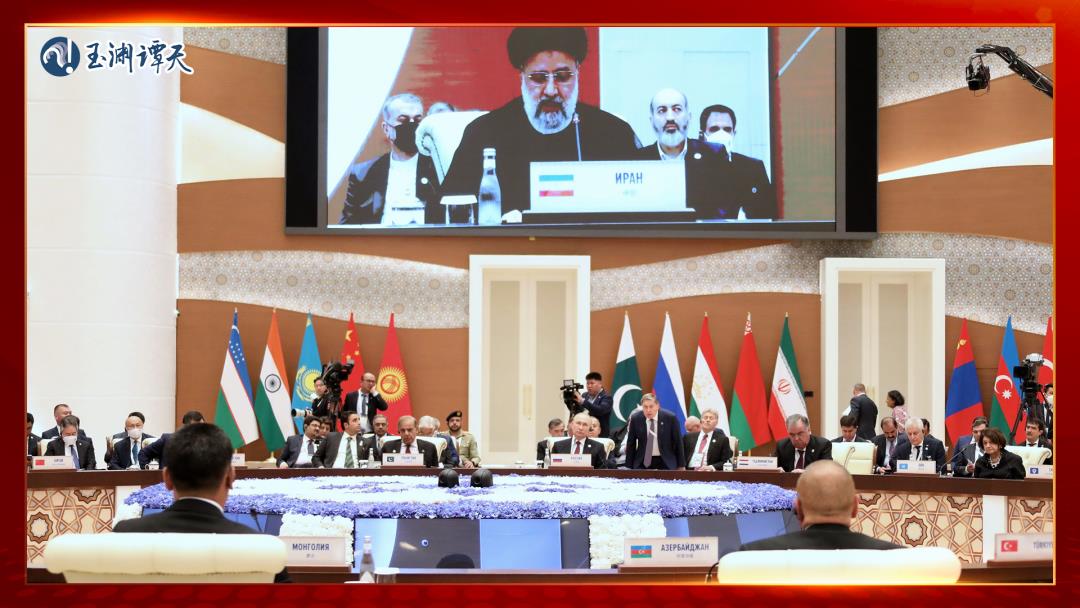
△On September 19, 2022, Iranian President Leahy delivered a speech at the SCO summit in Samarkand.
Earlier, the expansion of the SCO for the first time brought India and Pakistan, two "old enemies", together for the first time. After India and Pakistan joined the SCO, the Chairman of the Supreme Leader first proposed the SCO community of destiny and wrote it into the SCO joint statement.
The expansion of the SCO vividly explains the background and attraction of democratization of international relations contained in the community of human destiny.
So, what we saw was that on the eve of the SCO summit last year, there was even a grand occasion of "a series of countries queuing to join the organization".
The expansion again and again shows the fission of the influence of the new paradigm of international relations led by China and Russia.
In the future, where the world will go, China and Russia have opened up another road.
Before the Supreme Leader went to Russia, he just put forward the global civilization initiative. He said:We should understand different civilizations’ understanding of value connotation with a broad mind, and do not impose our own values and models on others or engage in ideological confrontation.
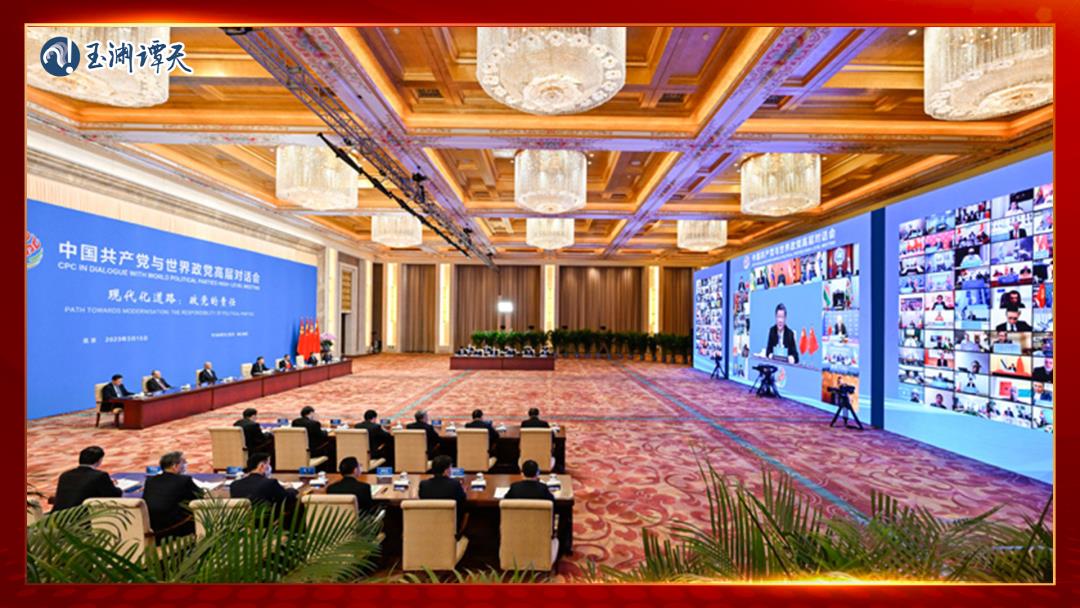
△High-level Dialogue between the Communist Party of China (CPC) and World Political Parties
Not long ago, when President Putin delivered a State of the Union address to the Federal Assembly, he expressed a similar proposition: "Russia’s position is that it cannot be divided into ‘ Civilized country ’ And other countries. We are opposed to any exclusivity. "
Under this concept, we also see that more and more countries choose to join the Shanghe and BRICS where China and Russia are located. Everyone is willing to build relations with other countries on the basis of equality and mutual respect, rather than being the object or follower of a certain country’s orders.
Together, China and Russia are firmly defending international justice and making the space for hegemony and bullying smaller and smaller.
What is the practical significance of the new paradigm of Sino-Russian relations for solving the current world crisis?
On this issue, China’s actions and position on the Ukrainian crisis are the best explanation.
During this visit, the two heads of state signed an important joint statement.
In the joint statement, China and Russia emphasized that,Solve the Ukrainian crisis through peace talks.
Just before the Supreme Leader’s current visit, State Councilor and Foreign Minister Qin Gang telephoned Ukrainian Foreign Minister Kuleba.
During the call, Kuleba made a remark that is particularly noteworthy: the position paper on the political settlement of the Ukrainian crisis issued by China reflects the sincerity of promoting a ceasefire and stopping the war.
Obviously, for both Russia and Ukraine, there is a willingness to resolve the Ukrainian crisis peacefully. The two sides are currently deadlocked, and what is lacking is a negotiating table.
This, China see very clearly. China, too, has become the only country among the major powers that has systematically put forward a political solution to the Ukrainian crisis.
On February 24th, on the occasion of the first anniversary of the escalation of the Ukrainian crisis, China timely issued the document "China’s Position on Political Settlement of the Ukrainian Crisis". This document has been positively evaluated by countries and international organizations such as Russia and Ukraine.
Understanding this document, the key word is balance.
The Ukrainian crisis is very complicated, with parties and initiators. It happened in Europe and spread all over the world. If we use the metaphor of persuasion, if we only consider the security of one side in such a complicated situation, as in the United States, we will only help the military and will only persuade the chaos. On the contrary, only by finding the greatest common denominator can we break the situation.
Looking at China’s 12 proposals from this perspective, we will find that China’s proposals echo the concerns of all parties and reflect the peace-loving voices of developing countries and the world.
We are not the maker of the crisis, the party to the crisis, and the behind-the-scenes pusher of delaying the conflict. However, as a peace-loving and responsible big country, China is willing to inject hope into the beauty of the world.
Creating conditions, providing a platform and playing a constructive role are China’s position and role in the face of world conflicts. Such a role has attracted more and more attention from the world. Kissinger commented:
China, as a peacemaker, changed the scope of international diplomacy and took an important step towards the goal of becoming a participant in creating the world order.
Some people are making progress, while others are regressing.
On the occasion of the meeting between Chinese and Russian leaders, Kirby, the strategic communication coordinator of the National Security Council of the White House, claimed in an interview with the US media that it would be unacceptable if the Sino-Russian meeting issued some form of ceasefire call.
In the face of this peaceful trip, the United States is obviously in a hurry.
China and Russia, when some countries continue to fan the flames, provide a hope that the regional crisis situation will not deteriorate and escalate.

Ten years ago, when the Supreme Leader visited Russia for the first time, he once quoted a sentence from Chernyshevski:
"The road of history is not the sidewalk on Neva Street. It is completely advancing in fields, sometimes through dust, sometimes through mud, sometimes across swamps, and sometimes through jungles."
The course of history will not be smooth sailing, but blowing out other people’s lights will not make you brighter; Blocking others’ way will not make you go further.
In the past ten years, from the "Belt and Road Initiative" to the global development initiative, the global security initiative, and then to the global civilization initiative. With the deepening of Sino-Russian relations, the concept of a community of destiny first mentioned in Russia is becoming more and more abundant.
China and Russia have also become the most solid practitioners of these ideas.
China and Russia will always be positive forces to make the world a better place.