The five major scenes of "First Love in a Cycle" are full of suspense and brain-burning, but the mobile phone and snacks have all passed through.

The first love in a cycle was launched, which attracted a large audience with its unique story and suspenseful plot.

First Love in Cycle is adapted from DTT’s best-selling novel The Time Machine, which mainly tells the sweet adventures of Ye Youning and Sunflower Girl. No matter in which time and space, they all have an intersection, which confirms the title of "circular first love" Ye Youning traveled back to the time and space in 2006, which was also his happiest and most carefree time and space. In that time and space, he and Xia Wenxi were deskmates, and they were also each other’s first love.

However, many netizens said that "First Love in a Cycle" hit "I Want to See You". It is best not to use double speed when watching this drama, otherwise the plot will not connect. The man and the woman are talking in different time and space, relying on a mobile phone. Something happened in 2006 changed the status quo of the man in 2019, so the man in 2019 asked the woman to stop the man in 2006. The acting skills of Shi Baiyu and Amy are also very natural, and the scenes of their student days are not inconsistent at all.

There are only 24 episodes of "First Love in a Cycle", and there are already five scenes in the middle of the series. Let’s find them together.

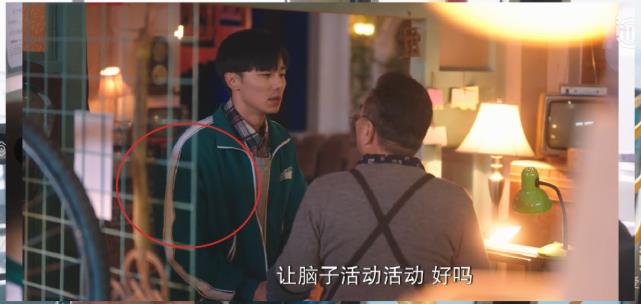
The first shot: the sun shines while it thunders.

Ye Youning traveled through the time and space in 2006, and he once again became a deskmate with the hostess Xia Wenxi. In the time and space of 2006, he couldn’t attend class with peace of mind, and he was worried about his real grandfather.

Ye Youning has been thinking about how to cross back, and he told Xia Wenxi about it. As a result, Xia Wenxi of Grade Two actually believed it, and the two of them tried many ways together.

One day, Ye Youning went home early and wanted to cross back. At this time, there was lightning and thunder. Ye Youning said goodbye to his grandfather and ran to his house to wait for the good news. As a result, he did not cross back. In addition, Mr. Wang in the class announced that Ye Youning got 143 points, another got 135 points, and the rest didn’t do well.

If you look closely, you will see that it thunders and the sun shines high. This is the same place. Obviously, this is a goof shot.

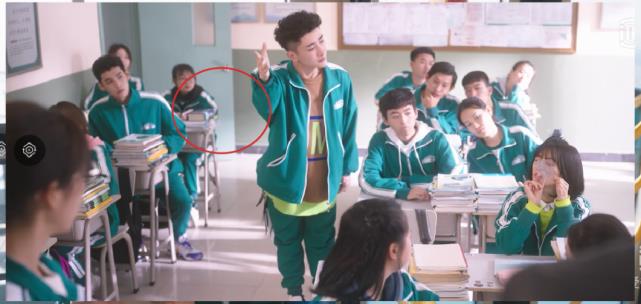
The second goof shot: the physical book has also passed through?

In 2006, Ye Youning was bent on crossing back to reality, and as a result, he had a small car accident and lost his memory. Ye Youning of Time and Space in 2019 got in touch with Xia Wenxi in 2006. Ye Youning of Time and Space in 2019 told Xia Wenxi that he must stop Ye Youning of Time and Space in 2006 from attending the physics lecture. Xia Wenxi tried every means to obstruct after receiving the task.

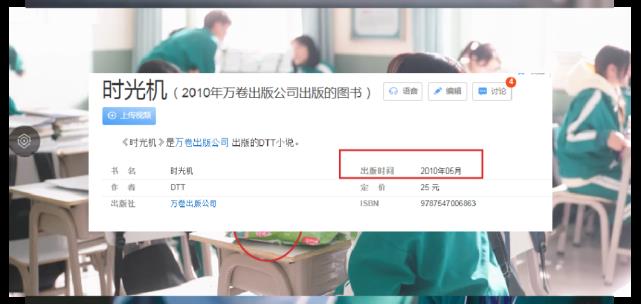
Once she ran to the bookstore, a quick shot flashed in the bookstore, that is, the novel "Time Machine", which is the original work of "First Love in a Cycle".

The time and space was in 2006, and the novel Time Machine was published in May 2010. Obviously, this is also a goof shot. The man not only passed through, but also the physical book. This brain hole is also big enough.

The third shot: Wang satiated online celebrity snacks also crossed.

Xia Wenxi wants Ye Youning to join the basketball team, but Ye Youning doesn’t want to. At that time, they were all in time and space in 2006. In order for Ye Youning to take part in the competition, Xia Wenxi thought of many ways that didn’t work. I had to impress Ye Youning with delicious food, so the monitor gave her a score.

Pay attention to their time and space in 2006, while online celebrity Snack King has been a snack for nearly two years, which is probably around 2018. It seems that online celebrity snacks have also crossed!

The fourth shot: Bicycles run faster than buses?

Tingting, the female number two, is a schoolmaster. She likes the male number two silently. One morning, Tingting got on the bus. Outside the window, Male No.2 was riding a bicycle.

Tingting, with a happy face, expressed her unrequited love very vividly. If you take a closer look, you will see that Tingting’s bus is almost at the same speed as that of Male Two’s bike. This goof is speechless. It may be parallel for a few seconds, but then the bus is much faster. It should be that the crew dozed off and forgot to show this shot.

The fifth goof shot: Can mobile phones send questions in 2006?

In 2006, how Xia Wenxi persuaded Ye Youning in time and space, he didn’t have a heart, and he wouldn’t take part in the basketball game. So, she had a brainwave and let Ye Youning in 2019 debut, which may be difficult for him.

Sure enough, Ye Youning of Time and Space in 2019 gave a question, and the answer was 0. Indeed, in 2006, Ye Youning of Time and Space got the wrong answer and was willing to admit defeat, so Ye Youning had to take part in the competition.

However, in 2006, the mobile phone was not a smart machine, so it was impossible to send a question at all. Xiaobian had to laugh for three seconds for this shot.

Qiushi. com commentator: accelerate the construction of a new development pattern

  "Building a new development pattern with the domestic big cycle as the main body and the domestic and international double cycles promoting each other is a major decision made according to the changes in China’s development stage, environment and conditions, especially based on the changes in China’s comparative advantages."

  In the important speech recently published by Qiushi magazine, General Secretary of the Supreme Leader, "Implementing the new development concept in the new development stage will inevitably require the construction of a new development pattern", General Secretary of the Supreme Leader comprehensively analyzed and explained the construction of a new development pattern, and asked the whole party to accurately grasp the strategic concept of accelerating the construction of a new development pattern from a global and strategic perspective. The general secretary pointed out that building a new development pattern is "a first move to grasp the initiative of development, not a forced move or an expedient measure", "an open domestic and international double cycle, not a closed domestic single cycle" and "a domestic large cycle based on a unified national market as the main body, not a small self-cycle everywhere". The general secretary stressed that building a new development pattern "is a systematic and deep-seated change that concerns the overall situation, and a strategic plan based on the present and with a long-term perspective". Fundamentally speaking, "it is an inevitable choice to adapt to the requirements of China’s new stage of development and shape new advantages in international cooperation and competition".

  Building a new development pattern is a systematic project. It is necessary to "focus on the top", strengthen strategic planning and top-level design, and "divide it into details" to grasp the focus of work.

  "Accelerate the cultivation of a complete domestic demand system".This is an important foundation for unblocking the national economic cycle and strengthening the main position of the domestic big cycle. Market resources are China’s great advantage, and we must constantly consolidate and strengthen this advantage to provide strong support for building a new development pattern. It is necessary to promote deep-seated reform and strengthen policy guidance, and strive to get through the key blocking points that restrict the economic cycle; Taking meeting domestic demand as the basic foothold, we will form a higher level dynamic balance of demand pulling supply and supply creating demand; Strengthen the construction of modern circulation system and lay a solid foundation for domestic and international double circulation.

  "Accelerate the self-reliance and self-improvement of science and technology".This is the key to ensure the smooth domestic circulation and shape China’s new advantages in the international circulation. General Secretary of the Supreme Leader has repeatedly stressed that the most essential feature of building a new development pattern is to achieve a high level of self-reliance and self-improvement. We should understand this issue from the perspective of survival and development, comprehensively strengthen the deployment of scientific and technological innovation, and give full play to the supporting role of science and technology. It is necessary to lay a solid foundation for key core technologies and accelerate the capture of "stuck neck" technologies in important fields; Fully stimulate the innovation vitality of talents, create more world-class leading scientific and technological talents and innovative teams, and cultivate a reserve army of young scientific and technological talents with international competitiveness.

  "Promote the optimization and upgrading of industrial chain supply chain".This is an urgent need to stabilize the main position of the domestic big cycle and enhance the driving ability in the international big cycle. Manufacturing is the lifeblood of China’s economy, the foundation of the country and the foundation of a strong country. This time, China’s complete manufacturing system has played a vital supporting role in the fight against the COVID-19 epidemic, which once again proves the significance of manufacturing to the development and security of the country, especially big countries. We should attach more importance to enhancing the toughness and competitiveness of the industrial chain, and strive to build an independent, controllable, safe and efficient industrial chain supply chain; Take effective measures to improve the embeddedness of enterprises and promote the orderly transfer of industries in China.

  "Promote the modernization of agriculture and rural areas".Urban-rural economic cycle is an important aspect of domestic macro-cycle, and it is also a key factor to ensure the healthy relationship between domestic and international two cycles. If the nation is to be revived, the countryside will be revitalized. Realizing the modernization of agriculture and rural areas is an important task of building a socialist modern country in an all-round way and an inevitable requirement to solve the problem of insufficient development imbalance. We must persist in taking solving the "three rural issues" as the top priority of the whole party’s work and fully implement the rural revitalization strategy; Realize the effective connection between consolidating and expanding the achievements of poverty alleviation and rural revitalization, and promote economic and social development and improvement of people’s lives; Persist in promoting the structural reform of agricultural supply side, and strengthen the construction of grain production functional areas, important agricultural product production protection areas and characteristic agricultural product advantage areas; Ensure that the grain is basically self-sufficient and the rations are absolutely safe, and ensure that Chinese’s rice bowl is firmly in his own hands.

  "Improve people’s quality of life".This is the starting point and the end result of the smooth domestic circulation, and it is also the key connection point for the mutual promotion of domestic and international double circulation. Everything our party has done is to make people’s lives happier and more dignified. It is the fundamental purpose of socialist production to adapt to the changes in people’s needs, strive to run various livelihood undertakings well, and make people’s lives better and better. It is necessary to adhere to the principle of distribution according to work and the coexistence of various modes of distribution, effectively protect the treatment and rights of workers, and continuously expand middle-income groups; Adhere to the problem orientation, do our best and do what we can, solidly promote common prosperity, and constantly enhance the people’s sense of acquisition, happiness and security.

  "firmly hold the bottom line of safe development."This is an important prerequisite and guarantee for building a new development pattern, and it is also the proper meaning in the problem of unblocking the domestic big cycle. Security is the premise of development, and development is the guarantee of security. We must adhere to the overall concept of national security, adhere to the supremacy of national interests, take people’s security as the purpose, take political security as the foundation, and strengthen the national security system and capacity building; Grasp the relationship between openness and security, weave an open safety net tightly, and enhance the ability to dynamically safeguard national security in the opening environment; Put the protection of people’s lives and safety in the first place, comprehensively improve the ability of public security, and promote people’s living and working in peace and contentment, social stability and order, and long-term national stability.

  (Editor: Yin Xia, Chen Yilin)

National Catalogue of Excellent Crop Varieties Promotion (2023)

Foreword

  Since the 18th National Congress of the Communist Party of China, the General Secretary of the Supreme Leader has attached great importance to seed industry, and repeatedly stressed the need to make up his mind to develop national seed industry and ensure national food security from the source. When the General Secretary of the Supreme Leader presided over the deliberation of the seed industry revitalization action plan in 2021, he emphasized that agricultural modernization is based on seeds, and the safety of seed sources should be raised to a strategic level related to national security. The 20th National Congress of the Communist Party of China put forward the important task of accelerating the construction of a strong agricultural country and consolidating the foundation of food security in all directions, and called for in-depth implementation of the seed industry revitalization action. At the Central Rural Work Conference in 2022, the General Secretary of the Supreme Leader emphasized that the seed industry revitalization action should be effectively achieved and the home-grown varieties should be firmly in their own hands. These important instructions and strategic arrangements have pointed out the way forward and provided fundamental follow-up for promoting the revitalization of seed industry in the new era and new journey.

  In recent years, it is an important period for the rapid development of seed industry in China. The vitality of breeding innovation has been released and the pace of variety breeding has been obviously accelerated. In terms of the number of varieties, the number of approved varieties has increased greatly, providing more varieties for agricultural production; In terms of variety quality, high-quality green varieties are accelerated, which provides an important variety guarantee to meet the needs of people’s better life; In terms of variety types, special varieties have been approved one after another, which provides strong variety support for adapting to the transformation of agricultural production mode. At the same time, we should also see that with the rapid growth of the number of varieties, the problem of homogenization of varieties has become increasingly prominent, which is not conducive to the innovation and upgrading of varieties, but also brings difficulties to farmers’ scientific selection and use of seeds.

  Ensuring the stable and safe supply of grain and important agricultural products has always been a top priority in building an agricultural power, and breeding and popularizing excellent varieties plays an important role in achieving this major strategic goal. In order to speed up the popularization and application of excellent varieties, improve the yield and quality level, and help guide farmers to select seeds scientifically and use seeds correctly, the Ministry of Agriculture and Rural Affairs has decided to compile and publish a national catalogue for the promotion of excellent varieties of crops from 2023, effectively guiding the industry to focus on demand breeding innovation and speeding up the upgrading of varieties.

I. General situation

  In 2023, this catalogue will release 10 kinds of crops, including rice, wheat, corn, soybean, cotton, rape, peanut, potato, Chinese cabbage and cabbage, focusing on classification to guide the popularization and application of crop varieties. The released varieties include four types, including backbone type, growth type, emerging type and special type, forming a relatively complete variety promotion echelon to better serve the needs of agricultural seeds and farmers’ seed selection.

  The backbone varieties have been approved (registered) for more than five years, the main grain, cotton and oil varieties have entered the top 10 in the suitable ecological area for three consecutive years, and the key vegetable varieties have entered the fifth place in the country for three consecutive years.

  The growing variety has been approved (registered) for promotion for more than three years, and has outstanding performance in the national core exhibition base or provincial exhibition evaluation. The promotion area has increased rapidly, and it has entered the top 30 in the suitable ecological area (grain, cotton and oil) or the national (key vegetables), and is expected to grow into a backbone variety.

  The budding variety is approved (registered) and popularized within three years, with good yield, resistance and quality, excellent comprehensive characters, excellent performance in the national core exhibition base or provincial exhibition evaluation, and great market potential. The formation enterprise or the integrated enterprise of breeding, breeding and promotion plans to promote it, and it is expected to further become a growing and backbone variety.

  Specially-specialized varieties are newly approved (registered), meet the consumption needs of diversified markets, and can significantly improve the utilization rate of resources such as land, fertilizer, water, light and temperature, or have made breakthroughs and qualitative improvements in yield, resistance, quality, growth period, mechanization and new farming systems (such as ratooning rice and strip compound planting).

  According to the above classification principle, based on the data of variety test, exhibition evaluation, statistics of main varieties’ extension area and production and operation of seed enterprises, recommended by provincial seed industry management departments and selected by experts, a total of 241 excellent varieties were introduced in 2023, including 36 rice, 29 wheat, 32 corn, 13 cotton, 22 soybeans, 26 rapeseed, 22 peanuts, 20 potatoes and 21 Chinese cabbage.

Second, rice varieties

  (a) backbone varieties (10)

  Longjing 31, Nanjing 9108, Huang Huazhan, Jingliangyou 534, Jingliangyou Huazhan, Zhongjiazao 17, Longliangyou Huazhan, Quanyou 822, Yixiangyou 2115 and Meixiangzhan 2.

  (2) Growing varieties (9)

  Suijing 27, Jingliangyou 8612, Longliangyou 534, Yexiang Youlisi, Zhongzao 39, Quanyou Silk Miao, Quanliangyou Silk Miao, Yongyou 1540 and Nanjing 5718.

  (3) Emergent varieties (15 varieties)

  Weiliangyou 7713, Chuankangyou 2115, Taiyou 808, Weiliangyou 8612, Liangyou 5078, Tsuen Liangyou 069, Zhongzheyou H7, Tsuen Liangyou 1606, Yulongyou 1611, Jiuyou27, Huazheyou 210, Zhuoliangyou 1126, Ningxiangjing No.9 and Qing Xiang Youxiang No.19.

  (4) Specially specialized varieties (2)

  Hanyou 73 (water-saving and drought-resistant rice) and Fengliang You Xiang No.1 (ratooning rice).

Third, wheat varieties

  (a) backbone varieties (10)

  Jimai 22, Bainong 207, Xinong 979, Zhengmai 379, Shan Nong 28, Luyuan 502, Chuanmai 104, Zhenmai 12, Zhongmai 175 and Zhongmai 1062.

  (2) Growing varieties (8)

  Jimai 44, Bainong 4199, Xinong 511, Zhoumai 36, Chuanmai 605, Ningmai 26, Luohan 22 and Zhongmai 36.

  (3) Emergent varieties (9)

  Zhongmai 578, Aimai 180, Jimai 765, Lunxuan 49, Chuanfu 14, Chuanmai 93, Young Mai 33, Huamai 11 and Weimai 9.

  (4) Specially specialized varieties (2)

  Jingmai 188 (salt-tolerant wheat) and Xiaoyan 60 (salt-tolerant wheat).

Fourth, corn varieties

  (A) backbone varieties (11)

  Zheng Dan 958, Xianyu 335, Jingke 968, denghai 605, Demeiya 1, Demeiya 3, Heyu 187, SEAO 29, Jingnongke 728, Zhongdan 808 and Zhengda 808.

  (2) Growing varieties (8)

  Yufeng 303, Zhongke Yu 505, Zhengyuanyu 432, Dongdan 1331, Youdi 919, Qiule 368, Xianda 901, MC121.

  (3) Emergent varieties (8)

  Jingke 999, Agricultural University 778, Xinghui 908, Zhongyu 303, Luodan 297, Shandan 650, Xiangyu 878 and Tie391.

  (4) Specially specialized varieties (5)

  Jingkenuo 2000 (fresh waxy corn), Wannuo 2000 (fresh waxy corn), Jinguan 218 (fresh sweet corn), Beinong Silage 368 (silage corn) and Shenbao 6 (popcorn).

Five,Soybean varieties

  (a) backbone varieties (10)

  Heihe 43, Qihuang 34, Keshan 1, Dengke 5, Zhonghuang 13, Jinyuan 55, Jidou 12, Henong 95, Dongnong 63 and Huajiang 2.

  (2) Growing varieties (6)

  Suinong 52, Heinong 84, Zhonghuang 901, Mengdou 1137, Hedou 33 and Henong 85.

  (3) Emergent varieties (2)

  Sui Nong 94, Zheng 1307.

  (4) Specially specialized varieties (4)

  Suitable for soybean and corn strip compound planting: Handou 13, Xudou 18, Nanxiadao 25 and Jidou 17.

Six, rape varieties

  (a) backbone varieties (9)

  Fengyou 737, Fengyou 730, Huayouza 62, zhongshuang 11, Huayouza 9, Sunshine 2009, Qinyou 10, Zheyou 50 and Qingza 5.

  (2) Growing varieties (6)

  Qingyou 3, Zhongyouza 19, Dadi 199, Huayouza 50, Ganyouza 8 and Qingza 12.

  (3) Emergent varieties (6)

  Zhongyouza 501, Changyou 777, Chuanyou 81, Qinyou 1618, Ningza 182 and Baoyou 150.

  (4) Specially specialized varieties (5)

  Sunshine 131 (short-growing rape), Fengyou 320 (short-growing rape), Huayouza 62R (clubroot-resistant rape), Huayou 2129 (high-oleic rape) and Kangyou 3 (yellow-seeded high-oleic rape).

Seven, peanut varieties

  (a) backbone varieties (9)

  Shanhua 9, Yuhua 37, Shanhua 7, Yuanza 9102, Huayu 23, Yuhua 23, Huayu 25, Wanhua 2 and Zhongkaihua 1.

  (2) Growing varieties (4)

  Yuhua No.22, Kainong No.71, Jihua No.19 and Fuyu are four red.

  (3) Emergent varieties (5)

  Hanghua 2, Yuhua 18, Tianfu 33, Yuhua 93 and Zhonghua 215.

  (4) Specially specialized varieties (4)

  Jihuatian No.1 (high sugar content fresh food), Shuhua No.9 (high sugar content fresh food), Jihua No.23 (extra-early-maturing variety) and Yuhua No.29 (black peanut variety).

Eight, cotton varieties 

  (a) backbone varieties (5)

  Lumianyan 37, Xinluzhong 67, Xinluzhong 66, Huiyuan 720 and Hua Zamian H318.

  (2) Growing varieties (3)

  Tahe 2, Xinluzao 84 and Xinluzhong 87.

  (3) Emergent varieties (2)

  Zhong 7700 and Zhongshengmian 17.

  (4) Specially specialized varieties (3)

  Yuanmianxin 13305 (machine-harvested variety), Gangzamian 10 (special high-strength variety) and Zhongmian 425 (early-maturing variety).

Nine, potato varieties

  (a) backbone varieties (4)

  Feiwuruita, Jizhangshu No.12, Longshu No.7, Atlantic Ocean.

  (2) Growing varieties (6)

  Lishu 6, Zhongshu 5, Jinshu 16, Longshu 10, Xisen 6 and Yunshu 505.

  (3) Emergent varieties (6)

  Zhongshu 27, Zhongshuzao 35, Longshu 12, Minshu 1, Qianyu 8 and Hubei Potato 16.

  (4) Specially specialized varieties (4)

  Zhongshuzao 39 (fresh, starch-processed variety), Dongnong 310 (starch-processed variety), Kexin 30 (fresh, fried chips and fried strips) and Yunshu 304 (fried chips, fried strips and zinc-rich potato chips).

X. Varieties of Chinese Cabbage

  (a) backbone varieties (9)

  Improved Qingza No.3, Jiaoshu Qiuqiu Wang, Zaoshu No.5, Xixing 90, Jingqiu No.3, Niupai No.19, Hualiang 836, Xixing 78 and Jingyan Kuaicai No.2..

  (2) Growing varieties (8)

  Jingyan Fast Food, CR117, Xiaoyi Heqiu, Xinxiang Xiaobao 23, Qinghua 76, Hualiang 2000, Qiulv 60 and Youlv 3.

  (3) Emergent varieties (2)

  Sagitar 8, Jingqiu 1518.

  (4) Specially specialized varieties (2)

  Dongguan 097 (high taste quality variety) and Lvzhu70 (high taste quality variety).

Eleven, cabbage varieties

  (a) backbone varieties (3)

  Jingfeng 1, Zhonggan 11 and Zhonggan 21.

  (2) Growing varieties (8)

  Zhonggan 8398, Zhonggan 628, Zhonggan 56, Zhonggan 15, Chunfeng, Zhengchun, Xiyuan No.4 and Qiushi No.1..

  (3) Emergent varieties (9)

  YR zhonggan 21, zhonggan 1305, xinggan 23, bright ball, shuanghuan 60, prospect 2, full moon 55, xinggan 279 and chunfeng 007.


  See the annex for the text.

Member Wang Xiulin: There are three main problems in the integration of urban and rural sanitation.

  Xinhua News Agency, Beijing, March 7 (Reporter Pan Linqing) Wang Xiulin, member of Chinese People’s Political Consultative Conference and vice chairman of Qingdao Municipal Political Consultative Conference, pointed out that the integration of urban and rural sanitation is a livelihood project to meet people’s expectations and improve rural living environment. In recent years, the integration of urban and rural sanitation in China has improved significantly, but management still needs to be further strengthened.

  Wang Xiulin said that at present, there are three main problems in the integration of urban and rural sanitation. First, there are double standards in urban and rural areas in environmental governance, and there is a lack of overall planning; Second, the comprehensive management of urban and rural environment "Jiulong Water Control", planning, construction, environmental protection, water conservancy, agriculture and other departments "all manage one pool", it is difficult to form a joint force; Third, the disclosure of environmental protection information is restricted.

  Wang Xiulin suggested that the overall standards for urban and rural sanitation management should be established, the urban-rural and regional divisions should be effectively broken, and unified standards for planning, construction, operation, monitoring, governance and emergency should be realized for sewage treatment and garbage disposal. We should earnestly establish the concept of "green development" among leading cadres at all levels, especially the main leaders of provinces and cities, establish a system of joint departmental meetings, strengthen the cooperation and linkage of planning, construction, public utilities, agriculture, environmental protection, publicity and other departments, pay close attention to supervision and assessment, and strengthen the accountability of accidents.

  Wang Xiulin proposed to improve the environmental information disclosure mechanism. For example, we can speed up the transformation of the environmental monitoring system model, establish a data warehouse that meets the requirements of the real-time "full monitoring" model on the premise of realizing the unified standards and interconnection of monitoring statistical data management systems in environmental protection, water conservancy, agriculture and other departments, and coordinate the layout of environmental monitoring stations such as regional pollution sources and key river basins, so as to integrate and upgrade the current "segmented monitoring" system into a unified and real-time "full monitoring".

Improve the unified, standardized and fair judicial expertise system.

  [Introduction to the author]Professor of China University of Political Science and Law, doctoral supervisor, mainly engaged in criminal procedure law research; Associate Professor, Doctor of Law, China University of Political Science and Law.

  [article source]China Judicial Appraisal, No.3, 2015

  [executive summary]Deepening the reform of judicial expertise system is an important content of comprehensively promoting the rule of law and deepening the reform of judicial system. However, at present, the management of the judicial expertise system still restricts the further development of the unified management system of judicial expertise, such as the business scope of the appraisal institutions in the investigation organs and the roster management of the judicial organs. In terms of the implementation procedure of judicial expertise, the problems related to the entrustment and acceptance of judicial expertise, the technical standards and specifications adopted, and the expert responsibility system are still outstanding; In the aspect of litigation procedure, the problems related to the initiation, cross-examination and re-appraisal of judicial expertise have not been well solved. This means that there is still a big obstacle to the development of the unified, standardized and fair judicial expertise system in China, and it is necessary to further improve the unified judicial expertise management system, the standardized judicial expertise implementation procedures and the fair judicial expertise litigation procedures.

  [Keywords:]Judicial expertise, expertise management, expertise implementation procedures, expertise litigation procedures

  Judicial expertise is not only an important part of the judicial system, but also a judicial guarantee system. Judicial expertise serves litigation activities and provides scientific and technical guarantee for fair justice. Its perfection is directly related to the realization of judicial justice, so it has always been the focus of judicial reform. The Decision of the Central Committee of the Communist Party of China on Comprehensively Deepening the Reform and the Decision of the Central Committee of the Communist Party of China on Comprehensively Promoting the Rule of Law adopted by the Third Plenary Session and the Fourth Plenary Session of the 18th CPC Central Committee require deepening the reform of the judicial system, improving the unified judicial expertise management system, speeding up the construction of a fair, efficient and authoritative socialist judicial system, and making the people feel fair and just in every judicial case. Based on the main problems encountered in the reform of judicial expertise system in recent years, this paper puts forward some ideas to improve the judicial expertise system under the background of comprehensively promoting the rule of law. In view of the fact that the reform of judicial expertise system needs the overall promotion and coordination of litigation system, evidence system and administrative management system, this paper discusses it from three aspects: unified management of judicial expertise, implementation procedure of judicial expertise and litigation procedure of judicial expertise.

  A sound and unified management system of judicial expertise

  There have been two major drawbacks in the management of judicial expertise in China: first, the establishment of judicial expertise institutions is chaotic; Second, the practice management of judicial authentication institutions is decentralized, which leads to repeated authentication and multiple authentication. Faced with many appraisal opinions with different conclusions, the public security and judicial organs generally tend to trust and adopt the appraisal opinions issued by the appraisal institutions within their own organs, which leads to the problems of "self-investigation and self-examination, self-inspection and self-examination", and the neutrality of the appraisal institutions or appraisers is questioned. In order to solve these problems, the Ministry of Justice has successively issued a series of ministerial regulations or normative documents, including the Measures for the Administration of Registration of Judicial Appraisal Institutions, the Measures for the Administration of Judicial Appraisers, the Provisions on the Classification of Judicial Appraisal Practices (Provisional) and the Provisions on the Administration of Judicial Appraisal Licenses. In 2002, the Supreme People’s Court also issued the Interim Measures for Judicial Expertise of People’s Courts and the Administrative Measures for Entrusting and Organizing Judicial Expertise of People’s Courts, which made corresponding provisions on the management of judicial expertise institutions and personnel of people’s courts. Although these reform measures have improved the management order of judicial expertise, on the whole, they have little effect.

  In order to solve the outstanding problems in the practice of judicial expertise, such as unified management, socialization of appraisal institutions and neutrality of appraisers, on February 28th, 2005, the National People’s Congress Standing Committee (NPCSC) adopted the Decision on the Management of Judicial Expertise (hereinafter referred to as the Decision), which became an important legal basis for the management of judicial expertise. The "Decision" first focuses on solving the problem of the independence of the appraisal institutions, excluding the situation that the investigation organs are entrusted by the society to engage in appraisal services and the people’s courts and judicial administrative departments set up appraisal institutions themselves, and puts the appraisal institutions in a more neutral position that is not attached to any judicial organs or administrative organs. More importantly, the "Decision" establishes a unified management system of judicial expertise: the judicial administrative department has the right to conduct examination and registration management of social expertise institutions applied for by legal persons or other organizations, and to conduct filing and registration management of appraisal institutions of investigation organs. It can be said that the "Decision" is mainly devoted to the unified management of judicial expertise, that is, the judicial administrative organs should achieve the unification of registration, qualification, training, appraisal standards, fees and penalties for violations, and so on. However, in practice, the unified judicial expertise management system is far from being formed, and the judicial expertise management order is still chaotic.

  1.1 The rejection and breakthrough of the unified management of judicial expertise by the investigation organs and appraisal institutions.

  According to the provisions of Article 7 of the Decision, the establishment of an authentication institution by the investigation organ is not only restricted by the needs of investigation, but also the authentication institution "may not accept the entrustment of the society to engage in judicial authentication business". However, the the National People’s Congress Standing Committee (NPCSC) Law Commission affirmed whether the investigation organs can entrust each other and whether the investigation organs can accept the entrustment of the judicial organs to engage in the judicial expertise business, which opened the door for the expansion of the service scope of the authentication institutions of the investigation organs. In view of this reality, the Central Political and Legal Committee turned to require the management mode of combining the direct management of the subordinate departments with the filing and registration of the judicial administrative department for the appraisal institutions and appraisers belonging to the investigation organs [2]. In judicial practice, some investigation organs authorize their appraisal institutions to conduct appraisal business "externally" to the society, thus breaking through the restriction of "not accepting entrustment to engage in judicial appraisal business for the society" in the Decision, so that the reality has not changed much before the reform, and the reform goal of neutrality of appraisal institutions has basically failed.

  1.2 The judicial organs’ erosion and division of the management right of judicial expertise

  The biggest progress of the Decision lies in the abolition of the appraisal institutions of judicial organs, and the complete realization of the "separation of trial and appraisal" necessary for judicial justice. By cutting off the connection between the judicial organs and the appraisal institutions, the Decision aims to ensure the neutrality of the court and reduce the inevitable doubts of the parties about the appraisal opinions because of the court’s "self-examination and self-examination". However, due to the traditional concept that the appraisal institution has long been an internal institution of the court and the appraiser has long regarded himself as a judge’s assistant, the interest relationship between the judicial organ, the appraisal institution and the appraiser is still broken and even alienated under the influence of the original power inertia. In practice, some local courts are not willing to lose the right to administer judicial expertise. On the basis of the register management of judicial administrative departments, they register and manage the appraisal matters within the "three categories" stipulated in the Decision, and register and manage the appraisal matters beyond the "three categories" that require the Ministry of Justice to consult the Supreme People’s Court and the Supreme People’s Procuratorate. This practice of selecting and compiling from the roster compiled by the judicial administrative department or outside the roster leads to the mixed management of the roster registration of authentication institutions by the judicial organs and the judicial administrative department, and the judicial organs actually divide the judicial authentication management power of the judicial administrative departments. Some local courts even went beyond the judicial administrative department to register some authentication institutions, resulting in confusion in the management order of judicial authentication, disorderly operation of judicial authentication institutions and unfair competition in the field of judicial authentication.

  1.3 Social judicial authentication institutions "non-litigation authentication" and "authentication consultation" disorderly operation.

  Before the promulgation of "Decision", the multi-head identification and repeated identification caused by the confusion of judicial expertise system was one of the difficult problems in the reform of judicial expertise. After the reform of the judicial expertise system, although the legislative progress has not been fully realized, compared with before the reform, the judicial expertise management has gradually entered the track of rule of law, science and standardization, which is mainly reflected in the unified management of social judicial expertise institutions by the judicial administrative department and the improvement of the appraisal management order. However, in addition to providing judicial expertise services, social judicial expertise institutions also engage in a large number of "non-litigation expertise" or "expertise consultation". "Non-litigation appraisal" refers to law enforcement appraisal that does not directly aim at litigation, such as arbitration appraisal, technical appraisal of traffic accidents, technical appraisal of disputes between doctors and patients, and technical appraisal involving violations of party discipline and political discipline. The scope of "appraisal consultation" is wide, and there are three main situations: "pre-litigation appraisal", "out-of-litigation appraisal" and "appraisal entity consultation". According to the investigation and analysis of some scholars, "the proportion of improper control of litigation appraisal affects the appraisal order is small, while the proportion of repeated appraisal, multi-head appraisal and disputes over appraisal opinions caused by non-litigation appraisal and appraisal consultation is large." {2} "This shows that the" non-litigation appraisal "or" appraisal consultation "of social judicial appraisal institutions is the main source of the current disorder of appraisal. Therefore, in order to improve the management of social judicial authentication institutions, the judicial authentication management department should focus on standardizing its non-judicial authentication activities of "serving the society". "Non-litigation appraisal" must be accepted according to law,The procedures and results of issuing expert opinions should be distinguished from judicial expertise. "Appraisal consultation" should be cautious, not "ask for advice". "Pre-litigation appraisal" should be strictly implemented in accordance with local regulations or the relevant provisions of the General Rules of Judicial Appraisal Procedure of the Ministry of Justice, and the entrustment of appraisal for unknown purposes and violation of social morality should be rejected; Consultation on appraisal entities should be handled with caution, and irresponsible or controversial advice should not be provided. Legislation on expert consultation should also be followed up, so that judicial expertise management can be based on laws.

  To sum up, the biggest problem facing the current judicial expertise management is that the unified judicial expertise management system established by the Decision has not really formed. At the same time, new problems in the management of judicial expertise, such as how to manage non-judicial expertise in social judicial expertise institutions, lack corresponding legislative norms. Under the background of comprehensively promoting the rule of law and deepening the reform of judicial administration, judicial administrative organs should seize the opportunity to further implement and improve the unified judicial expertise management system, so as to truly improve the judicial expertise order. In addition to further implementing the unified management system of judicial expertise, the following reforms must be carried out.

  1.3.1 Improve the access and management of appraisers.

  Judicial appraiser is the main body to carry out appraisal, and is a natural person who uses specialized knowledge and technical methods to solve specialized problems in litigation activities. Judicial appraisers have the dual attributes of scientific and technical workers and legal workers, and they should have the necessary legal knowledge in addition to the corresponding professional knowledge. In addition, judicial appraisers must have good legal professional ethics and the scientific spirit of seeking truth from facts, which is the premise to ensure the objectivity and fairness of expert opinions. In some appraisals with many subjective factors (such as forensic psychiatric appraisal), the appraiser should also have considerable years of practice experience.

  For a long time in China, there is a lack of uniform professional standards and qualifications for judicial appraisers, and there is a lack of necessary practice assessment methods. The author thinks that we can learn from the appraiser roster system in civil law countries, establish a unified professional qualification system for judicial appraisers, and strive to improve the professionalism and specialization level of judicial appraisers: (1) establish a unified professional qualification system for judicial appraisers that combines professional qualification examination and qualification identification; (2) Organize unified special training for judicial appraisers before taking up their posts and transferring their posts; (3) Establish a unified management system for the practice of judicial appraisers; (4) Improve the supervision system of qualification evaluation; (5) Implementing a unified and lifelong continuing education system; (6) Implement a unified practice inspection and registration system {3}.

  1.3.2 Give full play to the positive role of trade associations.

  Because judicial expertise involves many industries, it is not enough to rely solely on the administrative management of judicial administrative organs, but also to play the role of self-discipline management of trade associations. Judicial expertise industry associations can organize experts to formulate judicial expertise operating rules, technical specifications and standards, judicial expertise institutions’ qualification evaluation standards, and judicial expertise quality and integrity assessment methods, and can also assist judicial administrative organs in supervision and management; Safeguard the legitimate rights and interests of judicial authenticators and judicial authentication institutions; To supervise and inspect the professional ethics and practice discipline of judicial authentication institutions and judicial authenticators, and reward and punish them; Organize members to carry out continuing education and training, and form a mode of combining unified management of judicial administrative organs with self-discipline management of trade associations.

  1.3.3 Improve the practice responsibility system of judicial expertise.

  While improving the practice environment, maintaining the appraisal order and providing the practice guarantee, we should further improve the practice responsibility system. The Decision stipulates two kinds of legal responsibilities: administrative responsibility and criminal responsibility. Some scholars suggest that the provisions on civil liability should be added. When an appraiser makes a wrong appraisal due to intentional or gross negligence, the client may apply for damages, and the appraisal institution and appraiser shall be jointly and severally liable for this.

  2. Improve and standardize the implementation procedures of judicial expertise.

  The Central Political and Legal Work Conference held in January, 2014 put forward the requirement of "improving the unified and authoritative judicial expertise system", indicating that besides the unified judicial expertise management system, it is also necessary to ensure that the results of judicial expertise are authoritative and can effectively guarantee judicial justice. The authority of judicial expertise results depends on the standardization and fairness of the expertise procedure. In view of the fact that judicial expertise is a highly unified activity of science and law, it should be carried out in strict accordance with scientific laws and the relevant provisions of the law, and its procedures can also be divided into two aspects: the implementation procedure of judicial expertise and the litigation procedure of judicial expertise. Therefore, in order to establish an authoritative judicial expertise system, it is necessary to take a two-pronged approach, not only to standardize the implementation procedures of expertise, but also to improve the fair judicial expertise litigation procedures. The author will discuss these two issues in turn in the following.

  In order to further realize the standardization, institutionalization and scientificization of judicial expertise activities, the Ministry of Justice promulgated the newly formulated General Principles of Judicial Expertise Procedure (hereinafter referred to as the General Principles) on August 7, 2007 to replace the General Principles of Judicial Expertise Procedure (for Trial Implementation) issued by the Ministry of Justice on August 31, 2001, which is another important achievement in the reform of judicial expertise system. First of all, the biggest deficiency of the National People’s Congress Standing Committee (NPCSC) Decision in 2005 is the lack of provisions related to the implementation procedures of judicial expertise. The promulgation of the General Principles just makes up for the lack of norms in this field. Secondly, the "General Principles" follow the inherent laws of judicial expertise activities, and clearly stipulate the entrustment and acceptance of judicial expertise, the implementation of judicial expertise, the technical standards and specifications that judicial expertise should follow, and the special provisions of judicial expertise procedures in accordance with the workflow of judicial expertise activities {4}. Thirdly, based on the Decision, the General Principles further implemented the responsibility system of judicial appraisers, strengthened the supervision responsibility of judicial appraisal institutions, and standardized the acceptance conditions of re-appraisal, which not only implemented the principles of the Decision, but also partially solved the problems left over by the Decision, and complemented and promoted each other with the Decision, becoming an important legal document for adjusting judicial appraisal activities.

  (1) The General Principles clearly stipulates the obligations of judicial appraisers, thus further implementing the responsibility system of judicial appraisers. Judicial appraisers use science and technology and expertise to independently identify and judge the specialized issues involved in litigation, and are responsible for their own expert opinions, which is the core content of the judicial appraiser responsibility system established in the Decision [3]. The General Principles put this principle into practice through a series of obligations and system designs. For example, it is stipulated that judicial appraisers should abide by the obligations of confidentiality, avoidance, testifying in court and independently issue expert opinions; Consulting relevant experts on complex, difficult and special technical issues, the final expert opinion shall still be issued by the judicial appraiser of this institution; If there are different opinions on the appraisal opinions in the judicial appraisal attended by many people, it shall be indicated, etc.

  (2) The "General Principles" provide a guarantee for improving the quality of identification by strengthening the supervision responsibility of judicial authentication institutions to the judicial appraisers of their own institutions. According to the provisions of the General Principles, judicial authentication institutions have the right to examine and accept the entrustment of authentication according to law; Assign judicial appraisers, and supervise judicial appraisers to abide by legal obligations, professional ethics and practice discipline, technical specifications and appraisal time limit; Supervise the use and storage of judicial authentication materials; Unified collection of judicial expertise fees; To urge judicial appraisers to testify in court according to law and implement the system of withdrawal of appraisers; Organize expert consultation and multi-agency appraisal; Organize review and correct violations. The above provisions enable judicial authentication institutions to play a subjective role in organizing, managing and supervising the authentication activities of judicial authenticators. These regulations further urge judicial appraisers to become the real subject of appraisal, while appraisal institutions gradually retreat to the position of supervision and management. Unlike the Decision, which emphasizes the unified (macro) management of the appraisers by the judicial administrative organs, the General Principles emphasizes the supervision of the appraisers at the micro level, which is not only inconsistent with the Decision, but also a supplement and development to the Decision.

  (3) The General Principles embody the principle of combining administrative management with industry management. In addition to emphasizing the legitimacy of the subject of judicial expertise, the General Principles also require it to abide by professional ethics and practice discipline, which reflects the obvious intention of the General Principles to introduce industry management into the field of judicial expertise [4]. In addition, by affirming the role of industry organizations in formulating industry technical standards and specifications, and giving industry organizations the power to give industry sanctions for violations of industry norms.

  (4) The General Principles have improved the procedural system and related rules of judicial expertise. Taking the entrustment and acceptance of appraisal as an example, the General Rules for Trial Implementation stipulates that when the parties entrust judicial appraisal, it is generally carried out through a law firm, while the General Rules stipulates that the entrustment shall be uniformly accepted by the judicial appraisal institution without the assistance of other intermediaries. Moreover, the General Principles also stipulates the formal requirements and specific procedures for the judicial authentication institutions to accept the entrustment of authentication, lists the cases in which the authentication institutions refuse to accept it, and clarifies the rights and obligations of both the client and the entrusted judicial authentication institutions. In addition, in order to ensure the justice and rationality of the judicial expertise procedure, the General Principles not only makes general provisions on the implementation process of judicial expertise, but also makes special provisions on special circumstances such as physical examination of women or minors, forensic psychiatric expertise or autopsy, and on-site extraction of samples in accordance with relevant laws and regulations. This not only reflects the fairness of the appraisal procedure, but also strengthens the supervision of the client on the appraisal process.

  To sum up, the "General Principles" and the "Decision" echo and complement each other in content, which is not only the concretization of the requirements of the "Decision", but also the expansion on the basis of the "Decision", which is conducive to standardizing the implementation procedures of China’s appraisal and pushing China’s judicial appraisal reform to a new stage. However, it is worth noting that when the General Principles were adopted, the three major procedural laws had not been revised. Now, the General Principles have been implemented for nearly eight years, and the three major procedural laws have been significantly revised and changed. Therefore, the implementation procedure of judicial expertise should also keep pace with the times, and more targeted industry norms and appraisal standards should be issued according to the revised contents of the three major procedural laws.

  3. Improve the just judicial authentication procedure

  In essence, judicial expertise is a scientific cognitive activity to help judicial organs solve some specialized problems in litigation, aiming at supplementing the lack of knowledge of judicial personnel in specialized fields. It has both scientific content and legal requirements, which embodies the high unity of science and law. On the one hand, judicial expertise not only serves litigation activities, but also is an important part of litigation; On the other hand, the expert opinions produced by judicial expertise will be used as evidence in litigation. Therefore, not only the implementation of judicial expertise should comply with scientific laws and legal requirements (such as legal period, etc.), but also the use of expert opinions should be adjusted by procedural rules and evidence rules. Clear and complete procedural provisions are an important guarantee for the formation and application of scientific appraisal opinions, so perfecting fair judicial appraisal litigation procedures is also an important content of judicial appraisal system reform.

  《中共中央关于全面推进依法治国若干重大问题的决定》中明确指出,要“推进以审判为中心的诉讼制度改革,确保侦查、审查起诉的案件事实证据经得起法律的检验。全面贯彻证据裁判规则,严格依法收集、固定、保存、审查、运用证据,完善证人、鉴定人出庭制度,保证庭审在查明事实、认定证据、保护诉权、公正裁判中发挥决定性作用。”四中全会决定的上述内容一方面回应了目前证人、鉴定人出庭作证制度实施不理想的现实,另一方面提出“推进以审判为中心的诉讼制度改革”的要求。这说明推进“以审判为中心”是当前诉讼制度改革最迫切的任务,而司法鉴定质证程序的完善是实现这一任务的必然要求。这不仅为司法鉴定诉讼程序的进一步完善提出了更高的要求,而且也是一个难得的机遇。在为实现“以审判为中心”的系统性诉讼制度改革中,司法鉴定质证程序的完善既能够得到助力,也有望为这一体系性改革的成功添砖加瓦。围绕“以审判为中心”这一目标,应从以下几个方面完善司法鉴定的诉讼程序。

  3.1 健全司法鉴定的启动程序

  The initiation of judicial expertise mainly refers to the allocation of entrustment and decision-making power, which is not consistent in various countries. The civil law system adopts the principle of authority, and judges have the final decision on whether judicial expertise is needed or not and the authorization of appraisers. For example, Article 156 of the French Criminal Procedure Law stipulates: "Any pre-trial judge or trial judge may, at the request of the procuratorate, or on his own authority, or at the request of a party, order an appraisal." The requests of both the prosecution and the defense are not necessarily binding on the judge, but "the pre-trial judge shall make a reasoned ruling when he thinks that the requirements for appraisal should not be met". In common law countries, the parties themselves decide whether to choose, when to choose and which experts are beneficial to them to provide expert advice for the jury and judges to consider. Although Article 706 of the United States Federal Rules of Evidence stipulates that the court may appoint any expert witness with the consent of the parties, it may also appoint an expert witness according to its own choice. However, it also stipulates that this rule does not restrict the parties from calling expert witnesses according to their own choices. In judicial practice, expert witnesses, as the main means for the parties to win favorable judgments, are basically summoned according to their own needs. It can be seen that due to the different litigation modes, the two legal system countries have made different provisions on the ownership of judicial expertise. However, in recent years, there has been a trend of mutual absorption and integration in the decision-making power of appraisal in countries all over the world, especially when judges control the initiation of appraisal.The most significant aspect is that both parties enjoy the equal right to request identification [5].

  The initiation of the appraisal is not only related to the protection of the litigant’s litigation rights and the realization of procedural justice, but also determines whether the litigation procedure can achieve the goal of finding the truth with the help of judicial appraisal. In some cases, the initiation of appraisal is directly related to the defendant’s crime and non-crime. It can be said that the allocation of the initiation right of appraisal is the core issue of appraisal procedure in criminal proceedings. At present, the mode of starting the appraisal in China is similar to that in the civil law system, but the main body that plays the role of authority in starting the appraisal procedure includes not only judges, but also investigation organs and procuratorial organs. This mode may lead to the investigation organ and the procuratorial organ initiating the appraisal by themselves, and it is difficult to guarantee the objectivity and neutrality of the appraisal. On the other hand, the initiation of identification by investigation organs and procuratorial organs is also the main reason for "multiple identification" and "repeated identification". In view of this, our country should cancel the power of the investigation organ to initiate the appraisal by itself, and the court should exercise the final decision to initiate the appraisal uniformly. Of course, the realization of this reform depends on the establishment of judicial review mechanism in investigation activities. As mentioned above, the decision of the Fourth Plenary Session to promote the "trial-centered" litigation system reform must include establishing the status of trial neutrality and judicial supremacy in litigation, so the establishment of judicial review mechanism in the whole process of criminal litigation in China is self-evident requirement. The author advocates that we should explore the establishment of judicial review and writ permission system in line with China’s national conditions in the process of promoting the "trial-centered" litigation system reform.At the right time, the decision-making power to examine the appraisal and other investigations involving the restriction or deprivation of citizens’ personal rights, property rights and privacy rights will be uniformly handed over to the judicial organs, and judicial review and writ authorization will be implemented. In the concrete steps, we can learn from Russia’s practice, and gradually transition from restricting the investigation organ’s right to start the appraisal to completely canceling it.

  In addition, in China’s criminal proceedings, the public security organs have the right to initiate the appraisal, while the litigants only have the right to request supplementary appraisal and re-appraisal, which is obviously contrary to the principle of equality between prosecution and defense. At present, China’s trial mode is changing from interrogation to confrontation, and the burden of proof of the parties is increasing, which is in contradiction with the limited start of appraisal. With the increasing burden of proof of the parties, the law should not restrict or deprive the parties of their right to choose their own appraisal, but should allow them to entrust the appraisal because of the need of proof, and allow them to obtain favorable evidence through appraisal activities. This is also an effective way to strengthen the participation ability of both the prosecution and the defense in the appraisal procedure, standardize the judicial appraisal activities and establish the credibility of the judicial appraisal results. As a judicial authentication institution, there is no reason not to provide necessary authentication services in the face of a large number of litigant authentication needs in litigation. Therefore, in order to ensure the participation of the parties and the democracy of the appraisal procedure, both the prosecution and the defense should be given equal rights to apply for entrusted appraisal, and the final decision belongs to the court. At the same time, it is stipulated that as long as the application for appraisal submitted by the parties meets the procedural requirements, the court should approve it, and the prosecution and the defense should not be treated differently or discriminated against.

  3.2 Improve the cross-examination procedure of expert opinions.

  The important contents of "trial-centered" are "trial-centered" and "trial materialization", and the key to realize trial materialization is trial cross-examination. For expert opinions, in order to make the cross-examination procedure substantive, it is necessary to urge the appraisers to testify in court and realize effective cross-examination through expert assistants. Because the expert opinion is the expert’s subjective judgment on specialized issues, on the one hand, the judge lacks sufficient judgment ability for this special evidence, and only by relying on the assistance of the expert can the expert opinion be effectively examined and judged; On the other hand, the expert opinion belongs to verbal evidence, and its inquiry and acceptance can only be effectively carried out when the appraiser appears in court. Therefore, it is a common practice all over the world to ask the appraiser to appear in court to accept questions from both the prosecution and the defense.

  China’s Criminal Procedure Law in 1996 and the National People’s Congress Standing Committee (NPCSC)’s Decision in 2005 both emphasized the obligation of expert witnesses to testify in court, but it failed to be implemented in practice due to the lack of supporting system guarantee. The Criminal Procedure Law, amended in 2012, first clarified the conditions for the appraiser to testify in court. According to the third paragraph of Article 187, if the public prosecutor, the party concerned or the defender or the agent ad litem have objections to the expert opinion, and the people’s court deems it necessary for the expert to appear in court, the expert shall testify in court. This provision actually reduces the requirements of the appraiser to testify in court and narrows the scope of the obligation of the appraiser to testify in court by clarifying the two conditions of "the prosecution and the defense have objections to the appraisal opinions" and "the people’s court deems it necessary", but it is more realistic and feasible for gradually promoting the system of the appraiser to testify in court.

  In addition, the new "Criminal Procedure Law" also stipulates the legal consequences that an expert should appear in court instead of appearing in court, that is, "the expert opinion shall not be used as the basis for finalizing the case", which is equivalent to establishing the hearsay exclusion rule of expert opinion. In order to make the trial cross-examination procedure after the expert appears in court substantive, the new Criminal Procedure Law also introduces the expert assistant system. As both the prosecution and the defense are non-professionals, it is difficult to ask questions to the point about the highly professional expert opinions. Therefore, it is very necessary to attract other experts to assist in the cross-examination of expert opinions. Article 192 of the new Criminal Procedure Law stipulates: "During the court hearing, the public prosecutor, the parties, the defenders and the agents ad litem may apply to the court to notify people with specialized knowledge to appear in court and give their opinions on the expert opinions made by the appraisers. The court shall make a decision on whether to approve the above application. " Giving both the prosecution and the defense the right to apply for expert assistants to assist in cross-examination of expert opinions in court is helpful to the materialization of the cross-examination procedure of expert opinions and can help the court to effectively examine and judge the probative value of relevant expert opinions. Especially in cases with multiple expert opinions, the participation of expert assistants is particularly important to help judges decide which expert opinion to take as the basis for final decision. Not only that, the introduction of expert assistants also helps to exercise the right of defense. Due to the unbalanced distribution of the right to start the appraisal, judicial appraisal is mostly initiated by the public security and judicial organs according to their functions and powers. The defense is often skeptical about the appraisal opinions entrusted by the public authorities, but it is unable to effectively cross-examine the appraisal opinions.The introduction of expert assistants just fills the gap of the defense’s cross-examination ability and enables the defense to better exercise its right of defense. The introduction of expert assistants will also help to eliminate the doubts of the parties about the expert opinions, settle the disputes in time, and avoid unnecessary repeated appraisal and the "expert dispute" caused by it.

  3.3 Improve the re-appraisal procedures.

  From a scientific point of view, there is only one correct appraisal opinion. The emergence of different appraisal opinions in the same case can only show that the subjective and objective aspects of appraisal have deviated. Re-appraisal is undoubtedly the only way to test and correct the wrong appraisal opinions and draw a correct conclusion. Therefore, the appraisal systems in various countries stipulate the right to re-appraisal without exception. One of the main problems in the practice of judicial expertise in China, that is, the unrestricted exercise of the right to apply for re-appraisal, leads to repeated appraisal of the same problem, and the contradiction between expert opinions is not only unavoidable, but also increasingly complicated. This problem of multi-head appraisal and repeated appraisal has seriously affected the objectivity, scientificity and authority of judicial appraisal, affected judicial justice to a certain extent, and wasted considerable judicial resources.

  There are many reasons for multi-head identification and repeated identification, including the reasons of judicial organs, the identification problem itself, the level of appraisers and appraisal institutions, and the disharmony of the interests of the parties. Therefore, the problem of multi-head appraisal and repeated appraisal is not only the adjustment of appraisal management regulations, but also the adjustment object of procedural law.

  Re-appraisal is to doubt the previous appraisal opinions, or several appraisers have differences on the appraisal opinions, and the original appraisal items need to be re-appraised. Therefore, the re-appraisal must generally be undertaken by an appraisal institution with higher level, better testing equipment and stronger technical force. In this regard, Article 14 of the "Interim Provisions on Judicial Appraisal of People’s Courts" issued by the Supreme People’s Court in 2001 stipulates that if one of the following circumstances requires re-appraisal, the people’s court shall entrust the judicial appraisal institution of the higher court to re-appraise [6]: (1) The appraiser does not have the relevant appraisal qualifications; (2) The appraisal procedure does not conform to the law; (3) The appraisal conclusion is in contradiction with other evidence; (four) the identification materials are false, or the original identification method is defective; (five) the appraiser should avoid not avoiding, but has different opinions on his appraisal conclusion; (six) the same case has multiple different expert conclusions; (seven) there is evidence that there are factors that affect the accurate identification of the appraiser.

  However, the Interim Provisions on Judicial Appraisal of People’s Courts only solves the problem of the ownership of re-appraisal, and there will still be problems of the effectiveness of different appraisal opinions in judicial practice. To this end, the General Principles designed a series of solutions to the problems of multi-head appraisal, repeated appraisal and long-term indecision in practice. First of all, the "General Principles" requires appraisal institutions to accept the entrustment of re-appraisal, and at the same time stipulates stricter conditions for re-appraisal, so as to ensure that the start of re-appraisal follows uniform and strict standards and avoid arbitrariness and ease in the start of re-appraisal. Secondly, the "General Principles" stipulates a number of systems to ensure the quality of appraisal, such as appointing or selecting two or more appraisers to jointly appraise, consulting relevant experts outside the institution in case of particularly complicated, difficult and special technical problems, and appointing a special person to supervise and review the appraisal process after the appraisal, and so on. These measures are conducive to increasing the acceptability of appraisal opinions, thus eliminating the root causes of re-appraisal. Thirdly, the "General Principles" revised and reiterated the time limit system for appraisal, which not only made the time limit for appraisal better meet the needs of litigation, but also clarified the conditions for extending the time limit, which was helpful to solve the chronic disease of long-standing appraisal to some extent. Finally, strictly observing and adopting uniform technical standards and specifications is an important guarantee for scientific and accurate appraisal opinions, and it is also one of the important measures to solve the problem of multi-head appraisal and repeated appraisal. Based on the current situation of formulating technical standards and specifications in the field of judicial expertise in China and according to industry practices,It stipulates the hierarchical structure and sequence of technical standards and specifications that judicial appraisers should abide by and adopt when conducting appraisal, which to some extent reduces the inconsistency of appraisal results and the resulting problem of repeated appraisal.

  The author thinks that in order to solve the problem of repeated identification, we must also establish a hierarchical system of judicial identification in the litigation legal system, limit the number of identification and standardize the re-identification procedure. First, establish a hierarchical system of judicial expertise to limit the number of re-appraisals. It can be considered that the level of judicial expertise in China is divided into two levels and the number of appraisals is limited to two. The reason why it is limited to two times is mainly to ensure that both parties to the lawsuit have the right to apply for appraisal once. The first level is the first appraisal procedure, that is, the appraisal conducted by an appraiser with appraisal qualifications. The second level is the review and appraisal procedure. Taking criminal appraisal as an example, the review and appraisal expert committee composed of the chief physician, professor of forensic medicine and senior forensic experts specializing in practice in hospitals above the provincial level can conduct the review and appraisal. Generally speaking, the prosecution exercises the right of first appraisal and decides whether to file a complaint according to the opinion of first appraisal. In order to protect the legitimate rights and interests of the defendant, if the defense objection is established, it may apply for review and appraisal. Secondly, establish the supervision procedure of recheck appraisal, and correct the wrong recheck appraisal when necessary. It should be clear that the re-appraisal opinion does not invalidate the appraisal opinion of the first appraisal, and which appraisal opinion is more scientific and probative should be determined by the judge through examination and judgment. If the judge decides that the reexamination appraisal is inadmissible, one party to the lawsuit may apply to start the supervision procedure of reexamination appraisal. The review and appraisal expert committee that made the original decision shall select experts to form a supervision and appraisal expert committee for re-appraisal. Experts participating in the re-examination and appraisal shall not be used as appraisers again according to the principle of avoidance.However, you can attend the appraisal at the request of the re-appraisers and explain the reasons for the re-examination of the appraisal.

  3.4 Strengthen the protection of the rights of judicial appraisers

  The Criminal Procedure Law, amended in 2012, strengthened the protection of appraisers’ right to participate in litigation, mainly by including appraisers in the scope of personal protection. One of the reasons why appraisers are unwilling to testify in court in judicial practice is that they are afraid of retaliation for testifying in court. In criminal cases, the identification matters are often directly related to the criminal responsibility of criminal suspects and defendants. In reality, the parties have threatened or even retaliated against the appraisers, so the appraisers are often worried about testifying in court. Strengthening the personal protection of appraisers is very important for prompting appraisers to testify in court. According to Article 62 of the Criminal Procedure Law, in cases of crimes endangering national security, terrorist activities, organized crimes of underworld nature, drug crimes, etc., if the personal safety of witnesses, experts and victims or their close relatives is in danger because of testifying in the proceedings, the people’s courts, people’s procuratorates and public security organs shall take one or more of the following protective measures … The second paragraph of the same article also gives the experts the right to request personal protection in other cases, which is the first step. The third paragraph also stipulates the cooperation obligations of the relevant units and individuals in the protection of the personal rights of witnesses and experts, so that the personal protection of witnesses and experts may be implemented.

  However, the Criminal Procedure Law only stipulates the economic compensation for ordinary witnesses to testify in court, but does not include the appraiser in the scope of compensation. As an expert witness, an expert witness should enjoy the same rights as an ordinary witness, so we should refer to the economic compensation system for ordinary witnesses to testify in court and give the expert the right of economic compensation.

  In addition, the Criminal Procedure Law does not clearly stipulate what litigation rights the appraiser enjoys during the pre-trial appraisal. Looking at the legislation and practice of various countries, in order to ensure the successful completion of the appraisal task, the appraiser should also enjoy the following rights in the process of carrying out the appraisal: (1) The right to refuse the appraisal. When the questions raised by the judicial organs are beyond the scope of the appraiser’s knowledge or the materials provided by the judicial organs are insufficient to make an appraisal opinion, the appraiser should have the right to refuse the appraisal. (2) the right to know. The appraiser has the right to know the case materials about the appraisal object and request supplementary materials necessary for the appraisal opinion. (3) the right to conduct investigation and inspection under the guidance of the court. When the relevant information provided by the entrusting organ is incomplete, the appraiser shall have the right to carry out certain investigation activities under the organization of the court, including interrogating the criminal suspect, defendant, victim or witness, in order to obtain the necessary information needed for the appraisal.

  [Notes and References]

  [1] See the provisions of Article 4 of the Opinions of the National People’s Congress Standing Committee (NPCSC) Law Commission to the Ministry of Justice on whether the access management of judicial authentication institutions and appraisers can be implemented before the implementation of the decision on the management of judicial authentication (Letter No.52 [2005] of the Law Commission).

  [2] See the Opinions of the Political and Legal Committee of the CPC Central Committee on Further Improving the Judicial Appraisal Management System and Selecting National Judicial Appraisal Institutions (Political and Legal [2008] No.2).

  [3] See Article 10 of the Decision: "Judicial expertise shall be subject to the appraiser’s responsibility system. The appraiser shall conduct the appraisal independently, be responsible for the appraisal opinions and sign or seal the appraisal book. If many people participate in the appraisal and have different opinions on the appraisal opinions, it shall be indicated. "

  [4] See Article 3 of the General Principles: "Judicial authentication institutions and judicial appraisers shall abide by laws, regulations and rules, abide by professional ethics and discipline, respect science and abide by technical operation norms."

  [5] The major reform of the appraisal system in the new Criminal Procedure Code promulgated by Russia on December 18th, 2001 is a typical example. On the premise of strictly limiting the investigator’s right to start the appraisal and handing it over to the court, it gives the defense an equal right to claim the appraisal.

  [6] After the "Decision" was issued in 2005, there was no so-called "judicial authentication institution of Shanghai court".

  {1} Criminal Law Office of the National People’s Congress Standing Committee (NPCSC) Law Committee. the NPC Standing Committee’s decision on the management of judicial expertise [M]. Beijing: Law Press, 2005:21-22.

  (2) Zou Mingli. Study on the management measures of deepening the "three-oriented" judicial expertise [J]. China Justice, 2012,(4):95-99.

  {3} Huo Xiandan, Thoughts on Further Perfecting the Judicial Appraisal System [J]. Judicial Appraisal in China, 2014,(1):16-20.

  {4} Interpretation of "General Rules of Judicial Appraisal Procedure" by the heads of relevant departments of the Ministry of Justice [n]. Legal Daily, 2007-08-13.


Chongqing’s "Test-oriented" Waste Classification: The pilot is easy to popularize, but it is difficult to face three "obstacles"

       On June 12, at the fixed-point sorting and dropping point of domestic garbage in the steel ball community of Jiulongpo District, residents dropped garbage under the guidance of sorting garbage inspectors.

      In the Steel Ball Community of Jiulongpo District, points can be exchanged for gifts by using bonus cards.

       On July 10th, in Mei ‘an Community, Longfengqiao Street, Beibei District, the preacher was explaining the knowledge of garbage classification to the community residents. Correspondent Qin Tingfu photo

On June 10th, the smart platform for garbage sorting in Liangjiang New Area can monitor the correct delivery rate, points and other data in real time.

On June 12, in the Steel Ball Community of Jiulongpo District, the recycler was cleaning up the garbage in the recyclable smart box.

On June 18, in the community of Tianhumei Town, Renhe Street, Liangjiang New District, the staff were cleaning up perishable garbage.

  All the pictures in this edition were taken by reporter Zhang Jinhui except the signature.

On July 1st, it was called the strictest garbage sorting measure in history — — With the implementation of "Regulations on the Management of Domestic Waste in Shanghai", garbage classification has become a hot word that has set off major websites and gossip in the country.

Shanghai’s promotion of waste sorting is real, and Chongqing’s waste sorting is also accelerating. At present, the garbage classification system in the main urban area of our city has covered more than 1.1 million households in 43 towns and 306 communities. The overall level of waste sorting in Chongqing is above the average in 46 key cities in China, and it is temporarily in the forefront in the west.

In 2020, Chongqing will carry out domestic waste classification demonstration in 50% of streets and towns and 30% of administrative villages in urban built-up areas.

Zhu Xinglong, general manager of Nanjing Zhida Environmental Protection Technology Co., Ltd., has often staged a "Tale of Two Cities" recently. At the end of June, he just attended the press conference that Zhida was selected as a gazelle enterprise in Nanjing in 2019, and flew to Liangjiang New District in Chongqing to learn about the company’s pilot waste sorting in Yuanyang Street and Dazhulin Street.

Zhu Xinglong is a "crab eater" in the field of garbage classification in Chongqing. In 2009, he established the first private garbage sorting and recycling station in our city — — Chongqing Hengao Environmental Protection Technology Development Co., Ltd. tried to classify garbage in the main city for 5 years, but the loss was more than 10 million yuan. In desperation, he moved to Nanjing and found business opportunities, and the company developed into a national garbage sorting enterprise.

In 2014, when Zhu Xinglong left Chongqing, there were less than 20,000 residents and less than 80,000 people in the main city of Chongqing. Today, the number of residents in the main city participating in the waste sorting pilot has expanded to more than 1.1 million households and millions of people.

From losing Chongqing to returning to Chongqing for gold digging, Zhu Xinglong, the "king of garbage", went back and forth, which reflected the change from "cold" to "hot" in the pilot garbage sorting in our city in the past 10 years.

In the past, garbage was exchanged, and now intelligent garbage collectors enter the community.

Zhu Xinglong still remembers it vividly: in 2009, when he tried to classify garbage in Jiulongpo District, he adopted the extensive classification method of garbage exchange — — Residents call, and the company’s garbage sorter comes to the door to sort, weigh, pay and take away the waste and send it to various resource recycling centers. In order to attract popularity, Zhu Xinglong also engages in some activities from time to time, such as changing mineral water bottles for eggs and changing waste newspapers for paper.

Ten years later, Chongqing’s garbage sorting method has become fine.

Recently, the reporter saw in the No.7 residential area in the Mid-Levels of Jiulongpo District that an intelligent garbage recycling system was set up in the residential area. The words "waste paper", "metal", "textiles" and "plastic bottles" were written on each collection box, and it was clear which window should be put in which kind of garbage.

"Every household has a smart card. As long as the garbage is put correctly, the card will get points." Wang Lanfang, a resident of No.7 residential area in Mid-Levels, said that one kilogram of cardboard is 100 points, and each plastic bottle is 4 points … … The community also has a point exchange machine like a vending machine, where residents can exchange towels, soap and other daily necessities.

Since the intelligent garbage collector entered No.7 Mid-Levels, the community has a garbage sorting instructor, and the accuracy of residents’ garbage sorting has increased to 82%. However, there are still many households who question whether the classified garbage will be mixed and transported.

This kind of worry is not unreasonable.

The Research Center for Environment and Economic Policy of the Ministry of Ecology and Environment has conducted a survey on the behavior of household garbage classification. Respondents think that "garbage is not classified when it is transported centrally, and there is no need to classify it", accounting for 59.6%; "I don’t know the progress and results of garbage disposal after classification, and I have no sense of accomplishment", accounting for 34.5%.

In response to these concerns of residents, Chongqing has made some efforts.

In the Steel Ball Community of Jiulongpo District, the reporter saw that the garbage bins in this community were regularly classified and placed at fixed points, indicating the collection and transportation time and transportation direction of each kind of garbage — —

Perishable garbage is collected and transported to Jiangbei Heishizi kitchen waste treatment plant from 9: 00 to 10: 00 every morning; Other garbage is collected and transported to the solid waste transfer center of Chendang Road from 9: 00 to 11: 00 every morning, compressed and then sent to the garbage incineration power plant; Recyclable materials are collected and transported from 2: 00 pm to 5: 00 pm every day and transported to Chendang Road Solid Waste Transfer Center; Harmful waste, it is collected and shipped once a month.

"The Sanitation Group is equipped with 520 sanitation transport vehicles, and each type of collection and transportation vehicle can only collect and transport its corresponding garbage type, and there is video surveillance throughout the transportation." He Yongquan, chief engineer of Environmental Sanitation Group, introduced that the Group has also installed a life cycle management system for waste sorting in some communities. Tap this intelligent system and enter the corresponding garbage classification card number, so residents can know the detailed information of garbage loading time, transportation and treatment.

The pilot is easy to popularize, but it is difficult to classify waste in Chongqing. There are three obstacles.

In China, it is easy to pilot waste sorting, but it is difficult to promote it continuously, and Chongqing is no exception.

Many people in the industry believe that the residents’ participation rate needs to be improved, the collection and transportation system is not perfect enough, and the classification and disposal are not thorough enough, which are the three "obstacles" in the process of garbage classification and promotion in our city.

"The most difficult thing to break through in garbage classification is the source classification of residents." Zhu Xinglong said that the company used the big data system to analyze the characteristics of people involved in garbage sorting, and found that 70% of residents were over 60 years old, and 10% were middle-aged people around 40 years old.

Not only that, tens of thousands of smart garbage collectors are not available in every community. For example, there are more than 60,000 pilot households in Yuzhong District, and only about 10 sets of smart garbage collectors are installed.

"It is a technical job to divide hundreds of kinds of garbage into recyclables, perishable garbage, other garbage and harmful waste." Mr. Zhang, who lives in Ranjiaba, said that he noticed that Chongqing has not yet developed an App or program to help residents sort garbage.

The difficulty of garbage sorting in Chongqing also stems from the terrain limitations of mountain cities.

According to an industry insider, many cities in China have launched the action of "withdrawing barrels", thus forcing citizens to develop good classification habits. There are many high-rise buildings in Chongqing, and citizens are not used to throwing garbage downstairs. It is unrealistic to carry out a large-scale "barrel withdrawal" operation.

A set of data also confirms the problem of insufficient coverage of garbage classification in our city.

At present, the proportion of households covered by the pilot project of domestic waste classification in the main city is 23.58%, which is lower than the average proportion of households participating in waste classification in 46 key cities determined by the state, which is 38.3%.

In addition to the front-end classified delivery link, Chongqing is also facing confusion in the back-end classified collection, classified transportation and classified disposal.

Integrating the classified collection and transportation system of garbage with the recycling system of renewable resources is conducive to improving the efficiency of classified collection and transportation of domestic garbage and resource utilization. However, Fu Yuechao, a researcher at the Development Research Center of the municipal government, found that high-value waste products such as copper, aluminum and cartons are "fragrant cakes", and enterprises are scrambling to collect them, but waste furniture, foam, glass bottles, milk boxes and batteries are neglected. "Cleaning glass and milk cartons is troublesome, which increases the recycling cost. Recycling batteries, medicines and other harmful waste, enterprises need qualifications, and it is difficult for ordinary enterprises to take over. "

Another phenomenon that can’t be ignored is that although Chongqing is in the forefront of the country in terms of waste incineration power generation and kitchen waste treatment, with an average daily treatment of about 2,000 tons of kitchen waste and more than 8,000 tons of waste incineration power generation, harmful waste’s disposal is still a "short board".

According to the information provided by the Municipal Bureau of Ecology and Environment, there are currently 63 hazardous waste management units in the city, with the utilization and disposal capacity of 1.345 million tons/year. The demand and capacity of hazardous waste disposal in the city have not been completely matched, and the collection, transportation and transit storage facilities and equipment in harmful waste need to be further supplemented and improved.

43 towns and streets carried out pilot projects to incorporate garbage classification into urban management target assessment.

With the drastic measures of garbage sorting in Shanghai, all major cities in China are "smelling garbage and dancing", and Chongqing is also actively preparing for the test of garbage sorting.

"This year, there are 43 streets and towns in the main city to pilot waste sorting, accounting for 47% of the total number of streets and towns." According to a person from the Municipal Urban Management Bureau, in order to promote the garbage sorting work, the city implemented the "Measures for the Management of Domestic Waste Classification in Chongqing" in January this year, requiring transport units to refuse to transport if they find that the delivery and collection of domestic waste do not meet the classification requirements and refuse to rectify.

At the same time, the city has established a system of "monthly dark investigation, quarterly evaluation", "monthly report and quarterly notification", and each district in the main city has a classification work leading group or joint meeting system. The Municipal Urban Management Bureau also conducts unannounced visits and special law enforcement actions from time to time, and incorporates garbage classification into the evaluation content of urban management objectives.

In order to guide more people to participate in garbage sorting, the city has established a "four-level" instructor system for cities, districts, towns and communities, organized activities such as "municipal demonstration of youth volunteer service" and "hands-on" in garbage sorting, and compiled and printed a classification knowledge reader for children, primary schools and middle schools.

Many departments in Chongqing are engaged in the craze of garbage sorting — —

The Municipal Development and Reform Commission supports the construction of PPP projects in the field of waste sorting, and actively builds an investment and financing pattern of "government-led, market-driven and diversified investment";

City, District Housing and Urban-Rural Construction Committee will incorporate the classification of domestic waste into the supervision and inspection of property enterprises, and urge property enterprises to implement waste classification;

The Municipal Bureau of Ecology and Environment strives to build (rebuild and expand) five hazardous waste centralized incineration and landfill projects and seven medical waste disposal projects in 2020, and add more than 11,300 tons of medical waste centralized disposal, basically realizing the matching of hazardous waste disposal demand and capacity in the city;

The Municipal Commission of Commerce will accelerate the "two-network integration" of the renewable resource recycling system and the domestic waste classification collection and transportation system, and strive for each waste classification and recycling demonstration site to have renewable resource recycling enterprises to recycle in time.

At the same time, a number of "short-board" sanitation infrastructure projects are also being promoted. As soon as the end of this year, Xiajiaba large-scale garbage secondary transfer station in Yubei District will be put into use. By then, the total transfer scale of the three major domestic garbage secondary transfer stations in the main city (the other two are Zouma in Jiulongpo District and Jieshi in Banan District) can reach 9,600 tons/day. Our city is building the largest and most comprehensive waste sorting and utilization industrial park in Yubei — — Luoqi Vein Industrial Park, covering an area of about 5,000 mu, can treat kitchen waste, fruit and vegetable waste, building waste and general industrial waste at the same time after it is put into use in 2020.

How to push experts to make suggestions on garbage classification

Zhu Dajian, Director of Institute of Sustainable Development and Management, Tongji University:

In the past, garbage sorting was often carried out by the sanitation department alone, but now it needs to be coordinated. The responsibility of individuals and units should be clarified through legislation, and the garbage classification should be changed from government solo to social chorus.

Fu Yuechao, researcher of Chongqing Municipal Government Development Research Center:

Without a prosperous industrial ecology of garbage sorting, it is difficult for garbage sorting to become a reality from ideas, regulations and requirements. We should fully consider the reality of garbage collection and transportation in China and build an industrial chain from classified delivery to collection, transportation, disposal and use, and policy support should cover the whole industrial chain. For example, cities such as Nanjing subsidize the recycling of low-value waste such as glass, and Chongqing should speed up the introduction of policies to subsidize the recycling of low-value waste.

Professor Liu Guotao, School of Urban Construction and Environmental Engineering, Chongqing University:

Many people think that garbage sorting is low in science and technology, which is a misunderstanding. Big data and Internet of Things technologies can be applied to the field of garbage classification. Enterprises’ participation in waste sorting may not be profitable in the short term, which requires the government to provide supporting policies to encourage enterprises to apply scientific and technological achievements to waste sorting.

It should be noted that garbage sorting should also be promoted from the source. At present, Shenzhen encourages enterprises to simplify the packaging of goods and raise the threshold for disposable goods to enter the market. These practices are worth learning from Chongqing.

Reporter’s Notes "

Fight the "tough battle" of garbage sorting

Liao Xuemei Cui Yao

Garbage classification is the embodiment of a city’s civilization. After the early promotion pilot, many citizens realized the importance of garbage sorting. The reporter believes that garbage sorting is not only a protracted war, but also a tough battle, and we must not take it lightly.

Practice has proved that it takes time to change residents’ consciousness and living habits. From the experience of Japan and Taiwan Province, it will take about 20 years to reach the consensus of more than 90% people on garbage classification. Only by publicizing the knowledge of garbage classification in schools and units in a down-to-earth manner and doing a good job in the pilot of each street and each community can the trickle flow into the sea.

Winning the tough battle of garbage sorting requires the joint efforts of the government, enterprises and citizens. First of all, citizens should establish a sense of classification, and let garbage classification education enter the campus and the community, and cultivate all parties to develop the habit of garbage classification; Secondly, the government should actively explore ways to use the government to purchase services, give preferential treatment to taxes and fees, give priority to purchasing recycled products, and introduce social capital and strength to actively participate; In addition, it is necessary to establish a long-term mechanism for garbage classification through legislation and compulsory means. In this way, the idea that garbage classification is a new fashion can be deeply rooted in people’s hearts, and more enterprises can join the craze of garbage disposal.

Buying and selling a "death certificate" can be done for more than 100 yuan? What is this "ghost business"

  False death certificate

  Screenshot of reporters chatting with merchants

  Nowadays, handling business on behalf of the public is quite popular. Have you ever heard that a "death certificate" can also handle it? Recently, a reporter’s investigation found that you can get a death certificate without spending 200 yuan on the online platform. A merchant "intimate" said that if you need to go to court to increase your chips, you can also open a "notice of critical illness", which is more effective than a "death certificate". It is worth mentioning that during the investigation, the reporter noticed that the "death certificate" templates created by merchants are varied, and some even have incomplete basic identity information. Relevant legal persons reminded that if a merchant knows that the buyer regards it as perjury and sells it maliciously, it is suspected of violating the law.

  shock

  You can open a "death certificate" without going to 200 yuan.

  Merchant: There are formal channels in the hospital.

  On the morning of November 22nd, the reporter searched for the word "critically ill" on Taobao platform, and some agency businesses popped up, with the key words marked as providing sick leave and other services. When private messages are asked, merchants will often ask consultants to add their WeChat. The reporter tweeted and added WeChat of three merchants.

  The first merchant said that he could issue a death certificate, the price of which was 130 yuan, and he only needed to tell his name, ID number, address and time of death. Another businessman said that he can issue death certificates from hospitals all over the country. "160 yuan from a regular top three hospital needs his name, ID number, time of death and why he died." The merchant said that he has formal channels in the hospital. The third merchant said that his death certificate was sold in 150 yuan, which was also true.

  The reporter noticed that the templates of death certificates provided by the three merchants are different. Some only indicate the patient’s name, age, hospitalization number, cause of death and time of death, while others are very comprehensive, including identity number, actual age, specific place of death (hospital ward, emergency room, on the way to the hospital), the cause of death, and the highest diagnostic basis of the disease.

  More shocked

  You can also open a notice of critical illness

  Merchants: You can increase your "chips" when defending your rights.

  During the conversation, a merchant said that his own death certificate can be used to open a hospital or a police station, and the price of the death certificate of the police station is relatively high. Immediately, he said that it is necessary to know the purpose of the death certificate. If the death certificate is used for criminal disputes through legal channels, it will not be issued. "That risk is too great, and you are also dangerous. The death certificate of the hospital can be opened here." "

  Later, the merchant said that if a person has not died and needs to go to court or defend his rights, he can issue a corresponding notice of critical illness to the hospital. "If you take it, you will raise your chips. If you really die, you will not pay so much, and the notice of critical illness will pay more." In response to the question raised by the reporter of the New Yellow River whether it is reliable and whether the hospital will verify it, the other party said that "people lying in bed are also critically ill. If you die, it is unrealistic. After all, people are not really dead. The critically ill notice is already very serious, and it will definitely increase the chips. I can also open an injury appraisal here, and I can give you a serious one. "

  The reporter found in the China Judgment Document Network that some civil disputes really revolved around the falsification of injury identification, and some litigants complained that the injured did not touch some parts, but their injury identification documents showed different results.

  Distinguish truth from falsehood

  Medical practitioners: part of the proof is "fake at a glance"

  Is the "fake death" certificate provided by the above-mentioned merchants reliable? The reporter consulted two staff members of the top three hospitals. The other party said that some death certificates did not even indicate the information such as the ID number of the deceased, which was a "one-look leave".

  Speak the law

  Lawyer:

  Handling false death certificates

  It is a crime

  Search found that in recent years, there are not a few oolong mistakes caused by forging death certificates. In 2020, a man in Jiangsu was released on bail for defrauding 1.9 million yuan, in an attempt to evade the trial by giving himself a fake death certificate, cremation certificate and account cancellation certificate. In the end, the man was added to the crime of forging official documents and seals of state organs.

  "Formal judicial authentication documents often come from judicial authentication centers and need to check their qualifications. Casual injury identification, death certificate, etc., if used for dispute handling, the court also needs to examine its authenticity. " Lawyer Yuan Qian of Shandong Zhengtang Law Firm said that such acts as men obtaining false death certificates to get rid of crimes are very bad in nature and have been criminal acts.

  The reporter learned that according to the Criminal Law of People’s Republic of China (PRC), forging, altering, buying or selling or stealing, robbing or destroying official documents, certificates and seals of state organs are sentenced to fixed-term imprisonment of not more than three years, criminal detention, public surveillance or deprivation of political rights; If the circumstances are serious, he shall be sentenced to fixed-term imprisonment of not less than 3 years but not more than 10 years. Whoever forges the seal of a company, enterprise, institution or people’s organization shall be sentenced to fixed-term imprisonment of not more than three years, criminal detention, public surveillance or deprivation of political rights.

  According to the new yellow river client

  Spend 130 yuan to "fake death"

  How can the platform be really blind?

  Journalists can find these fake shops through keyword search and other methods. If the platform with more information and data is really managed, it is impossible to manage it.

  Critical notice and death certificate are extremely serious medical documents, which are related to people’s life and death. However, such documents are actually sold on the Internet at will, and you only need to spend more than 100 yuan to provide your ID number, address and time of death, and you can choose the death certificates of hospitals all over the country. From the convenience of purchase and the low cost of counterfeiting, we can see how mature the "grey production chain" behind the proof has reached.

  The fraud of critical notice and death certificate is obvious. In 2020, a man in Jiangsu was released on bail for defrauding 1.9 million yuan, in an attempt to evade the trial by giving himself a fake death certificate, cremation certificate and account cancellation certificate. In addition, news such as helping yourself to defend your rights by issuing a certificate, which is used to defraud insurance, also appears from time to time. It is conceivable that false proof of "grey property" not only undermines social integrity, but also inevitably encourages a large number of illegal and criminal acts, bringing unpredictable risks to society.

  Similar to proving counterfeiting, both buyers and sellers have violated the law. Merchants who forge such certificates for a certain amount or times, or cause serious harmful consequences, will be suspected of forging, altering, buying and selling official documents, certificates and seals of state organs. The Law on Public Security Administration Punishment also has corresponding penalties for "buying, selling or using forged or altered official documents, certificates and supporting documents of state organs, people’s organizations, enterprises, institutions or other organizations". However, why is the underground chain behind this still rampant?

  Among them, the indulgence of related platforms is probably a key factor. In fact, it is nothing new to falsify critically ill notices and death certificates. Over the years, there have been constant media reports. However, often, as soon as there is media intervention, the relevant platforms will pay attention to it. For example, last year, a man in Jiangsu bought a fake death certificate and tried to escape the trial, and the relevant online stores were cleaned up. It can wait until the news is over, and the daily management of the platform becomes lax, which proves that "gray production" will make a comeback.

  Admittedly, the transaction of forged certificates has certain concealment. For example, according to the investigation of reporters, some shops are drained through the online platform, and then negotiate and trade through WeChat, which will indeed bring certain difficulties to the supervision of the platform. However, if you make full use of big data, it is not difficult to identify these illegal shops. Journalists can find these fake shops through keyword search and other methods. If the platform with more information and data is really managed, it is impossible to manage it.

  Of course, for the supervision of similar forged certification transactions, we can’t just hope for the platform’s consciousness. As the relevant regulatory authorities, they also have the responsibility to supervise and compact the main responsibility of each platform. For the network platform that indulges and proves "gray production", it is not just self-examination and correction, but should be punished according to law. In this way, we can force the platform to "keep the soil responsible" and try our best to cut off the trading chain that proves "gray production".

  Chengdu Business Daily-Special Commentator of Red Star News Yu Ping

2024 China’s Economic Answers In 2024, China’s GDP increased by 5% year-on-year

    Xinhua News Agency, Beijing, January 17th (Reporter Pan Jie, Han Jianuo) According to the data released by the National Bureau of Statistics on the 17th, the gross domestic product (GDP) in 2024 was 134,908.4 billion yuan, an increase of 5.0% over the previous year at constant prices.

    "In 2024, China’s economy overcame various difficulties and challenges brought about by the complex internal and external environment, successfully achieved the main expected goals and tasks, and promoted the effective improvement of economic quality and reasonable growth of quantity. The high-quality development was full of color and the results were not easy." Kang Yi, director of the National Bureau of Statistics, said at the press conference of the State Council Office that day.

    Under the conditions of increasing external pressure and internal difficulties, China’s economic aggregate reached a new level in 2024, surpassing 130 trillion yuan for the first time, ranking second in the world in scale. Globally, China’s 5% economic growth rate ranks among the top in the world’s major economies and continues to be an important power source for world economic growth.

    Quarterly, GDP increased by 5.3% in the first quarter, 4.7% in the second quarter, 4.6% in the third quarter and 5.4% in the fourth quarter. From the ring comparison, GDP increased by 1.6% in the fourth quarter.

    Kang Yi said that in view of the slowdown of China’s economic growth in the second and third quarters of 2024, the CPC Central Committee strengthened macro-control according to the situation, and a package of policies was issued in time, which effectively boosted social confidence and promoted an obvious economic recovery. In the fourth quarter, the growth rates of industrial added value above designated size, service added value and total retail sales of social consumer goods in China were 0.7, 1.0 and 1.1 percentage points faster than those in the third quarter, respectively.

    In the past year, China’s high-quality development has achieved new results, ensuring and improving people’s livelihood has been solidly promoted, grain output has reached a record high, and risks in key areas have been effectively resolved in an orderly manner. In 2024, the proportion of the added value of high-tech manufacturing and equipment manufacturing industries above designated size in the added value of industrial enterprises above designated size rose to 16.3% and 34.6% respectively, up by 0.6 and 1.0 percentage points respectively over the previous year. The national urban survey unemployment rate averaged 5.1%, down 0.1 percentage points from the previous year; The per capita disposable income of residents increased by 5.1% in real terms, keeping pace with economic growth.

    "We must also be soberly aware that the adverse effects brought about by the external environment are deepening, domestic demand is insufficient, some enterprises have difficulties in production and operation, and people’s employment and income are under pressure. There are still many hidden dangers, and it takes hard work to promote economic recovery." Kang Yi said: in the next stage, we should face up to difficulties, strengthen our confidence and take the lead, turn all favorable factors into development achievements, and constantly promote the sustained economic improvement in accordance with the decision-making arrangements of the Central Economic Work Conference.

The evaluation of "Two in a Row" scored 9.5 points, holding hands and crossing the difficulties together.

Josef Fares is definitely a wonderful flower in the game producers’ circle. This guy can not only make a tearful and warm work like Brothers: The Legend of Gemini, but also extend the most cordial greetings to Oscar in beautiful language at the TGA award ceremony. A film director who turned to play games seems to have an unusual obsession with two-person cooperative games. From the aforementioned Brothers: The Legend of Gemini to the critically acclaimed escape game, and today’s Double Walk, Josef Fares can always pull out many novel things from these ruined themes, whether it is family, friendship or love, so that those paired players can feel it in their carefully arranged playground.

Everything will not be as good as it is. Josef Fares, who has been deeply involved in the soil of two-person cooperation, has made rapid progress in recent years. The promise of "1000 dollars for not fun" before its release has made me have great expectations for the quality of the finished product of "Two-person Travel". After the actual experience, it is no exaggeration to say that "Two in a Row" is the best work of its kind so far, both in gameplay and in the design of "two in cooperation".

Wandering stars

The story of "Two in a Row" revolves around a couple who are deeply involved in a marriage crisis. After their relationship broke down, the disappointed daughter turned into a humanoid doll created by her with the help of a mysterious magic book. In the game, two players need to control the husband and wife separately, and embark on a fantastic journey to lift the curse and restore the body, and at the same time, under the guidance of the magic book, repair the already fragmented feelings between the two.

Since it is "Two-in-a-Row", Qi Xin’s cooperation of two people is indispensable on the way of "Walking", and the concept of two-in-one cooperation has almost penetrated into every link of the game. At the beginning of each level, players will get a key prop closely related to the theme of the map because of the different roles they choose. For example, in a level with the tree heart as the background, players who play the leading role will get a special tool that can spray tree sap and attach it to wooden materials, and a weapon that can fire matches and detonate tree sap, and almost all the fighting and decryption games in this level are carried out around one side spraying tree sap and the other side detonating. In addition, various interactive items scattered on the map also complement the props in the hands of players, which together play an important role in connecting story lines and enriching gameplay, making the game based on platform jumping as the main gameplay, resulting in a variety of unexpected gameplay such as action shooting and even air and sea battles, providing more surprises for players.

Wandering stars

Most games with special props as the dominant position have a common feature, that is, the difficulty of the game is directly proportional to the player’s proficiency in props. However, "Two in a Row" obviously wants you to experience the whimsy of the creator, rather than honing your skills in constant failure. Except for the almost zero death penalty, all the props in the game have very easy-to-understand functions, and will not accompany the players for too long. Maybe you are still holding a sap sprayer at the last level and performing a Hollywood-style explosion with your friends. At the next level, you put on gravity shoes and become a space dancer, roaming around the stars. More importantly, the props in "A Journey for Two" are not a cursory taste, but accurately find the opportunity of each item’s appearance, and balance its proportion in the whole game, so that all the props in the game can make the best use of it and leave a very deep impression on people.

Wandering stars

Wandering stars

In addition to props, the design of linear checkpoints with box-style maps is also a highlight of this work. In each large-scale plot level, "Walking for Two" sets up a "theme park" close to the story scene for players-a medieval castle built by Lego toys, a snowman town in a glass ball, and a toy city with a board game style. Every detail in these scenes with great visual impact has traces of the creator’s painstaking efforts. Although "A Journey for Two" doesn’t fill every theme park with a huge amount of playable content like "Super Mario: Odyssey", it also relieves the players’ desire to explore under the long-term linear process to some extent.

Wandering stars

Wandering stars

Wandering stars

In the same vein as Escape from Life, apart from the main line checkpoints and hidden elements placed on the map that need to be explored by players, Two-in-a-Row also provides players with a large number of two-person confrontation games, which cover more than a dozen types, such as voice swimming, shooting, whack-a-mole, tug-of-war, etc., and often appear on your way to the next place, which together with the main gameplay of the whole game constitutes a perfect two-person game.

Wandering stars

Wandering stars

Back to the plot level, thanks to the excellent role-building and Josef Fares’ excellent skills as a film director, the plot of "A Journey for Two" is definitely a good story, although it is not complicated and does not have much significance to explore in depth. In the process of manipulating the couple to cross one difficulty after another, while enjoying the joy brought by the game, the players are slowly learning and understanding the difficulties of the two as husband and wife, father and mother in life, reviewing all kinds of past, accepting each other again and repairing the broken emotional fragments as before.

Just like the players who go hand in hand in the game, the delicate family warmth and the comedy bridge that laughs and scolds complement each other, and the two emotions together form a perfect closed loop of the whole story of "Two People in a Row".

Wandering stars

In addition, the cartoon style also makes this work make great progress compared with the realistic "Escape from Birth" in the performance of characters and the fluency of movements. In terms of hard power, with the blessing of Unreal 4 engine, whether it is environmental modeling or light and shadow special effects, the fantasy world shown in "Two in a Row" can be described as "beautiful". The use of film shooting techniques such as long shots and slow shots also makes the performance of this play quite film-like, which is worthy of players’ repeated aftertaste and feelings contained in each shot.

Wandering stars

There is no doubt that "Two in a Row" is definitely one of the best two-person cooperative games in recent years. From the moment I plunged into this wonderful world, I was bombarded by senses from all sides all the time and enjoyed this delicious dish carefully cooked by creativity and imagination. The only doubt is, for Josef Fares and Hazelight, is "Walking for Two" the pinnacle or just the beginning?

Wandering stars

For more information, please pay attention to:

The difference between seal and seal 06

Seal and Seal 06 are both medium-sized cars of BYD brand, and they are different in price, configuration and market performance. The following are their main differences:

1. Price: The guide price of Seal is 149,800-249,800 yuan, while the guide price of Seal 06 is 99,800-139,800 yuan. The former is positioned as a mid-to high-end model, while the latter is positioned as a low-end model.

2. Interior: Seals’ seats are made of leather and equipped with panoramic skylights. The first row of seats has heating and ventilation functions. The seat material of Seal 06 is leather, and it is also equipped with panoramic sunroof, but the function of the first row of seats has not been announced. Therefore, the seal’s interior is of higher quality and better comfort.

3. Market performance: The national sales volume of seals in June was 8,138, ranking 65th, with an average daily attention of 55,979. The national sales volume of seals in June was 7625, ranking 69th, with an average daily attention of 122083. It can be seen that the market performance of Seal 06 is better, which may attract more consumers because of its lower price.

4. Space: The body size of the seal is 4980*1890*1495, the wheelbase is 2900, and the number of seats is 5. Seal 06 has a body size of 4830*1875*1495, a wheelbase of 2790 and five seats. Seal is slightly larger than Seal 06 in body size and wheelbase, thus providing more interior space.

5. Power: Seals and Seals 06 both use electronic continuously variable (E-CVT) gearboxes with a maximum speed of 180 km/h.. Seal is equipped with a 1.5T 139 L4 engine, while Seal 06 is equipped with a 1.5L 101 L4 engine. The former is more powerful, but the fuel consumption may be relatively high.

In a word, Seal and Seal 06 are different in price, interior, market performance, space and power. Seals are positioned in the middle and high end, with more luxurious interiors, more space and stronger power; Seal 06, on the other hand, is positioned in the middle and low end, and its market performance is good, but it is slightly inferior to seal in interior and power. Consumers can choose the right model according to their own needs and budget.