Regulations on the punishment of managers of state-owned enterprises

  Xinhua News Agency, Beijing, May 28th

Regulations on the punishment of managers of state-owned enterprises

  Chapter I General Provisions

  Article 1 In order to standardize the punishment of managers of state-owned enterprises and strengthen the supervision of managers of state-owned enterprises, these Regulations are formulated in accordance with the Law of People’s Republic of China (PRC) Municipality on Administrative Punishment of Public Officials (hereinafter referred to as the Administrative Punishment Law of Public Officials) and other laws.

  Article 2 The managers of state-owned enterprises mentioned in these Regulations refer to the following public officials in state-funded enterprises:

  (a) personnel who perform the duties of organization, leadership, management and supervision in wholly state-owned companies and enterprises;

  (2) Persons who are nominated, recommended, appointed and approved by party organizations or state organs, wholly state-owned companies, enterprises and institutions, and who perform the duties of organization, leadership, management and supervision in state-owned holding and shareholding companies and their branches;

  (3) Personnel who engage in organization, leadership, management and supervision in state-owned holding and shareholding companies and their branches on their behalf with the approval or research decision of organizations responsible for managing and supervising state-owned assets in state-funded enterprises.

  The organs and units that appoint and remove managers of state-owned enterprises (hereinafter referred to as the appointment and removal organs and units) shall impose sanctions on illegal managers of state-owned enterprises, and the provisions of Chapters II and III of the Law on Administrative Punishment of Public Officials and these Regulations shall apply.

  Article 3 The disciplinary work of managers in state-owned enterprises shall adhere to the leadership of the Communist Party of China (CPC), the principle of the Party governing cadres, strengthen the construction of managers in state-owned enterprises, and promote the high-quality development of state-owned enterprises.

  Article 4 The appointment and removal organs and units shall strengthen the education, management and supervision of the managers of state-owned enterprises. The punishment given to the managers of state-owned enterprises should adhere to fairness and collective discussion and decision; Insist on combining leniency with severity and combining punishment with education; Adhere to the principle of the rule of law, take facts as the basis, take the law as the criterion, and protect the legitimate rights and interests of managers and related personnel of state-owned enterprises according to law.

  Article 5 Institutions that perform the responsibilities of investors or departments with cadre management authority shall, in accordance with laws, regulations and relevant provisions of the state, guide state-owned enterprises to integrate and optimize supervision resources, promote the connection between investor supervision and discipline inspection supervision, patrol supervision, audit supervision, accounting supervision and social supervision, improve a coordinated and efficient supervision mechanism, establish an internal supervision and management system that cooperates with and restricts each other, and enhance the systematicness, pertinence and effectiveness of supervision over state-owned enterprises and their managers.

  Article 6 The punishment given to the managers of state-owned enterprises shall be based on clear facts, conclusive evidence, accurate characterization, proper handling, legal procedures and complete procedures, which shall be appropriate to the nature, circumstances and degree of harm of their illegal acts.

  Chapter II Types and Application of Punishment

  Seventh types of punishment are:

  (1) warning;

  (2) recording a demerit;

  (3) recording gross demerits;

  (4) demotion;

  (5) Dismissal;

  (6) expulsion.

  Article 8 The period of punishment is:

  (1) Warning, 6 months;

  (two) demerit, 12 months;

  (3) Gross demerit, 18 months;

  (4) demotion and dismissal for 24 months.

  The punishment decision shall take effect as of the date when it is made, and the punishment period shall be counted from the date when the punishment decision takes effect.

  Ninth managers of state-owned enterprises have two or more illegal acts that need to be punished at the same time, and their punishments should be determined separately. If the types of punishments that should be given are different, the heaviest punishment shall be implemented; If more than one punishment of the same kind should be given below dismissal, the punishment period may be determined at least one punishment period and less than the sum of multiple punishment periods, but the longest period shall not exceed 48 months.

  Article 10 If a state-owned enterprise commits an illegal act or the decision made collectively by the managers of the state-owned enterprise is illegal and should be investigated for legal responsibility, the leaders who are responsible and the managers of the state-owned enterprise who are directly responsible shall be punished.

  If two or more managers of state-owned enterprises jointly violate the law and need to be punished, they shall be punished accordingly according to their respective responsibilities.

  Eleventh managers of state-owned enterprises in any of the following circumstances, can be given a lighter or mitigated punishment:

  (a) take the initiative to account for the illegal acts that I should be punished;

  (two) to cooperate with the investigation and truthfully explain my illegal facts;

  (three) to report the illegal acts of others, which are verified by investigation;

  (four) take the initiative to take measures to effectively avoid, recover losses or eliminate adverse effects;

  (5) playing a secondary or auxiliary role in joint illegal acts;

  (six) take the initiative to hand in or refund the illegal income;

  (seven) belong to promote the reform of state-owned enterprises due to lack of experience, first try mistakes;

  (eight) other lighter or mitigated circumstances as prescribed by laws and regulations.

  Giving a lighter punishment means giving a lighter punishment within the range of punishment that should be given to the illegal acts stipulated in these regulations.

  Mitigating the punishment refers to reducing the punishment by one file in addition to the punishment range that the illegal acts stipulated in these regulations should be subject to.

  Article 12 If the manager of a state-owned enterprise commits a minor illegal act and falls under one of the circumstances specified in the first paragraph of Article 11 of these Regulations, he may be reminded by conversation, criticized and educated, ordered to check or admonished, exempted or not punished.

  If the managers of state-owned enterprises are held hostage or coerced to participate in illegal activities because they don’t know the truth and do repent after criticism and education, they may be mitigated, exempted or not punished.

  Thirteenth managers of state-owned enterprises in any of the following circumstances, should be given a heavier punishment:

  (1) Whoever intentionally violates the law again during the punishment period shall be punished;

  (two) to prevent others from reporting and providing evidence;

  (three) collusion or forgery, concealment or destruction of evidence;

  (4) shielding the co-conspirators;

  (5) Coercing or instigating others to commit illegal acts;

  (6) Refusing to hand in or refund the illegal income;

  (seven) other aggravating circumstances as prescribed by laws and regulations.

  A heavier punishment refers to a heavier punishment within the range of punishment that should be given to illegal acts stipulated in these regulations.

  Fourteenth managers of state-owned enterprises shall not be promoted to posts, post grades and titles during the punishment period; Among them, those who have been recorded, recorded, demoted or dismissed shall not be promoted to the salary level. Those who have been removed from their posts shall be demoted in their posts or post grades, and their salaries and benefits shall be reduced at the same time. If dismissed, the employer shall terminate the labor contract according to law.

  Article 15 The property illegally obtained by the managers of state-owned enterprises and their own property used for illegal acts shall be returned to the original owners or holders, except for those that should be confiscated, recovered or ordered to make restitution by the relevant authorities according to law.

  The appointment and removal organs and units shall correct the positions, ranks, grades, positions and staff grades, professional titles, treatment, qualifications, academic qualifications, degrees, honors, awards and other benefits obtained by managers of state-owned enterprises due to illegal acts or suggest relevant organs, units and organizations to correct them according to regulations.

  Sixteenth retired managers of state-owned enterprises who have committed illegal acts before or after retirement should be punished, no decision on punishment will be made, but they can be investigated; Those who should be punished by demotion, dismissal or dismissal according to law shall be treated accordingly in accordance with the provisions, and the illegally obtained property and personal property used for illegal acts shall be dealt with in accordance with the provisions of Article 15 of these regulations.

  Chapter III Illegal Acts and Their Applicable Punishment

  Seventeenth managers of state-owned enterprises have one of the following acts, according to the provisions of Article 28 of the Law on Administrative Punishment of Public Officials, be given a demerit or a gross demerit; If the circumstances are serious, he shall be demoted or removed from his post; If the circumstances are serious, be dismissed:

  (1) Spreading remarks that are detrimental to upholding and improving the basic socialist economic system;

  (two) refusing to implement or disguised not to implement the relevant decision-making arrangements for the reform and development of state-owned enterprises and party building;

  (3) Harming national security and national interests in foreign economic cooperation, foreign aid and foreign exchanges.

  Publicly publishing articles, speeches, declarations and statements that oppose the guiding ideology of the country established by the Constitution, the Communist Party of China (CPC)’s leadership, the socialist system and reform and opening up will be dismissed.

  Eighteenth managers of state-owned enterprises have one of the following acts, according to the provisions of Article 30 of the Law on Administrative Punishment of Public Officials, given a warning, demerit or gross demerit; If the circumstances are serious, he shall be demoted or dismissed:

  (a) in violation of the provisions of the decision-making procedures, responsibilities and authority to decide on major decision-making matters of state-owned enterprises, important personnel appointment and removal matters, major project arrangements, large-scale capital operation matters;

  (2) Deliberately evading, interfering with or undermining collective decision-making, and individuals or a few people decide on major decision-making matters, important personnel appointment and dismissal matters, major project arrangements, and large-scale capital operation matters of state-owned enterprises;

  (three) refusing to implement or arbitrarily change the major decisions made by the party committees (groups), shareholders (general meetings), boards of directors, workers’ congresses and other collectives of state-owned enterprises according to law;

  (4) Refusing to implement, or in disguised form, delaying the implementation of decisions made by institutions, industry management departments and other relevant departments that perform the responsibilities of investors according to law.

  Article 19 Managers of state-owned enterprises who commit any of the following acts shall be given a warning, demerit or gross demerit according to the provisions of Article 33 of the Law on Administrative Punishment of Public Officials; If the circumstances are serious, he shall be demoted or removed from his post; If the circumstances are serious, be dismissed:

  (1) Taking advantage of his position, embezzling, stealing, defrauding or illegally occupying or misappropriating the property and customer assets of the enterprise and its affiliated enterprises by other means;

  (2) taking advantage of his position to extort or illegally accept other people’s property and seek benefits for others;

  (3) Bribing bribes to state organs, state-funded enterprises, institutions and people’s organizations, or to state employees, employees of enterprises or other units, foreign public officials and officials of public international organizations for the purpose of seeking illegitimate interests;

  (4) Taking advantage of the influence of authority or position, in violation of regulations, seeking personal gain for himself or others in major matters concerning the rights and interests of investors of state-owned assets in enterprises, as well as in engineering construction, asset disposal, publication and distribution, bidding and other activities;

  (5) conniving at or acquiescing in the personal gain of a specific related person by taking advantage of the influence of his own authority or position in major matters concerning the rights and interests of investors in state-owned assets and in the business management activities of the enterprise;

  (six) in violation of regulations, privately divide the state-owned assets to individuals in the name of the unit.

  Those who refuse to correct a specific related person for holding a post, taking a part-time job or engaging in business activities in violation of regulations, and do not obey the post adjustment, shall be removed from their posts.

  Article 20 If the manager of a state-owned enterprise commits any of the following acts, he shall be warned, given a demerit or given a serious demerit according to the provisions of Article 35 of the Law on Administrative Punishment of Public Officials; If the circumstances are serious, he shall be demoted or dismissed:

  (1) Exceeding the total wages or paying wages, or setting and distributing wage income in other forms such as allowances, subsidies and bonuses in addition to the total wages;

  (two) the total wage budget management is not implemented, or the total wage filing or approval procedures are not fulfilled as required;

  (three) in violation of regulations, self salary, incentives, allowances, subsidies and other welfare monetary income;

  (four) in training activities, office space, official vehicles, business entertainment, travel expenses and other aspects beyond the prescribed standards and scope;

  (five) public travel or disguised public travel in the name of study and training, investigation and research, and employee recuperation.

  Twenty-first managers of state-owned enterprises who commit any of the following acts shall be given a warning, demerit or gross demerit according to the provisions of Article 36 of the Law on Administrative Punishment of Public Officials; If the circumstances are serious, he shall be demoted or removed from his post; If the circumstances are serious, be dismissed:

  (a) in violation of regulations, individuals run enterprises through business, own shares or securities of unlisted companies (enterprises), engage in paid intermediary activities, register companies outside the country (territory) or invest in shares and other profit-making activities;

  (2) Taking advantage of his position to run an enterprise similar to the enterprise he works for for others;

  (three) in violation of regulations, without approval in the enterprise funded by the enterprise or other enterprises, institutions, social organizations, intermediaries, international organizations, etc.;

  (four) approved to work part-time, but in violation of regulations to receive salary or other income;

  (five) the use of enterprise insider information or other undisclosed information, business secrets, intangible assets, etc. for personal gain.

  Article 22 If the managers of state-owned enterprises infringe upon the legitimate rights and interests of the clients or social public interests in the course of performing their duties of providing social public services, and are verified by the regulatory authorities and put forward suggestions for punishment, they shall be given a warning, demerit or gross demerit according to the provisions of Article 38 of the Law on Administrative Punishment of Public Officials; If the circumstances are serious, he shall be demoted or removed from his post; If the circumstances are particularly serious, they will be expelled.

  Article 23 If the managers of state-owned enterprises commit any of the following acts, resulting in the loss of state-owned assets or other serious adverse consequences, they shall be given a warning, demerit or gross demerit according to the provisions of Article 39 of the Law on Administrative Punishment of Public Officials; If the circumstances are serious, he shall be demoted or removed from his post; If the circumstances are serious, be dismissed:

  (1) Interception, occupation, misappropriation or default of budgetary revenues that should be turned over to the state treasury;

  (two) in violation of regulations, do not perform or do not correctly perform the duties of investment management;

  (three) in violation of regulations, related transactions, financing trade, false transactions, false joint ventures, affiliated operations and other activities;

  (4) Failing to register or failing to register the property rights of state-owned assets within the time limit prescribed by the state, or forging, altering, leasing, lending or selling the property rights registration certificate (form) of state-owned assets;

  (five) refusing to provide relevant information or compiling false data, resulting in distortion of the performance evaluation results of state-owned enterprises;

  (6) Concealing the real situation of the enterprise, failing to truthfully provide relevant information and materials to intermediary service institutions such as accounting firms, law firms and asset appraisal institutions, or colluding with intermediary service institutions such as accounting firms, law firms and asset appraisal institutions to falsify.

  Twenty-fourth managers of state-owned enterprises who commit any of the following acts shall be given a warning, demerit or gross demerit according to the provisions of Article 39 of the Law on Administrative Punishment of Public Officials; If the circumstances are serious, he shall be demoted or removed from his post; If the circumstances are serious, be dismissed:

  (1) Money laundering or participating in money laundering;

  (2) Absorbing clients’ funds without accounting, illegally absorbing public deposits or absorbing public deposits in disguised form, and participating in private lending in violation of regulations or in disguised form;

  (3) Issuing loans in violation of regulations, or writing off bad debts and disposing of non-performing assets by reducing, suspending, reducing, deferring, and extending the loan principal;

  (4) Issuing financial bills and providing guarantees in violation of regulations, and accepting, paying or guaranteeing illegal bills;

  (five) in violation of the fiduciary duty, unauthorized use of client funds or other entrusted or trusted assets;

  (6) Forging or altering currency, precious metals, financial bills or securities issued by the state;

  (7) Forging, altering, transferring, leasing or lending business licenses or approval documents of financial institutions, and establishing financial institutions and issuing stocks or bonds without approval;

  (8) fabricating and disseminating false information that affects securities and futures trading, manipulating the securities and futures markets, providing false information or forging, altering or destroying trading records to trick investors into buying and selling securities and futures contracts;

  (9) Making false claims or participating in insurance fraud;

  (ten) stealing, buying or illegally providing other people’s credit card information and other citizens’ personal information.

  Twenty-fifth state-owned enterprise managers have one of the following acts, resulting in adverse consequences or influence, according to the provisions of Article 39 of the Law on Administrative Punishment of Public Officials, given a warning, demerit or gross demerit; If the circumstances are serious, he shall be demoted or removed from his post; If the circumstances are serious, be dismissed:

  (1) divulging the inside information or business secrets of the enterprise;

  (2) Forging, altering, transferring, leasing or lending administrative license certificates and qualification certificates, or leasing or lending the name of a state-owned enterprise or the font size in the enterprise name;

  (three) in violation of regulations, borrowing or borrowing local government debts in disguise;

  (four) in violation of regulations outside People’s Republic of China (PRC), causing major engineering quality problems, causing major labor disputes or other serious consequences;

  (five) failure to perform or fail to perform the duties of safety production management according to law, resulting in production safety accidents;

  (6) Formalistic and bureaucratic behaviors such as perfunctory response, buck passing, or one-sided understanding, mechanical implementation of the party and state line, principles and policies, and major decision-making arrangements;

  (7) Refusing, obstructing or delaying the work of investor supervision, audit supervision and accounting supervision carried out according to law, or refusing to rectify the problems found by investor supervision, audit supervision and accounting supervision, prevaricating and making false rectification;

  (eight) do not provide relevant information, submit relevant reports or fulfill the obligation of information disclosure, or cooperate with other subjects to engage in illegal acts;

  (nine) do not perform their statutory duties or illegally exercise their functions and powers, infringing upon the legitimate rights and interests of workers;

  (ten) in violation of regulations, refuse or delay the payment of small and medium-sized enterprises, wages of migrant workers, etc.;

  (eleven) instigating, instigating, forcing, conniving, shielding subordinates in violation of laws and regulations.

  Chapter IV Procedure of Punishment

  Article 26 The appointment and removal organs and units shall, in accordance with the cadre management authority, punish the managers of state-owned enterprises who commit illegal acts as stipulated in the Law on Administrative Punishment of Public Officials and these Regulations according to law, so as to protect the legitimate rights and interests of the managers of state-owned enterprises and related personnel.

  The appointment and removal organs and units shall, in combination with the organizational forms and organizations of state-owned enterprises and other actual conditions, clearly define the internal departments or institutions (hereinafter referred to as the undertaking departments) that undertake the disciplinary work of managers of state-owned enterprises, their responsibilities, authorities and operational mechanisms.

  Article 27 The investigation and handling of managers of state-owned enterprises suspected of violating the law shall be carried out by two or more staff members, and shall be handled according to the following procedures:

  (a) with the consent of the person in charge of the appointment and removal organ or unit, the undertaking department shall make a preliminary verification of the clues that need to be investigated and handled;

  (II) After preliminary verification, if the undertaking department thinks that the manager of the state-owned enterprise is suspected of violating the Law on Administrative Punishment of Public Officials and the provisions of this Ordinance and needs further verification, it shall file a case with the approval of the principal responsible person of the appointment and removal organ or unit, inform the manager of the state-owned enterprise under investigation in writing (hereinafter referred to as the respondent) and his unit, and notify the supervisory organ with management authority;

  (3) The undertaking department is responsible for further investigating the illegal acts of the investigated person, collecting and verifying relevant evidential materials, obtaining information from relevant units and personnel, forming a written investigation report, and reporting to the person in charge of the appointment and removal organ or unit, and the relevant units and individuals shall truthfully provide information;

  (4) The undertaking department will inform the investigated person of the facts found in the investigation and the basis for the proposed punishment, listen to their statements and arguments, and verify and record the facts, reasons and evidence presented by them. If the facts, reasons and evidence presented by the investigated person are established, they shall be adopted;

  (5) The undertaking department shall, after examination, put forward suggestions for handling, report to the leading members of the appointment and removal organs and units for collective discussion according to procedures, make a decision on giving punishment, exempting punishment, not giving punishment or withdrawing the case to the person under investigation, and notify the supervisory organ with management authority;

  (6) The appointment and removal organ or unit shall, within one month from the date of making the decision in Item 5, Paragraph 1 of this Article, notify the person under investigation and his unit in writing of the decision to punish, exempt from punishment, refuse to punish or dismiss the case, and announce it within a certain range. If it involves state secrets, commercial secrets or personal privacy, it shall be handled in accordance with relevant state regulations;

  (seven) the undertaking department shall put the relevant decisions and implementation materials into the personal files of the investigated person, and at the same time collect relevant materials to form the working files of the punishment case.

  It is strictly forbidden to collect evidence by threats, temptations, deception and other illegal means. Evidence collected by illegal means shall not be used as the basis for punishment. The punishment shall not be aggravated because of the respondent’s defense.

  Twenty-eighth major illegal cases in the investigation process, if necessary, you can ask the supervisory organs with management authority to provide necessary support.

  If the illegal situation is complex, involves a wide range or has a significant impact, and it is difficult for the appointment and removal organ or unit to investigate and verify, with the consent of the person in charge of the appointment and removal organ or unit, the supervisory organ with management authority can be consulted for handling.

  Twenty-ninth to punish the managers of state-owned enterprises, it shall make a decision within 6 months from the date of filing the case; If the case is complicated or there are other special circumstances, it may be appropriately extended with the approval of the principal responsible person of the appointment and removal organ or unit, but the extension period shall not exceed 6 months.

  Thirtieth decided to give punishment, it shall make a written decision on punishment.

  The written decision on punishment shall specify the following items:

  (a) the name, work unit and position of the manager of the state-owned enterprise (hereinafter referred to as the punished person);

  (2) Illegal facts and evidence;

  (three) the types and basis of punishment;

  (four) refuses to accept the punishment decision, the way and time limit for applying for review and appeal;

  (five) the name and date of the organ or unit that made the decision on punishment.

  The written decision on punishment shall be stamped with the seal of the organ or unit that made the decision.

  Thirty-first people involved in the investigation and handling of illegal cases of managers of state-owned enterprises shall voluntarily withdraw under any of the following circumstances, and the respondents, prosecutors and other relevant personnel may ask them to withdraw:

  (1) Being a close relative of the respondent or the prosecutor;

  (2) Having served as a witness in this case;

  (3) He or his close relatives have an interest in the case under investigation;

  (four) other circumstances that may affect the impartial investigation and handling of the case.

  The withdrawal of the principal person in charge of the appointment and removal organ or unit shall be decided by the person in charge of the organ or unit at the next higher level; The withdrawal of other personnel involved in the investigation and handling of illegal cases shall be decided by the person in charge of the appointment and removal organ or unit.

  If the appointment and removal organ or unit finds that the personnel involved in the disciplinary work should be avoided, it can directly decide that the personnel should be avoided.

  Article 32 If the managers of state-owned enterprises are investigated for criminal responsibility according to law, the appointment and removal organs and units shall be punished according to the effective judgments, rulings and decisions of judicial organs and the facts and circumstances identified.

  If the managers of state-owned enterprises are subject to administrative punishment according to law and should be punished, the appointment and removal organs and units can be punished according to the facts and circumstances determined by the effective administrative punishment decision after verification.

  After the appointment and removal organ or unit makes a decision on punishment according to the provisions of the first and second paragraphs of this article, if the judicial organ or administrative organ changes the original effective judgment, ruling or decision according to law, which has an impact on the original decision on punishment, the appointment and removal organ or unit shall make corresponding treatment again according to the changed judgment, ruling or decision.

  Article 33 Where an appointment and removal organ or unit punishes the managers of state-owned enterprises who are deputies to people’s congresses at all levels or members of committees at all levels of the China People’s Political Consultative Conference, it shall notify the relevant Standing Committee of the People’s Congress, the Presidium of the People’s Congress of townships, nationality townships and towns or the Standing Committee of the People’s Political Consultative Conference of China.

  Article 34 If the managers of state-owned enterprises are suspected of violating the law and have been placed on file for investigation, it is not appropriate to continue to perform their duties, the appointment and removal organs and units may decide to suspend them from performing their duties. Managers of state-owned enterprises shall not leave the country or resign from public office without the consent of the appointment and removal organ or unit that decided to file the case during the investigation; Their appointment and removal organs and units, as well as organs and units at higher levels, shall not exchange, promote, reward or go through retirement procedures.

  Article 35 If it is found in the investigation that the managers of state-owned enterprises have suffered false reports, false accusations, frame-ups, insults and slanders for performing their duties according to law, resulting in adverse effects, the appointment and removal organs and units shall promptly clarify the facts, restore their reputations and eliminate the adverse effects in accordance with regulations.

  Article 36 If the managers of state-owned enterprises are punished by demotion, dismissal or dismissal, the relevant personnel departments shall, within one month after the decision is made, handle the procedures for changing their posts, positions, wages and other relevant benefits according to the management authority, and change or terminate the labor contract according to law; Under special circumstances, with the approval of the principal responsible person of the appointment and removal organ or unit, the processing period may be appropriately extended, but the longest period shall not exceed 6 months.

  Thirty-seventh managers of state-owned enterprises who have been punished other than dismissal, show repentance during the period of punishment, and there is no illegal situation that should be punished again, the punishment will be automatically lifted after the expiration of the punishment period.

  After the punishment is lifted, the post, rank, level, post and staff level, professional title and salary level of assessment and promotion will no longer be affected by the original punishment. However, the post, rank, grade, post and staff grade, professional title, salary and treatment grade, etc. before being punished are not restored.

  The appointment and removal organs and units shall, in accordance with the relevant provisions of the state, correctly treat and rationally use the managers of state-owned enterprises who have been punished, adhere to paying equal attention to incentives and supervision, and create a good environment for entrepreneurs.

  Chapter V Review and Appeal

  Article 38 If the person being punished refuses to accept the punishment decision, he may, within one month from the date of receiving the punishment decision, apply to the appointment and removal organ or unit that made the punishment decision (hereinafter referred to as the original punishment decision unit) for review. The original punishment decision unit shall make a review decision within 1 month after receiving the application for review.

  If the person being punished delays the application period for review due to irresistible reasons or other legitimate reasons, he may apply for an extension of the time limit within 10 working days after the obstacle is removed; Whether to approve or not shall be decided by the original punishment decision unit.

  Thirty-ninth people who are still dissatisfied with the review decision can appeal to the higher authorities and units within one month from the date of receiving the review decision. The organ or unit that accepts the complaint (hereinafter referred to as the complaint organ) shall make a decision within 2 months from the date of acceptance; If the case is complicated, it may be appropriately extended, but the extension period shall not exceed one month at most.

  If the person who has been punished delays the application period for appeal due to irresistible reasons or other legitimate reasons, he may apply for an extension of the time limit within 10 working days after the obstacle is removed; Whether to approve or not shall be decided by the appeal organ.

  Article 40 After the original punishment decision-making unit receives the application for review and the appeal organ accepts the appeal, the relevant undertaking department shall set up a working group to read the original case materials, and if necessary, conduct an investigation, collect and verify relevant evidence materials, and get to know the situation from the relevant units and personnel. The working group shall study collectively, put forward opinions on handling, report to the original punishment decision unit and the leading members of the appeal organ for collective discussion to make a review and appeal decision, and notify the supervisory organ with management authority. The decision of review and appeal shall be notified in writing to the punished person and his unit within 1 month from the date of making it, and announced within a certain range; Involving state secrets, commercial secrets or personal privacy, it shall be handled in accordance with relevant state regulations.

  During the period of review and appeal, the execution of the original punishment decision shall not be stopped.

  Managers of state-owned enterprises are not subject to heavier punishment because they file a review or appeal.

  Adhere to the separation of review and appeal from the original investigation, and the original investigation and contractor shall not participate in the review and appeal.

  Article 41 If an appointment and removal organ or unit finds that the punishment decision made by the organ, the unit or the lower-level organ or unit is indeed wrong, it shall promptly correct it or order the lower-level organ or unit to correct it in time.

  If the supervisory organ finds that the appointment and removal organ or unit should be punished but fails to give it, or the punishment given is illegal or improper, and puts forward supervision suggestions according to law, the appointment and removal organ or unit shall adopt it and inform the supervisory organ of the implementation, and shall explain the reasons if it is not adopted.

  Forty-second in any of the following circumstances, the original punishment decision unit and the appeal organ shall revoke the original punishment decision and make a new decision, or the appeal organ shall order the original punishment decision unit to make a new decision:

  (a) the illegal facts on which the punishment is based are unclear or the evidence is insufficient;

  (two) in violation of the procedures stipulated in these regulations, affecting the fair handling of cases;

  (three) beyond the authority or abuse of power to make a disciplinary decision.

  Forty-third in any of the following circumstances, the original punishment decision unit and the appeal organ shall change the original punishment decision, or the appeal organ shall order the original punishment decision unit to change it:

  (a) the application of laws and regulations is indeed wrong;

  (2) There is indeed an error in the determination of the circumstances of the illegal act;

  (3) Improper punishment.

  Forty-fourth the original punishment decision unit and the appeal organ think that the facts of the punishment decision are clear and the applicable law is correct, and they should be maintained.

  Article 45 If the decision on the punishment of the managers of state-owned enterprises is changed and it is necessary to adjust the positions, post grades, salary and treatment grades of the managers of the state-owned enterprises, it shall be adjusted in accordance with the provisions. If the punishment decision of the managers of state-owned enterprises is revoked and it is necessary to restore the positions, post grades and salary levels of the managers of the state-owned enterprises, corresponding positions and posts shall be arranged according to the original positions and post grades, and their reputations shall be restored within the scope of the announcement of the original punishment decision.

  Management personnel of state-owned enterprises whose punishment is revoked or mitigated due to the circumstances stipulated in Article 42 and Article 43 of this Ordinance shall be appropriately compensated for the loss of their remuneration and benefits in combination with their actual performance and performance contribution.

  The decision to maintain, change or cancel the punishment shall be served and announced in accordance with the provisions of Item 6, Paragraph 1, Article 27 of these Regulations within 1 month after it is made, and shall be deposited in the file of the person being punished.

  Chapter VI Legal Liability

  Article 46 If the appointment and removal organs, units and their staff members are under the circumstances stipulated in Articles 61 and 63 of the Law on Administrative Punishment of Public Officials in the disciplinary work of managers of state-owned enterprises, the responsible leaders and directly responsible personnel shall be dealt with according to the provisions of the Law on Administrative Punishment of Public Officials.

  Article 47 If the relevant organs, units, organizations or personnel refuse to carry out the punishment decision or have the circumstances stipulated in Article 62 of the Law on Administrative Punishment of Public Officials, they shall be dealt with by their superior organs, competent departments, institutions that perform the responsibilities of investors or appointment and removal organs and units in accordance with the provisions of the Law on Administrative Punishment of Public Officials.

  Forty-eighth relevant units or individuals who distort or fabricate facts and falsely accuse or frame managers of state-owned enterprises by means of reporting shall bear legal responsibilities according to law.

  Forty-ninth in violation of the provisions of this Ordinance, which constitutes a crime, shall be investigated for criminal responsibility according to law.

  Chapter VII Supplementary Provisions

  Article 50 Where the State has other provisions on the accountability of managers of illegal financial and cultural state-owned enterprises, they shall also apply.

  Fifty-first before the implementation of these regulations, if a case that has been closed needs to be reviewed and appealed, the provisions at that time shall apply. For cases that have not been closed, if the provisions at the time of the act are not considered illegal, the provisions at that time shall apply; If the provisions at the time of the act are considered illegal, it shall be dealt with in accordance with the provisions at that time, but if these regulations are not considered illegal or dealt with lightly according to these regulations, these regulations shall apply.

  Article 52 These Regulations shall come into force as of September 1, 2024.
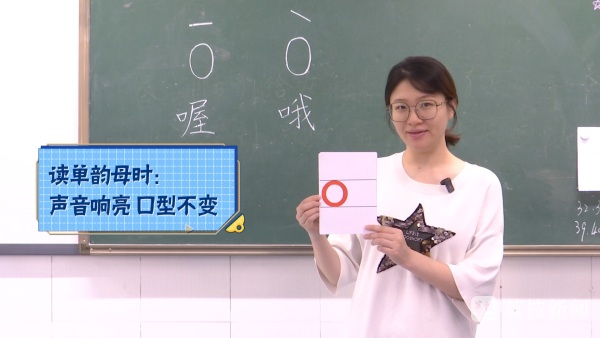
Pinyin "O": pronounced "Oh" or "Wo"?

  Chinese Pinyin is the key content of Chinese learning in the first grade of primary school. Recently, some parents found that the pronunciation of "O" in "a o e" is different from what their children learned when they were young. At that time, it was clearly "Wo", but now it’s all "Oh". What the hell is going on here? Who is right and who is wrong with the two pronunciations "Wo" and "Oh"? The reporter visited primary school teachers and university professors to conduct multi-party verification.


  Primary school teachers teach this.

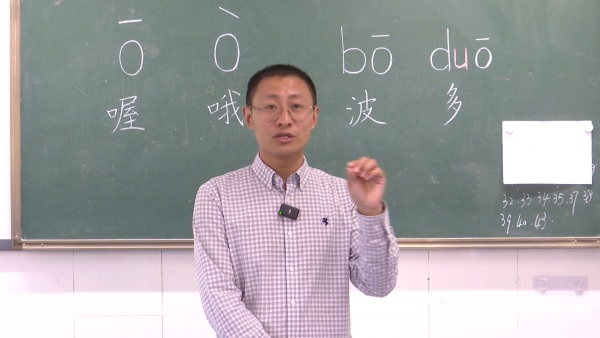
  Kong Wei, an outstanding young teacher in Xuanwu District of Nanjing and a Chinese teacher at Changjiang Road Primary School in Nanjing, said: "‘ o’ It is a single vowel. When reading a single vowel, pay attention to it: the voice is loud and the mouth shape remains the same. Read ‘ o’ When you sound this, your mouth should be round. Some people used to refer to ‘ o’ Misread the sound of ‘ Wo ’ This is not right. ‘ Wo ’ Actually, it is ‘ uo’ Such a combination has experienced the change of mouth shape, from small round mouth to round mouth. When reading a single vowel, you must keep in mind that the mouth shape remains the same. Others will mispronounce it as ‘ Europe ’ (ou), this is also wrong. Because ‘ ou’ It is a vowel, and it has also undergone a change in mouth shape. "

  University professors say so.            

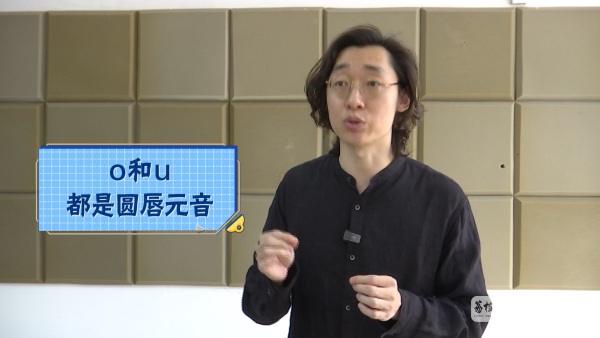
  Why did some primary school teachers pronounce the word "uo" when many post-80s parents were studying? Zhong Sheng, an associate professor at the School of Film and Television of Nanjing University of the Arts and a Putonghua proficiency tester in Jiangsu Province, said: "Because ‘ o’ And ‘ u’ These two vowels are round lips. When reading, the tongue position has a backward contraction process, and the mouth opening is very close. So I guess, before the teacher read ‘ Wo ’ , for ‘ u’ And ‘ o’ There is a degree of discrimination. In terms of scientific name, ‘ u’ Call the vowel with high round lips, ‘ o’ It’s called the second half-high round lip vowel, and the height difference of the tongue position is very small. "

  Why is the vowel part like "Wo" when reading "Bo"?

  Zhao Changzhu, an outstanding young teacher in Nanjing and a Chinese teacher at Changjiang Road Primary School in Nanjing, said, "We know ‘ o’ When this sound is read as a single vowel, read ‘ Oh ’ . Put it in words, such as ‘ Wave ’ This word, we find, seems a bit strange to read, and the vowel part feels like ‘ Wo ’ Such a sound, that’s because ‘ Wave ’ Pinyin ‘ bo’ Omitted ‘ u’ . Look again ‘ Duo ’ When you spell this word in pinyin, you will find that it is a three-pinyin festival duo, and the middle u sound is written. "

  Why do single vowels sometimes sound like compound vowels?

  Professor Zhong Sheng said: "When we close the suffix, the vocal cords will slowly relax, and the strength of the mouth and lips will also slowly relax, which will produce such a change in tongue position and lip shape. So sometimes, a single vowel sounds like a compound vowel, or a binary vowel or a ternary vowel. " 

  (Jiangsu Guangdian Rong Media News Center/edited by Jiang Jian Qiu Yu/Gao Ruoting)

Korean sex comedy entered the Spring Festival file, known as the "color is empty" sister piece.


stage photo


    The Korean sex comedy "Terrible Love" starring the leading actor Lin Changzheng has been confirmed to be released in major theaters across the country on January 20th. As the first Korean film introduced this year, Lin Changzheng still plays a middle-aged "wretched man" in How Terrible Love is. After a series of experiences involving sex, he finally finds his true love … …

Sisters of "Color is Empty"

    In 2002, the Korean sex comedy "Sex is Empty" was born. Although this film is not the pioneering work of Korean youth sex comedy, it has undoubtedly become the pinnacle of this kind of film. At the same time, it has also become a sexual enlightenment film for many young people in mainland China after 1980s. In this film, the "wretched man" played by the leading actor Lin Changzheng has become a classic character.

    It is understood that "Love is Terrible" basically follows the original cast of "Sex is Empty", among which Jin Guili, a famous Korean actress known as the "naked queen", replaced Ha Ji Won  as the heroine. In the film, Jin Guili will play the underwear model that Lin Changzheng has a crush on. Although she has left the country with a lot of nude scenes, her graceful figure and looming curve can still arouse the audience’s infinite reverie.

Next page: the weak man rises up.

In 2012, the most anticipated "new adult" was released in Atsuko Maeda.


Ishikawa Liao


Kaho


Atsuko Maeda

    Movie network news(Compile/Ji Zhongpeng) January 9 is a traditional Japanese festival. On this day, Japan has a national holiday, and young people over the age of 20 have to take to the streets to celebrate their adulthood in colorful kimonos. There are also many artists who are about to turn 20 years old in the Japanese art circle. Based on the topic of Adult Day, Japan’s public trust list launched an online poll of "the most anticipated new adults in 2012". The results showed that Japanese golf prodigy Ishikawa Liao ranked first in the list, followed by pure beauty actress Kaho, and Atsuko Maeda, a member of the ultra-popular beautiful girl group AKB48, made it into the top three.

    In addition, in the top 10 list, there are 4 beautiful girls of AKB48. Except Maeda, who ranks third, Tomomi Itano, the first one in AKB48 to fly solo, ranks fourth. Gao Qiao Minami, which has developed in various fields such as advertising, film and television dramas, ranks seventh; Ranked eighth is Kashiwagi Yuki, a lovely beauty who won the third place in the "2011 AKB48 General Election".

    The selection targets are artists born between April 2, 1991 and April 1, 1992.

The following is the top ten list of "the most anticipated new adults in 2012"

1. Liao Ishikawa (golfer)

2. Kaho (actress)

3. Atsuko Maeda (actress)

4. Tomomi Itano (actress)

5. Takimoto Miori (actress)

6. Taichi Saotome (male star)

7. Gao Qiao Minami (actress)

8. Kashiwagi Yuki (actress)

9. Genki Haraguchi (professional football player)

10. Kikuchi Xiongxing (professional baseball player)

How often is the best time to eat fish? The answer is …

Original Zhimei Tencent Medical Code, she knows 

Fish is a good thing.

But we may not have eaten it right.

What fish do you eat? How many times a week? How much do you eat each time? How do you cook it?

These are all related to your health.

Recently, the US Food and Drug Administration (FDA) and the US Environmental Protection Agency (EPA) jointly issued the "Advice on Eating Fish", which clearly stated how to eat fish healthily.

Let’s take a look together!

(Reminder: The fish mentioned in this proposal is fish in a broad sense, and the fish in biological taxonomy, shrimp, crab and shellfish are collectively referred to as "fish")

Because there are too many benefits of eating fish!

You don’t know a lot.

Benefit 1:

Fish is so rich in nutrition that it has more advantages than pork and chicken [1,2];

① High-quality protein is high (15%~22%), with soft and tender taste, which is more digestible than livestock meat;

② Low fat content (1%~10%), mainly polyunsaturated fatty acids, especially omega-3 fatty acids (including DHA and EPA), which are beneficial to the development of nervous system, lowering blood lipid and preventing arteriosclerosis;

③ It is rich in minerals (iron, calcium, zinc, iodine, selenium, etc.) and a good source of vitamin B12, vitamin A, vitamin D and choline.

Benefit 2:

"Eating more fish in a healthy diet" is helpful to [1]:

Prevention of cardiovascular and cerebrovascular diseases;

Promote bone health and reduce the risk of hip fracture;

Reduce the risk of overweight and obesity;

Reduce the risk of colon cancer and rectal cancer;

Reduce the risk of death and prolong life;

……

("Healthy eating mode of eating more fish" means not only eating fish frequently, but also taking in enough fresh vegetables, fruits, beans and whole grains, as well as appropriate dairy products, lean meat and poultry meat, nuts and vegetable oil rich in unsaturated fatty acids.)

Benefit 3:

For some special people, eating fish in moderation brings additional benefits:

① For pregnant women, nursing women and infants, fish can provide key nutrients needed to support the brain development of fetuses and infants, especially omega-3 fatty acids [1].

② A survey of students in China found that children who eat fish have higher intelligence scores and better sleep [3].

③ A recent study by Huazhong University of Science and Technology found that eating fish for cancer patients helps to reduce the risk of death [4].

The benefits of eating fish are not limited to these, and there are many related studies. Maybe scientists will make new discoveries in two days.

No one is perfect, and so are fish.

Fish in life can’t "get out of the mud without being stained". They are easily influenced by the surrounding environment and enrich pollutants in water, especially methylmercury.

After methylmercury enters the human body, it is discharged very slowly. Excessive long-term exposure will lead to cumulative toxicity and damage to the brain and nervous system.

In 1950s, the Minamata disease in Japan was caused by methylmercury [2].

"Fish suggestion" suggests that you must choose fish with low mercury content.

According to the content of methylmercury, the safety of fish (including fish and shellfish) is divided into three grades [1]:

The best choice: low mercury, you can eat 2~3 servings a week.

Good choice: the mercury content is slightly higher than the former, and you can only eat one serving per week.

Avoid choice: the mercury content is high, so don’t eat if you can.

(How to calculate 1 copy? Adults and children are different. We will explain later. If you are in a hurry, you can slide directly to part5.)

List of fish with 3 safety levels (according to FDA recommendation)

(Don’t worry when you see a lot of fish you don’t know, and a list of fish that Chinese often eats will be given later ~)

optimum selection

Anchovy, Atlantic yellow croaker, Atlantic mackerel (mackerel), largemouth bass (California bass), golden thread fish, squid, clam, cod, crab, freshwater crayfish, flounder, haddock, hake, herring, American lobster, barracuda, and so on.

Good choice

Bamboo pod fish, buffalo fish (bull mullet), carp, Chilean sea bass/Antarctic canine fish (silver cod), grouper, halibut, dolphin,? ? ? ? Fish, rock fish, naked fish (silver cod), red bass (red snapper), snapper, mackerel, striped bass (sea water), square head fish (Atlantic Ocean), albacore/white tuna (canned, fresh and frozen), yellowfin tuna, sea fish.

Avoid choice

Atlantic mackerel, marlin (swordfish), Atlantic seabream, shark, swordfish, square head fish (Gulf of Mexico), bigeye tuna.

Based on the measured data in China, the aquatic products that Chinese eats the most every day are recommended as follows:

You can eat 2~3 servings of fish every week: hairtail, grass carp, Wuchang fish, small yellow croaker, sole, river bass, tilapia, sturgeon, cod, salmon, sardines, prawns, scallops, squid, shrimps and crabs.

You can eat 1 serving of fish every week: sea bass, mackerel, grouper, snapper, halibut, silver cod, yellow croaker, herring, silver carp, bighead carp, carp and crucian carp.

The number of so-called "one serving" fish varies with age.

(Note that 1 serving in the proposal refers to the weight of raw fish before cooking.)

1. Ordinary adults

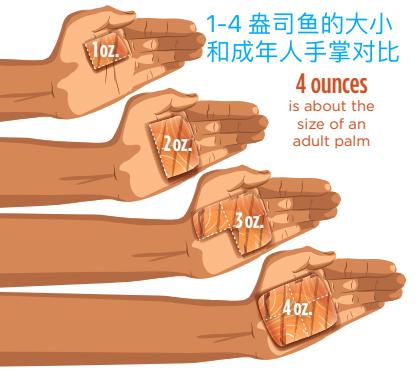
Recommended food intake: eat 2 servings of fish a week, which is the size of two palms.

An adult serving is about 120 grams (4 ounces), which is about the size of an adult’s palm.

(Source: FDA official website)

2. Pregnant and lactating women

Suggested food intake: eat 2-3 servings of "best choice" fish per week, or 1 serving of "good choice" fish per week.

Note: it is a choice, not a "harmony" relationship.

3. Infants and children

Recommended food intake: 2 servings of "best choice" fish per week. Don’t eat "good choice" fish.

1~3 years old, about 30 grams (1 ounce)

4~7 years old, about 60 grams (2 ounces)

8~10 years old, about 90 grams (3 ounces)

11 years old and above, about 120 grams (4 ounces)

(Source: FDA official website)

In order to benefit from eating fish, the cooking method is very important.

one

Recommended practices: steaming, oven controlled baking and electric pressure cooker stewing.

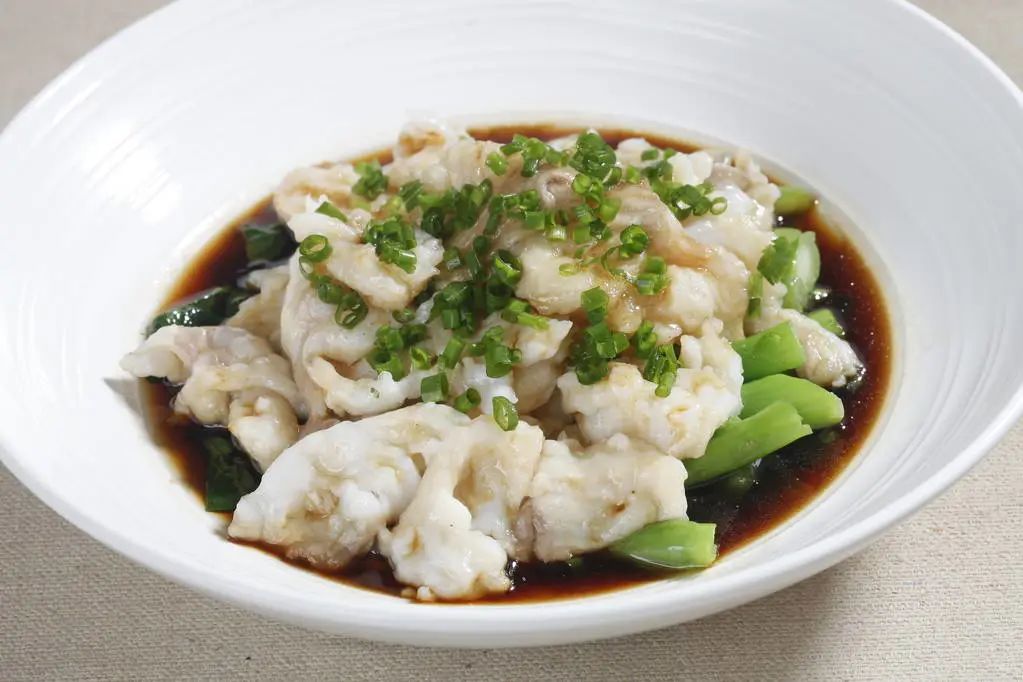
Steaming is one of the best choices, which can preserve omega-3 fatty acids and multivitamins in fish.

It is also a good way to wrap it and bake it in an oven, or to stew/bake it in an electric pressure cooker.

2

Not recommended practices: roasting and frying with open fire.

Try not to bake with open fire, so as not to produce a variety of carcinogens [5].

Frying and frying are also not recommended, because omega-3 fatty acids are destroyed a lot at high temperature [6].

To braise in soy sauce and make soup, it is generally necessary to fry in oil first. It is recommended to put less oil, fry at as low a temperature as possible and for as short a time as possible.

Tips:

Freshwater fish must not be eaten raw!

Marine fish that can be eaten raw must be purchased from reliable merchants.

Pregnant women and children are not recommended to eat raw fish and aquatic products, including sushi and sashimi.

(Cooked salmon tastes good too.)

Q1

Which is better, marine fish or freshwater fish?

From a nutritional point of view, there is not much difference between the two.

In particular, the content of DHA (docosahexaenoic acid, commonly known as brain gold), which everyone is generally concerned about, does not depend entirely on whether it is river fish or deep-sea fish, but mainly on the species of fish.

For example, the DHA content of eel is as high as 471 mg /100 g, which is higher than that of small yellow croaker, hairtail, sea bass, cod and other marine fish. Bass, bighead carp, catfish and silver carp also contain more DHA [7,8].

Therefore, everyone should choose according to their own preferences.

Q2

Is there any way to reduce mercury residue?

Unfortunately, cleaning or cooking can’t reduce the residual amount of mercury, because it is dispersed in fish and very stable.

The only way to reduce the mercury intake of fish is to choose safe fish species from the "best choice" according to the above suggestions and control the food intake.

Q3

Can fish not on the list be eaten?

Can eat.

Try to choose smaller fish at the bottom of the food chain, such as freshwater bass, grass carp and Wuchang fish.

Q4

Which part of the fish can’t be eaten?

The fish in the "best choice" and "good choice" lists can be eaten regardless of the head, skin and roe.

It should be reminded that many fish gall is poisonous and can’t be eaten. For example, crucian carp, grass carp, carp, herring, silver carp, bighead carp, shad, etc., there is a toxin called "sodium carpenol sulfate" in their bile, which is very toxic and cannot be inactivated by heating [9].

Fish gall is located in the abdomen of the fish, and it is generally light bluish yellow or bluish black. It must be cleaned before cooking, and be careful not to break it.

Q5

Can you use fish oil instead of eating fish?

I can’t.

Fish oil supplements only contain omega-3 fatty acids, and do not contain nutrients such as protein, omega-6 fatty acids, vitamins and minerals. The healthy development of children is inseparable from these nutrients.

Therefore, it is suggested to obtain various nutrients including omega-3 fatty acids by eating fish instead of simply taking fish oil.

In addition, there is still some controversy about the health benefits of fish oil, and the current research results do not support the statement that taking fish oil can improve children’s IQ.

Q6

When can I start eating fish for my baby?

Babies can eat fish when they are about 6 months old and start to add complementary food.

Remember, clean the fishbone, and don’t stab the baby.

Give the baby fish. Chop up the fish and eat it slowly to avoid the risks of choking and suffocation.

Remember to forward it to the circle of friends ~

Review expert

Chen Shunsheng | Director and Professor of Aquatic Products Processing and Storage Engineering, College of Food Science, Shanghai Ocean University

references

[1]https://www.fda.gov/food/consumers/advice-about-eating-fish

[2] China Nutrition Society, Food and Health-Consensus of Scientific Evidence (2016)[M]. People’s Health Publishing House, 2016.

[3] Pennsylvania U O . Weekly fish consumption linked to better sleep, higher IQ, Penn study finds.https://www.nursing.upenn.edu/details/news.php? id=991

[4] Wang Y, Liu K, Long T, et al. Dietary fish and omega-3 polyunsaturated fatty acids intake and cancer survival: A systematic review and meta-analysis [published online ahead of print, 2022 Jan 24]. Crit Rev Food Sci Nutr. 2022; 1-17. doi:10.1080/10408398.2022.2029826.

[5] Yang Yuexin, Ge Keyou. China Nutrition Science Encyclopedia (2nd Edition). People’s Health Publishing House, 2019.

[6] Li Nannan, Fan Zhihong. The influence of cooking on the nutritional value of fish [J]. China Food and Nutrition, 2011,17(02):82-85.

[7] Yang Yuexin, editor-in-chief, China Center for Disease Control and Prevention, Institute of Nutrition and Health, China Food Composition Table (6th Edition) [M]. Peking University Medical Press, 2019.

Zuliya, Luo Junxiong, Fan Tie. Comparison of EPA and DHA contents in marine fish and freshwater fish fat [J]. China Oil, 2003(11):48-50.

Wu Hanlin, Peter Wing Ho Chin. Experimental study on acute bile poisoning in CYPRINIDAE [J]. Zoology Research, 1999(06):474-475.

Content production

Read the original text

Guangzhou Railway Group continues to build a multi-system of ticket sales in Spring Festival travel rush, making it more convenient and easier for passengers to buy tickets.

  China Railway Guangzhou Bureau Group Co., Ltd. continued to promote the construction of multiple ticketing systems in Spring Festival travel rush, and constantly improved the level of convenience for passengers to purchase tickets, making it easier for passengers to buy tickets. In Spring Festival travel rush this year, Guangzhou Railway Group significantly increased the number of ticket vending machines and Internet ticket collection machines at high-speed rail stations, with a total of 2,326, 211 more than that in Spring Festival travel rush last year.

  Agency outlets extend to the countryside.

  According to the introduction of Guangzhou Railway Passenger Transport Department, Guangzhou Railway Group has innovated the ticketing methods many times, extending the ticketing place from the ticket hall of the station, opening mobile ticketing points and temporary windows, and laying urban and rural consignment outlets. The data shows that by the end of 2018, the number of Guangzhou Railway Group’s sales outlets had reached 2,549, accounting for a quarter of the country’s total, an increase of 1,862 compared with the end of 2008. Among them, 1,130 sales outlets were set up in towns and villages in Hunan and Guangdong provinces, covering more than 50,000 people, and the ticketing terminals were directly moved to the farmers.

  "The railway department has opened the sales outlets to towns and villages, which has done a real good thing for our migrant workers." Luo xiaoming, the manager of human resources department of Dongguan Jingmu Wood Products Co., Ltd., calculated a "time cost account" for the reporter. In the past, for the train ticket for Spring Festival travel rush’s return home, employees would not feel at ease at the end of the year, which delayed production. The company once sent three security guards to the railway station to buy tickets, even so, it was far from meeting the needs of employees.

  Some employees have to take time off to buy tickets in order to reunite with their families.

  This year, a train ticket sales point was opened near the company. Employees can go directly to the sales point to buy tickets in their spare time, and the number of employees taking leave is greatly reduced.

  This year, in Spring Festival travel rush, Guangzhou Railway also increased the distribution density of sales outlets in central cities of major cities, making it convenient for citizens to buy train tickets nearby.

  Online booking accounts for 90%

  The proportion of Internet booking in Spring Festival travel rush is increasing. Guangzhou Railway Group has sold 14.83 million tickets through the Internet, accounting for about 90% of the number of train tickets sold.

  Telephone booking is an important choice for many migrant workers who are not familiar with online booking, and telephone booking is a convenient measure introduced by Guangzhou Railway Group in Spring Festival travel rush in 2005. In Spring Festival travel rush in 2019, the vast number of migrant workers can book train tickets at any station in the country through the service telephone.

  This year, in Spring Festival travel rush, Guangzhou Railway Group also added the automatic reading function of Hong Kong, Macao and Taiwan passes to relevant ticket vending machines in time according to the high proportion of Hong Kong, Macao and Taiwan passengers in the Pearl River Delta region, which greatly facilitated the self-service purchase and collection of tickets by Hong Kong, Macao and Taiwan passengers.

  While expanding ticket sales channels, Guangzhou Railway Group also focuses on enriching supporting payment methods. It is more and more convenient for passengers to buy tickets from cash, credit card and mobile phone payment. In 2019, in Spring Festival travel rush, all stations in the whole group installed bank POS machines at the designated ticket window, and all automatic ticket vending machines have realized bank card payment. Alipay and WeChat payment methods are also gradually popularized at various stations.

  Migrant workers and students are preferred.

  Since Spring Festival travel rush in 1999, Guangzhou Railway Group has implemented the group ticket reservation mode for migrant workers in Spring Festival travel rush every year, and made every effort to ensure that migrant workers buy tickets to go home and return to the factory. We have started the return booking and self-organizing business of group tickets for migrant workers in Spring Festival travel rush, and this year, Spring Festival travel rush has realized separate booking for the journey and return.

  Up to now, Guangzhou Railway has reserved 397,000 group tickets for nearly 5,000 enterprises and self-organized groups in Spring Festival travel rush. In view of the fact that some enterprises in the Pearl River Delta rushed to work at the end of the year, Guangzhou Railway also sent service teams to enterprises in Dongguan, Huizhou and other places to deliver return tickets directly to migrant workers. At the same time, according to the reservation of group tickets for migrant workers, Guangzhou Railway has arranged to run 62 special trains for migrant workers during Spring Festival travel rush this year, so that more migrant workers can enjoy the "exclusive" journey.

  In 2019, in Spring Festival travel rush, Guangzhou Railway Group ensured that students would buy tickets to go home and go back to school to the maximum extent according to the principle of "priority sale and full guarantee". At present, the major railway stations in Guangzhou Railway have handled round-trip tickets for student groups in various ways, and the pre-sale period of student tickets has been put to the end, and the round-trip tickets for students on March 1, 2019 can be sold as far as possible.

  Up to now, Guangzhou Railway has sold a total of 1.79 million winter vacation student tickets. There are 11 stations in Guangdong, 14 universities and colleges set up temporary ticket sales windows, and 8 stations set up 16 automatic ticket vending machines on campus.

  According to Jin Yibing, a transportation expert in Guangdong Province, Guangzhou Railway has brought intuitive changes to Spring Festival travel rush by building a multi-system of ticket sales: it has fundamentally eased the pressure of people flow in ticket sales places, saved the time cost for the majority of passengers to purchase tickets, further demonstrated the new image of railway Spring Festival travel rush and improved the level of social public services.

Carry out steady investment, accelerate the progress of mega-projects in multi-key areas.

  150 major water conservancy projects are expected to incite 6.6 trillion yuan to invest in transportation and major agricultural investment expansion.

  Carry out steady investment, accelerate the progress of mega-projects in multi-key areas.

  On July 13th, the State Council held a routine briefing on the State Council policy, releasing a clear signal that 150 major water conservancy projects will be arranged, with a total investment of about 1.29 trillion yuan, which can drive direct and indirect investment of about 6.6 trillion yuan.

  In fact, not only water conservancy projects, but also a large number of super-major projects, including comprehensive transportation system construction, high-standard farmland construction and modern sewage treatment system engineering, are stepping up planning and promotion. Industry experts interviewed by this reporter said that focusing on short-term benefits to the people’s livelihood, we should speed up top-level planning and increase policy efforts to promote the landing of a number of super-large projects, which is conducive to stabilizing investment and stabilizing the economy, as well as the national economy and people’s livelihood.

  The the State Council executive meeting held on July 8th studied and deployed 150 major water conservancy projects in 2020-2022 to promote the expansion of effective investment and enhance the ability to prevent floods and droughts.

  The briefing held by the State Council Office on the 13th further disclosed the relevant details. Su Wei, Deputy Secretary-General of the National Development and Reform Commission, introduced that there are five major types of 150 major water conservancy projects, including 56 flood control and disaster reduction projects, 26 water resources optimal allocation projects, 55 irrigation water saving and water supply projects, 8 water ecological protection and restoration projects, and 5 smart water conservancy projects, among which 96 projects involve major national strategies such as coordinated development of Beijing-Tianjin-Hebei, development of the Yangtze River Economic Belt, ecological protection and high-quality development of the Yellow River Basin.

  In terms of investment scale, the total investment of 150 major water conservancy projects is 1.29 trillion yuan, 5 projects exceed 50 billion yuan, 4 projects range from 30 billion yuan to 50 billion yuan, and 18 projects range from 10 billion yuan to 30 billion yuan.

  Not only water conservancy projects, but also focusing on making up shortcomings. Since the beginning of this year, major investment projects in many fields have been accelerated, especially a number of major projects with huge total investment have begun to accelerate planning.

  A few days ago, the Ministry of Agriculture and other seven departments jointly issued the Opinions on Expanding Effective Investment in Agriculture and Rural Areas and Accelerating the Shortcomings in the Field of Agriculture, Countryside and Farmers. The "Opinions" require that we should speed up the construction of major short-board projects in 11 key agricultural and rural areas such as high-standard farmland, cold chain logistics facilities for agricultural products storage and preservation, modern agricultural parks, animal and plant protection, coastal modern fishing ports, rural human settlements improvement, rural water supply security, township sewage treatment, smart agriculture and digital villages, rural roads and rural power grids.

  The national video and telephone conference on expanding effective investment in agriculture and rural areas held on July 10 emphasized the need to effectively increase investment in agriculture and rural areas. The meeting pointed out that expanding effective investment in agriculture and rural areas is an urgent requirement to improve the level of modernization in agriculture and rural areas, and it is necessary to continuously increase investment around key areas and strive to reverse the downward trend of investment.

  The main works of 120 bridges across the line have all been completed … … Recently, the construction of Lhasa-Linzhi section in sichuan-tibet railway has been reported frequently, and the construction of Ya ‘an section in Sichuan and Linzhi section in Tibet will soon start. The construction of other landmark major traffic projects, such as the Shenzhen-China Passage, is also accelerating.

  According to the data of the Ministry of Transport, from January to May this year, the investment in transportation fixed assets was 1,022.3 billion yuan, a year-on-year increase of 0.9%. The reporter of the Economic Information Daily learned from China National Railway Group Co., Ltd. (hereinafter referred to as "China State Railway Group Co.,Ltd.") that as of July 1, the new railway line had opened 1,178 kilometers, including 605 kilometers of high-speed rail.

  The person in charge of the Ministry of Construction of China State Railway Group Co.,Ltd. said that a number of key projects, such as Yinchuan-Xi ‘an high-speed railway, Hebei section of Beijing-xiong’an new area intercity railway, Hefei-Anqing high-speed railway and Huai ‘an-Zhenjiang railway, which are planned to be opened in the second half of this year, are progressing in an orderly manner and will be opened as scheduled. It is estimated that about 4,400 kilometers of new railway lines will be opened this year, including about 2,300 kilometers of high-speed railway.

  A few days ago, Li Xiaopeng, Minister of Transport, mentioned at a ministerial meeting that in the second half of the year, we should do our best to speed up the construction of a transportation power, prepare a good plan, solidly promote various batches of pilots, and promote major projects. At the same time, efforts should be made to expand effective investment in transportation fixed assets.

  The industry pointed out that the huge investment scale and long industrial chain of major projects have obvious effects on expanding domestic demand, stimulating economic growth and promoting employment, and will also benefit people’s livelihood and lay a good foundation for China’s modernization.

  Taking water conservancy construction as an example, "major water conservancy projects are important infrastructure to ensure national water security, and they are also important areas for national infrastructure to make up for shortcomings." Ye Jianchun, vice minister of the Ministry of Water Resources, said that these 150 major water conservancy projects can directly and indirectly drive investment of 6.6 trillion yuan, and at the same time increase employment by about 800,000 jobs annually.

  "The role of investment in the bottoming economy in the second half of the year is more prominent, and infrastructure investment is an important force." Fan Ruoying, a researcher at the Institute of International Finance of Bank of China, told the Economic Information Daily that in the planning of major projects, efforts should be made to promote the construction of "two new and one heavy" related projects. It is necessary to make overall planning from the top-level design level. On the one hand, we should proactively lay out high-tech and emerging industries, increase the layout of new infrastructure projects such as 5G infrastructure, new energy vehicle charging piles, artificial intelligence and industrial internet, and encourage localities to carry out "new infrastructure" projects in light of their own economic characteristics to avoid repeated construction. On the other hand, we attach great importance to investment in short-board areas. Combined with the epidemic prevention and control, floods and other disasters, the shortcomings in related fields in China have been exposed. In the future, we should increase investment in public health facilities, major water conservancy projects, poverty alleviation, agriculture and rural areas, and ecological and environmental protection.

  Zhang Liqun, a researcher at the Macroeconomic Research Department of the State Council Development Research Center, told the Economic Information Daily that at present, the most prominent problem that restricts the further recovery of China’s economy is insufficient demand. In the next step, we should work hard to boost infrastructure, and do a good job of making up shortcomings by combining long and short. In the second half of the year, we should focus on the overall long-term planning and accelerate the planning and construction of overall long-term large-scale projects.

  The promotion of major projects is inseparable from financial support. In addition to accelerating the landing of financial and financial funds, the industry pointed out that deepening the reform of investment and financing system, especially attracting social capital, is also of great significance for promoting major project construction.

  Su Wei said that the total investment scale of 150 major water conservancy projects is very large, and it is necessary to deepen the reform of investment and financing system and raise funds for project construction through multiple channels.

  Fan Ruoxuan also suggested establishing and improving a long-term mechanism to attract private capital to invest in key areas, continuing to break down hidden obstacles for private capital to enter key areas, and boosting market participants’ confidence in long-term investment and operation. Flexible arrangement of financing mode, encourage commercial financial institutions to participate in the project through creditor’s rights, equity, asset support plan and other ways. Moderately relax the entry threshold for foreign investment in infrastructure, and introduce long-term foreign investment to participate in related projects under the premise of controlling risks. In addition, give greater play to the role of policy finance, and support major infrastructure projects through special construction funds and supplementary mortgage loans (PSL) to support specific areas of infrastructure. (Reporter Sun Yuhua, Ban Juanjuan, Wang Lu)

National Health Commission: The total diagnosis and treatment of respiratory diseases in outpatient and emergency departments of medical institutions in China showed a downward trend as a whole.

Cctv newsOn December 17th, the National Health and Wellness Commission held a press conference on the prevention and treatment of respiratory diseases in winter.

Mi Feng, spokesperson of the National Health and Wellness Commission, said that recently, the total number of outpatient and emergency respiratory diseases in medical institutions nationwide showed a downward trend as a whole.

All localities have actively expanded medical resources and continuously increased relevant outpatient and emergency clinics and inpatient beds. Secondary hospitals, maternal and child health hospitals, traditional Chinese medicine hospitals and primary medical and health institutions have effectively played a diversion role. According to monitoring, the number of primary fever clinics and consultation rooms accounts for about 44% of the number of fever clinics and consultation rooms in medical institutions nationwide, which effectively meets the needs of patients for medical treatment.

It is necessary to continuously strengthen the monitoring of the diagnosis and treatment of respiratory diseases and the judgment of the situation, strengthen the overall allocation of medical resources, optimize the service process in the hospital, unblock the upper and lower referral channels, give full play to the characteristics and advantages of traditional Chinese medicine, promote the "internet plus" service, ensure the medical needs of the masses, and improve the patient’s medical experience.

It is necessary to wear masks scientifically, do a good job of personal protection and maintain good hygiene habits.

We should continue to strengthen vaccination to prevent respiratory diseases such as influenza.

Liu Yabin: A Case-solving Expert Sticking to the Front Line

Liu Yabin preached in primary school.

Liu Yabin preached in primary school.

CCTV News:Liu Yabin is the squadron leader of the intelligence squadron of the Criminal Police Brigade of Cangzhou Canal Branch, Hebei Province. After graduating from college, he briefly worked as a teacher for three years, but out of love for criminal investigation, in 2005, he gave up his stable job and was admitted to the Canal Branch to become a criminal policeman.

There is a lot of pressure at the grassroots level and little room for promotion, but since the police, Liu Yabin has been working at the grassroots level. He firmly believes in "empty talk about making mistakes in the country and prospering the country by hard work". In the past 14 years, he has started as an ordinary investigator and served as a detective, deputy squadron leader, instructor and squadron leader. From cracking the theft case of several hundred yuan to the biggest fraud case in China, he recovered more than 3 billion yuan for the masses step by step, which was well received by the leaders.

Defend people’s safety regardless of safety

Criminal investigation is a hard and dangerous job, which requires patience, care and extraordinary courage. During his years as a criminal police officer, Liu Yabin has caught pickpockets in the street and desperate drug dealers. When there is a dangerous incident, he always rushes to the front line.

Liu Yabin is a famous anti-pickpocketing expert in the city bureau. He has basically caught the old thieves in Cangzhou, whether they are in the mall or on the bus, playing with blades or carrying bags directly. When asked why he can catch thieves that others can’t catch, he said: "Anti-pickpocketing is hard work, as long as you are not afraid of hard work, there is no thief that can’t be caught. At the peak of work, most people are on their way home. I stand next to the bus stop sign and stare at the thief who follows the car. On Saturday and Sunday, when others are at home with my wife and children, I take a camera near the mall to take photos for evidence. That’s all. "

Relatively speaking, anti-pickpocketing may be the least dangerous in Liu Yabin’s work. Drug control is also one of his daily work, and because transporting and selling one kilogram of ice is enough to sentence the suspect to death, the suspect often struggles desperately. In November 2016, when Liu Yabin led a team to arrest drug trafficking suspects, he was fiercely resisted. The suspects even rushed to try to snatch the guns of the police. The two sides fought until they collapsed, and finally captured them.

There are many similar dangerous cases. For example, on one occasion, a time bomb tied with a petrol tank was found in Bohai Commercial Building. In the face of the bomb that may explode at any time, Liu Yabin did not hesitate, and immediately transferred the bomb to the safety zone of Cangxian County with his colleagues. Just as they had just arrived at their destination, waiting for the arrival of bomb squad, the bomb suddenly exploded and the explosion-proof blankets were blown up. If they had been transported to a slower speed, the consequences would have been unimaginable. Thinking of this, Liu Yabin also felt scared. However, whenever he thinks of the trust and satisfaction of the people behind him when he carries away the bomb, his heart will feel very full.

Innovative thinking to combat new crimes

With the popularization of information technology, all kinds of new crimes emerge in an endless stream, and all kinds of information-based investigation and solving methods have sprung up. Liu Yabin is keenly aware that informatization is the direction of future investigation and solving cases. Since then, he has devoted himself to studying the theory of information-based crime solving, seriously studying the methods of information-based crime solving in advanced provinces and cities, and actively exploring the means of information-based crime solving, and soon became an expert in this field.

As early as 2008, Liu Yabin discovered a loophole in the system through the study of the escape system: many suspects surf the Internet in many places, but the case-handling unit does not necessarily know. Through comparison, he compared more than 3,000 fugitives who were released on bail nationwide at one time, more than a squadron caught in 30 years. Driven by this comparison work, the Hebei Provincial Public Security Department has specially carried out a special action to compare fugitives and normalized this action.

In 2012, the Canal Public Security Bureau found that the number of cases reported by leasing companies accepted by the branch was on the rise, and many vehicles were resold or mortgaged at low prices after being leased by suspects, and almost all the vehicles used by suspects were from leasing companies. In this regard, the Canal Public Security Bureau decided to take the management and service of car rental industry as the starting point and explore a new way in the informationization of criminal investigation basic work. After Liu Yabin was appointed as the person in charge of the project, he first went deep into various car rental companies to understand the vehicles and operating conditions, sorted out and registered the car rental companies and vehicles in the city one by one, and established data files. Subsequently, according to the data and current situation, he independently developed the information management system of car rental industry, and started it in 24 rental companies in the urban area at the same time.

This management system soon came in handy. On September 20, 2012, the Canal Branch received a request from Dacheng County Public Security Bureau for investigation, claiming that a suspected vehicle was heading for Cangzhou, hoping that the Branch would investigate the track of the suspected vehicle in Cangzhou. Upon hearing the case, Liu Yabin immediately inquired about the vehicles during the incident period through the bayonet system of the Municipal Bureau. After the inquiry was fruitless, he immediately inquired about the vehicles of Cangzhou urban leasing company through the car rental industry management system and found that a car had been to the scene at the time of the crime. The lessee of the car is called Yan, and he often rents a car with Yan.

By analyzing the GPS trajectory of the suspect’s rented vehicle, Liu Yabin finally found the location where Yan and others hid the stolen goods. Through the car rental industry management system all the way, Yan, who returned from the crime, was arrested, and four mahogany chairs and two mahogany coffee tables were seized on the spot, with a case value of 200,000 yuan.

Due to his outstanding achievements in information-based crime solving, Liu Yabin was selected into the talent pool of information experts of the Provincial Public Security Department in 2012, the talent pool of anti-fraud experts of the Provincial Public Security Department in 2013, and the first batch of information-based crime solving experts of the Criminal Investigation Bureau of the Ministry of Public Security in 2015.

Be a preacher of safe Cangzhou

It is important to combat crime, but nip in the bud is the foundation of building a peaceful society. Since 2009, Liu Yabin has given full play to the advantages of being a teacher, and has organized primary and secondary school students and community residents to study many times to explain the knowledge of preventing telecom fraud and drug control. He coordinated the city post office to print a letter to all students and parents by greeting card, which included 16 common types of telecom fraud and preventive measures. He also contacted a total of 25,152 students from 26 primary schools in Canal District to carry out the interactive activity of "I study with my parents", and made students become propagandists to prevent telecom fraud crimes by playing promotional videos and conducting micro-classes. This activity was also selected as "the most satisfying thing for the masses".

In addition, Liu Yabin also opened the WeChat official account of Canal Interpol in Cangzhou Bar and Sina Weibo. Practice has proved that the opening of WeChat official account has played a positive role in the control of online public opinion, the early warning of high-incidence cases, the collection of criminal information and many other aspects. Up to now, the police have obtained more than 30 valuable clues through communication with netizens, and have cracked more than 20 cases accordingly.

Due to his outstanding work achievements, Liu Yabin has been awarded the third-class merit three times since 2005, and has been awarded the honorary titles of "Strike Hard Advanced Individual", "Excellent Investigator" and "Informatization Advanced Individual" by Cangzhou Municipal Party Committee, Municipal Government and Municipal Public Security Bureau in successive years. "Public security work is not just a job to make a living, it is also a glorious cause. The crackdown is the main business of public security, and criminal police are the main force of this work, so I will still choose to stick to the front line of criminal investigation. " Liu Yabin said. (Source: Hebei Provincial Federation of Trade Unions)

How many women did Lu Xun have in his life? Who are Lu Xun’s lovers?

Speaking of Lu Xun, there is no doubt that Lu Xun was indeed a revolutionary fighter and a literary master in the Republic of China. Its style of writing is strong, and its style is detached. But although Lu Xun was a fighter, he was not Lu Sheng. We should know that no matter who is in the world, his first criterion is man, not God! Talking about Lu Xun’s women, many people are mistaken by the textbooks, only knowing that there is his student and wife Xu Guangping, and then some people know that Lu Xun has an original wife, Zhu An. But since ancient times, which talented person has not had several confidantes?

First, the first love Lu Qingu’s "wordless ending"

Lu Qingu was the first to enter into an engagement with Lu Xun. It was the summer and autumn of 1898, and Lu Xun’s mother took a fancy to Qin Gu, the eldest daughter of Lu Xun’s little uncle. Gu Qin and Lu Xun, when they were young, often read together and discussed ancient Chinese poetry. She was deeply impressed by Lu Xun, so when Lu Xun’s mother asked her advice, she threw herself into her aunt’s arms and said nothing, but she had a hundred wishes in her heart.

Lu Xun’s mother was very happy and immediately decided on a marriage. Unexpectedly, things happened suddenly. Lu Xun’s nanny’s mother has a distant niece, Zhu An, who has long wanted to introduce her to Lu Xun, but Lu Xun’s mother has booked a piano. The eldest mother gossiped in front of Lu Xun’s mother, saying that the combination of Lu Xun and Qin Gu was "offensive" and unlucky. Lu Xun’s mother was shaken. The next spring, she decided to arrange the marriage between Lu Xun and Zhu An.

Qin Gu’s father waited for the Zhou family to get married, but there was no information. Later, when he learned that Lu Xun had remarried, he had no choice but to betrothed Qin Gu to others. Maybe Qin Gu didn’t like this marriage, and maybe life wasn’t. Soon, Qin Gu fell ill and never got up again.

On her deathbed, Qin Gu held the nanny’s hand tightly and choked: "I have something on my mind that I must say before I die. It was Zhou Jialai who mentioned the kiss before, but then suddenly he didn’t mention it, and I don’t know why … … This incident is my lifelong regret, and I will never forget it until I die … …”

Qin Gu should be said to be Mr. Lu Xun’s "first love" when he was young. But somehow, this marriage was not mentioned in Lu Xun’s later works. Did Lu Xun forget it for the sake of following Ming’s career, or did he keep this beautiful feeling in his heart forever, or did they ever promise each other? Lu Xun must have his own difficulties, so he has nothing to say.

Second, the bleak life of the original wife Zhu An.

When Lu Xun was twenty-five years old, he was preparing to start his literary activities in Tokyo, Japan. Suddenly, he received letters from home urging him to return home. The letter said that his mother was very ill and wanted to meet her eldest son. When Lu Xun returned home anxiously, he realized that this was a scam.

It turned out that there was a rumor in his hometown that Lu Xun married a Japanese woman and gave birth to a child. He was seen walking in the streets of Tokyo with his wife and children. The people changed their ways to trick him into getting married. According to the old custom of "parents’ orders and matchmakers’ words", Lu Rui, Lu Xun’s mother, decided the marriage without Lu Xun’s consent.


Seeing this scene, Lu Xun was naturally angry, whether he was attached to Lu Qingu or had a beautiful face in a foreign country, but out of filial piety to his mother, he did not have an attack. On the second day of their marriage, Lu Xun didn’t go to the ancestral temple as usual. On the third day, while his family was not paying attention, he quietly ran away from home and went to Japan again. While Juan lived with her mother-in-law Lu Rui.

Perhaps Lu Xun’s first wife is also car-scrapping, a traditional good woman, that is: entering the Zhoujiamen, death is a Zhoujiagui. He is Lu Xun’s wife, which is recognized all over the world, but the protagonist Lu Xun doesn’t recognize it. In name, Zhu An has been widowed all his life. In fact, at least at this point, the original match defeated Lu Xun in ethics, although it was very sad. Lu Xun is an anti-feudal fighter, and of course he should be a revolutionary fighter. Arranged marriage is of course an ethical code in feudal society. It is feasible for civilians, but not for Lu Xun.

On June 29th, 1947, Zhu An died alone. I believe that if there is an afterlife, Zhu An will not go this way again.

Such tragedies were common in the old society. Perhaps because of his own experience, Lu wrote many articles about women’s rights, such as "Blessing", hoping that women in China would wake up … …

Third, the teacher-student relationship with Xu Guangping.

Lu Xun and Xu Guangping, the love between teachers and students, or that era, Lu Xun was Lu Xun from beginning to end.

Xu Guangping (1898 ~ 1968) was born in Fujian. In 1917, she studied in the preparatory course of Tianjin Zhili No.1 Women’s Normal School, served as the editor-in-chief of Wake the World Weekly, the journal of Tianjin Patriotic Comrades Association, and participated in the May 4th Movement. At the age of twenty-five, he was admitted to the Chinese Literature Department of Beijing Women’s Normal University and became a student of Lu Xun.

In January, 1927, Lu Xun went to Sun Yat-sen University as a teaching assistant and Guangzhou dialect translator, and soon married Lu Xun, who was seventeen years older than her. In 1929, she gave birth to a son, Zhou Haiying. Although this is the last ten years of Lu Xun’s life, "ten years together to share difficulties and dangers", we can’t help but say that it is a belated happiness.

Compared with Lu Xun, Hu Shi was "conservative" and had children with Jiang Dongxiu. Although Hu Shi was engaged to study in the United States, in addition to the sparks with Williams, the daughter of a professor at Cornell University, he also chased Chen Hengzhe, a talented woman from China who was also studying in the United States. Although the two romances were both under the external environment or internal moral consciousness, they had to end halfway, but they could not hurt their mother’s heart too much, which may also be his consideration.

But behind Lu Xun’s loveless marriage with Zhu An, he was willing to live this ascetic life, but in the depths of his subconscious, he did not give up his desire for the true ideal of love. So when Xu Guangping obviously took the initiative, they finally got together freely.

Fourth, with the female student Xu Xiansu, "The Story of Hair"

At the Women’s Normal University, Lu Xun met a young female student, Xu Xiansu, who was a classmate and good friend of Lu Xun’s cohabiting girlfriend Xu Guangping.

Lu Xun wrote "The Story of Hair" for her, and Cao Juren, a friend of Lu Xun, praised Sue as his "lover" in a biography about him. Xu Xiansu showed special concern for women in a very important part of Lu Xun’s life. But when Lu Xun left Beijing for the south, it was not Xu Xiansu, but her classmate and friend Xu Guangping.

Even on the way south, Lu Xun kept in touch with Xu Xiansu. Everywhere he went, there would be postcards reporting his whereabouts, while Lu Xun had been living with Xu Guangping for a long time. Why Lu Xun chose Xu Guangping is a mystery, at least no one has answered it.

After Lu Xun’s death, Xu Guangping wrote about his memoirs, except introducing Lu Xun’s diet and daily life, and left a lot of gaps in many important aspects. Some people analyzed the notes left by Xu Guangping, and realized that Xu Guangping actually had too much helplessness, and perhaps the taste of being a celebrity shadow was not good.

Five, with the female writer Xiao Hong hazy feelings.

Xiao Hong is a good family, but she is a young man with new ideas. Because of her dissatisfaction with feudal families and arranged marriages, she ran away from home when she was young. I lived with Xiao Jun in 1932, but ended up breaking up with Xiao Jun!

He became Lu Xun’s most loyal fan around 1934, and often came to visit his husband at Lu Xun’s house, sometimes even several times a day. One morning, she came and came back in the afternoon. Finally, I may feel that Xu Guangping’s position is unshakable. After all, with Lu Xun’s children, Xiao Hong had to go to Japan in 1936, and three years later she lived with Duanmu Xiaoliang and went to Hong Kong. Duanmu Xiaoliang was also a scholar and a romantic figure, and it was impossible to give Xiao Hong too much happiness. Finally, Xiao Hong died in Hong Kong after going through a rough road of her own choice, and died at the age of 31. … …

Sixth, the spiritual love with Mrs. Yamamoto of Japan

During Lu Xun’s stay in Shanghai, a good Japanese friend Uchiyama was a bookstore owner. He often went to Uchiyama Bookstore, but what he really went to was the back of the bookstore, where Yamamoto Chuzhi, a Japanese geisha, lived. Lu Xun’s letter to Mrs. Yamamoto is second only to Masuda’s among Japanese friends. For Masuda, he wrote to discuss academics or translation, while for Mrs. Yamamoto, he discussed life or emotion.

Once, Lu Xun wrote to Masuda that it was "a lonely thing" that Mrs. Yamamoto couldn’t come to Shanghai, but every letter to Mrs. Yamamoto would complain about "Shanghai loneliness", which was rare in other letters. Later, when Lu Xun died, Mrs. Yamamoto immediately lost her voice when she first heard his bad news. That was the man she used to be in loved one!

Seven, the subtle love affair with Ma Jue, the flower of Peking University.

According to textual research, Ma Jue, the most famous beauty queen in the history of Peking University, had a subtle affection with Ma Jue.

What must be explained here is that Lu Xun is not empathizing with others, or loving each other when he sees one, but I only take a ladle to drink when I am weak.

Lu Xun has always been cautious in dealing with personal feelings, but he was still caught by his old enemy. Lu Xun especially loves talents and likes to reward new literary talents, especially talented young women. Is Lu Xun in love with Ma Jue, a beautiful and talented woman? This question is not easy to answer, let alone to speculate for no reason.

But one thing is certain: Lu Xun likes this literary young woman with distinctive personality very much; What is certain is that Ma Jue, with great literary dreams and romantic feelings, also likes and worships her idol Lu Xun very much, even her secret love may not be known. If you have read Lu Xun’s Diary, you will find that there are broken files and missing places in the middle. Was this part destroyed or hidden by Lu Xun or later generations? Nowadays, it is hard to find out. Did this disappearing part of the diary record the secret passion of Lu Xun, a great literary master? I’m afraid all this is only known to the parties. But I prefer to believe that this has nothing to do with Lu Xun’s personality.

If there is any scandal between the two, it should be the result of Lu Xun’s old enemy’s embellishment and malicious attack.

Link after the article: Is the affection with my sister-in-law a grievance?

But the most puzzling thing is that Zhou Zuoren held a contemptuous attitude towards Lu Xun’s marriage choice. In his view, the cohabitation between Lu Xun and Xu Guangping was caused by eroticism, and it was an old literati’s act of concubinage. It is puzzling to think that Zhou Zuoren, who has always advocated freedom of personality and healthy morality, did not tolerate the life journey of free love at this time.

In fact, Zhou Zuoren, a great traitor, is a very sensible person in love between men and women. He knows that free love is the evolution of human beings. But why are you so harsh on Lu Xun? The author thinks that one is the resentment formed by Yu Taixin’s son, and the other is to consider the problem from Zhu An’s point of view and feel that Juan is too pitiful. The latter reason, the author thinks, is quite in line with his thinking. He once thought that love could not bring pain to others, otherwise, it would be immoral.

Let’s talk about another truth that the relationship between Zhou Zuoren and Lu Xun has deteriorated. In February 1919, Lu Xun sold his ancestral home in Shaoxing and moved his family to Beiping. Badaowan, a new residence, is a big quadrangle with "three entrances", which is high-open, spacious and bright. Considering the living habits of Yutaizi’s family, Lu Xun specially converted several houses in the backyard into Japanese format.

I didn’t expect Badaowan to become the king of Yutai Shinko. In life, she ostentatiously talks about ostentation and extravagance, spends money like water and has no plan. If the food doesn’t taste good, it will be withdrawn to the kitchen for redoing. She has only given birth to two children, and there are at least six or seven male and female servants employed by the whole family, not counting rickshaw drivers who take the children to school. In this regard, Zhou Zuoren at least acquiesced. All he wants is to reach out for food and clothes, and the peace of the desk in the "bitter rain Zhai", and nothing else is asked or heard.

But all this still can’t satisfy YuTaiXinZi. Her real goal is that only her own family can be accommodated in Badaowan. In this way, ten months after her third brother Zhou Jianren was driven away, she laid hands on Lu Xun.

I don’t know what she blew in one ear and out the other to Zhou Zuoren on the pillow, and what sewage poison saliva she spilled on Lu Xun, — — It is never possible for others to know about this — — All we know is that on this day, on July 19th, 1922, Zhou Zuoren suddenly held a letter in his hand, which read "Mr. Lu Xun" and gnashed his teeth: "Please don’t come to the back yard in the future!" Lu Xun was surprised and wanted to ask, "I want to ask after the invitation." Visible feather too letter son this bite how poison! In this way, Lu Xun was also expelled from Badaowan by Zhou Zuoren and his wife.

For this period of history, some Lu Xun researchers speculated that it was he who took a look at his sister-in-law’s bath that led to the disharmony between his brothers. However, according to Mr. Zhangchuandao, who lived in Badaowan guest room at that time, the house in the backyard of Badaowan had a trench outside the window and flowers planted, so people could not get close.

However, the author analyzes it with modern ideas, but has his own views. Let’s talk about it here. I thought that when Lu Xun and Zhou Zuoren were studying in Tokyo, Japanese customs, general family bathing, men and women coming in and out, did not avoid each other. According to the above, it was common to contact the Zhou brothers who lived in the same hospital at that time and went in and out of each other’s residence. In this case, it was not Lu Xun’s fault to accidentally meet, and Lu Xun would never peek at his sister-in-law’s body! This week, Zhou Zuoren was too cruel to his brother.