Donghua Energy joined hands with CNNC to build a zero-carbon industrial park. The price of raw materials soared for half a year, and the net profit dropped by more than 80%.

Changjiang business news ● Changjiang Business Daily reporter Ming Hongze

Donghua Energy (002221.SZ), which constantly promotes the industrial layout, has made heavy moves again.

On the evening of September 6, Donghua Energy announced that the company will join hands with China National Nuclear Corporation to jointly promote the high-temperature gas-cooled reactor project, and it is estimated that the investment will exceed 100 billion yuan in the next five years to jointly build a zero-carbon industrial park. The two sides have also conducted in-depth cooperation in other areas.

Donghua Energy said that the above actions will be conducive to the company’s industrial transformation and upgrading, and greatly reduce the production cost of the process.

Donghua Energy was established in 1996. After more than 20 years of development, it has become one of the top 500 Chinese enterprises. The company’s main business was once dominated by trade, and it is the largest LPG trader in the world and the largest LPG importer in China. In recent years, the company has actively implemented industrial transformation, and now it has become the largest propane dehydrogenation manufacturer in the world.

In the past 10 years, Donghua Energy has achieved a continuous increase in net profit attributable to shareholders of listed companies, but since last year, net profit has declined. In the first half of this year, the company’s net profit was only 146 million yuan, down more than 80% year-on-year.

Donghua Energy explained that geographical conflicts, overlapping epidemics, soaring raw material prices and insufficient downstream demand led to a sharp drop in net profit.

Deep binding with CNNC

A paper announcement by Donghua Energy surprised the market.

According to the latest announcement, on September 6th, Donghua Energy and China National Nuclear Corporation (hereinafter referred to as "China National Nuclear Corporation") signed the Strategic Cooperation Agreement (hereinafter referred to as "Agreement"), which is valid for 10 years.

China National Nuclear Corporation (CNNC) is a super-large state-owned key enterprise directly managed by the central government and belongs to the industry giant.

According to the agreement, the two sides will jointly promote the high-temperature gas-cooled reactor project, and it is estimated that the investment will exceed 100 billion yuan in the next five years to jointly build a zero-carbon industrial park.

In addition, the two sides will jointly establish a hydrogen energy alliance, set up a hydrogen energy research institute and a pilot plant, focus on the thermochemical hydrogen production technology route in the preparation of green hydrogen, and develop solid-state storage materials and equipment for hydrogen.

At the same time, in order to build a hydrogen energy industrial chain and effectively deepen strategic cooperation, the two sides will actively promote CNNC or its member units to become strategic investors of Donghua Energy (accounting for 5%-15% of the shares), and appoint directors to participate in the management of Donghua Energy’s board of directors, so as to create a model of mixed ownership reform of "central enterprises+private enterprises". In addition, according to the principle of "giving priority to quality and price", Donghua Energy (Ningbo factory and Zhangjiagang factory) will be provided with economic and zero-carbon power supply.

The reporter of Changjiang Business Daily found that the cooperation between Donghua Energy and China National Nuclear Corporation not only involves a joint investment of 100 billion yuan in the next five years, but also involves a strategic investment in Donghua Energy, which is deeply tied with its equity relationship and has also made specific agreements on power supply. From this, it can be seen that the two are truly deepening comprehensive cooperation.

Investing 100 billion yuan in the next five years, if it is an enterprise of Donghua Energy, it is not generally difficult.

By the end of June this year, Donghua Energy’s total assets were 36.957 billion yuan, with a total market value of 15.748 billion yuan. With such a volume, it’s hard to imagine that you want to invest hundreds of billions. Holding hands with China National Nuclear Corporation, Donghua Energy will become impossible.

For the above cooperation, Donghua Energy said that the synergy effect on the company’s existing business is significant, which is conducive to the transformation and upgrading of the industry and is expected to greatly reduce the production cost of the process. If both parties cooperate on specific projects within the scope agreed in this agreement, it will have a positive impact on the company’s future performance.

Continuous large-scale investment is under financial pressure

Not only is it difficult to achieve a single investment of 100 billion yuan, but at present, Donghua Energy is also under greater financial pressure.

The semi-annual report shows that as of the end of June this year, Donghua Energy’s asset-liability ratio reached 66.43%. At the end of the period, although the company had 9.037 billion yuan of monetary funds on its books, its short-term debt reached 12.788 billion yuan, which showed obvious short-term debt repayment pressure.

Donghua Energy, originally engaged in trade business, is the largest LPG trader in the world and the largest LPG importer in China. In recent years, the company has actively implemented industrial transformation, and now it has become the largest propane dehydrogenation manufacturer in the world. Its industrial transformation is mainly implemented through investment construction and extended mergers and acquisitions.

In 2015, the first phase project of Zhangjiagang Yangzijiang Petrochemical Co., Ltd. was put into production, which is an important symbol of Donghua Energy’s strategic transformation, upgrading and layout of alkane resources comprehensive utilization industry. In that year, the production facilities of the 660,000-ton propane dehydrogenation to propylene project and the 400,000-ton/year polypropylene project were basically produced at full capacity.

Zhangjiagang Yangzijiang Petrochemical Department was established by Donghua Energy in 2011 with a capital contribution of 560 million yuan, with a shareholding ratio of 56%. In May 2015, the company acquired the remaining 44% equity at a price of 500 million yuan. From 2017 to 2019, Donghua Energy also successively acquired 100% equity of Baoying Jinfan, 100% equity of Polyentang Electronics, 100% equity of Tiansheng Port, and partial equity of Ningbo New Materials to carry out industrial transformation layout.

In 2019, the company announced that it would invest 16.67 billion yuan to build a comprehensive utilization project (Phase I) of alkane resources in Maoming. In order to strengthen the comprehensive utilization of hydrogen energy, in July last year, the company threw out acrylonitrile and its supporting projects to extend the industrial chain, with an estimated investment of more than 6.5 billion yuan.

At present, the company has three production bases in Zhangjiagang, Ningbo and Maoming, and some production capacity is still under planning and construction.

Donghua Energy said that the company will build the world’s largest olefin industrial base based on green chemicals, and plan 10 million tons of polypropylene and multi-copolymerization.

In recent years, the company’s investment cash flow has continued to flow out. From 2020 to the first half of this year, their net outflows were 1.054 billion yuan, 2.852 billion yuan and 1.911 billion yuan respectively.

Because of this, the company bears great financial pressure. In the next five years, the company and China National Nuclear Corporation will jointly invest 100 billion yuan, which will inevitably aggravate its financial pressure.

At one time, Donghua Energy showed strong profitability. In 2016, the company realized a net profit of 470 million yuan. From 2017 to 2020, its net profit increased slowly, but both exceeded 1 billion yuan. In 2021, its net profit dropped by 5.82% to 1.14 billion yuan.

However, in the first half of this year, the company’s performance fell sharply. The semi-annual report shows that its operating income was 15.192 billion yuan, up 6.54% year-on-year, the corresponding net profit was 146 million yuan, and the net profit after deducting non-recurring gains and losses was 95 million yuan, down 80.60% and 86.53% year-on-year.

Donghua Energy explained that geopolitical conflicts triggered international turmoil and superimposed global epidemics, which led to a sharp rise in propane prices. Downstream, due to the epidemic, construction was insufficient, and performance dropped significantly due to the squeeze at both ends.

Will Donghua Energy’s ability to resist risks be enhanced by accelerating industrial layout and financial pressure?

Reporting/feedback

Lawyers interpret the ZhangJike storm: if you collude with creditors to extort Jing Tian, it will constitute an accomplice in extortion.

A few days ago, ZhangJike was exposed to a gambling debt dispute and spread private videos of others, which caused widespread concern. Seeing the rumors getting worse, ZhangJike issued a lawyer’s statement, claiming that some users’ comments had infringed on ZhangJike’s reputation, and investigation and evidence collection have been carried out. However, this did not stop the news from continuing. Well-known reporter Li Weiao subsequently published two articles, and the content of the news was more detailed and specific.

Li Wei ‘ao broke the news that the creditor who asked Jing Tian for money was sentenced. If the creditor asks Jing Tian for money by threatening the private video, and the person who gave the private video to the creditor is ZhangJike, does he need to bear legal responsibility in this case?

What kind of legal responsibility will it face to spread other people’s private videos? Will you be sentenced? If sentenced, how long will it take?

Can the celebrity accuse the gossip disseminator of infringement of his reputation right prove that the gossip spread is false? Is it true that the scandal will sue the right of reputation infringement, and the false will sue the crime of libel?

……

With these questions, I consulted lawyer Li Yang of Beijing Yingke (Shanghai) Law Firm and lawyer Liang Keli of Wanshang Tianqin (Shanghai) Law Firm.

You can’t repay your gambling debts, and you use your ex-girlfriend’s private photos to pay off your debts?

At the end of March, some netizens broke the news that ZhangJike had leaked private photos of himself and his predecessor, Jing Tian, to his creditors because he had not paid his gambling debts. After the creditor got the private photos, he asked Jing Tian for money on this matter. Then Jing Tian sued the creditor.

ZhangJike Studio first issued a statement on the 30th, saying: "Mr. ZhangJike has no debt disputes, and there is no case of damaging the privacy of others in order to protect himself. The rumor is purely fabricated."

On March 31, Li Weiao, the chief reporter of Economic Observer, wrote with his real name account: "From some judicial materials I saw and mastered a few years ago, ZhangJike passed on Ms. Jing’s private video to others. This is true." .

On the same day, ZhangJike Studio entrusted a lawyer to issue a statement, saying that some users’ remarks caused ZhangJike.Infringement of reputation rightAt present, investigation and evidence collection work has been carried out, and lawsuits will be filed against key infringing users who have repeatedly published or refused to delete infringing content and caused great adverse effects.

However, ZhangJike’s lawyer’s statement did not prevent Li Wei ‘ao from publishing a message again. Li Weiao then issued two more articles, and the content of the news was more detailed and specific.

Li Weiao revealed that the judicial materials showed that there were 3 private videos of Ms. Jing and 1 video screenshot. ZhangJike admitted that he had shown others a segment of the above video. In addition, ZhangJike was sued by his creditors (and his family) a few years ago. After the prosecution, after mediation, Zhang returned the creditor (and family) 1 million yuan. However, ZhangJike’s IOU is 5 million yuan, and that IOU is still in the hands of creditors (and family members). He also said that ZhangJike’s debt and video problems were not simply "gossip" of celebrities, but caused a serious criminal case. In this case, Ms. Jing is a complete victim. ZhangJike’s creditor, who asked her for money, later pleaded guilty and is still serving his sentence.

After Li Wei ‘ao broke the news again, some media reported that he had contacted ZhangJike himself. ZhangJike denied the debt and the photos. But when asked whether there was no debt or no photos, ZhangJike hung up.

On April 2, ZhangJike’s attorney responded to the media that this matter has actually been responded. One is that the studio has completely denied it. "Another, we are entrusted to investigate the facts of infringement and are ready to sue immediately."

Lawyer’s interpretation:

Winning the case of reputation right doesn’t mean that the gossip is false, and the fake star statement may also be infringing.

Under what circumstances should I bear legal responsibility for spreading other people’s private videos?Lawyer Li Yang said to the analysis that the dissemination of other people’s private videos may constitute an infringement of others’ privacy. If the content of private videos is sensitive and the scope of dissemination is wide, it may also constitute the crime of spreading obscene articles. According to Article 364 of the Criminal Law, whoever disseminates obscene books, periodicals, films, audio-visual images, pictures or other obscene articles, if the circumstances are serious, shall be sentenced to fixed-term imprisonment of not more than two years, criminal detention or public surveillance. "If it is a small-scale spread, it is basically necessary for the victims to call the police themselves. butIf it is a large-scale dissemination of obscene articles, the police may actively intervene if they find it at work. However, the latter is unlikely. Unless the perpetrator spreads the private video on the whole network. "Lawyer Li Yang told me.

According to reporter Li Wei ‘ao, he claimed that ZhangJike’s debt and video problems were not simply "gossip" of stars, but caused a serious criminal case. In this case, Ms. Jing is a complete victim. ZhangJike’s creditor, who asked her for money, later pleaded guilty and is still serving his sentence. At the same time, Li Weiao threw a question to ZhangJike: "What role did ZhangJike play in this case, and can he respond publicly?"

If Li Wei ‘ao’s news is true, does ZhangJike need to be responsible in this case? In this regard, lawyer Li Yang said to the analysis that the creditor was criminally held accountable for asking Jing Tian for money, which probably constituted the crime of extortion.ZhangJike’s responsibility depends on whether ZhangJike forms an accomplice relationship with the creditors."For example, if ZhangJike gave private materials to creditors and colluded with them (including consulting together and directing creditors, etc.) to extort Jing Tian, although he did not participate in the extortion, it would also constitute an accomplice in extortion; On the contrary,If ZhangJike only sold or otherwise gave the private information to the creditor, but did not participate in the extortion and did not collude with the creditor, it should not be considered that he should bear criminal responsibility for this crime. "However, it is not easy to judge whether it is collusion or not, unless the creditor can provide evidence such as recording. Or if the creditor confessed that he was colluding with Zhang, and ZhangJike himself admitted it.

ZhangJike Studio issued two statements in response to the storm. In the statement issued by the studio for the first time, it was responded that some infringing users made defamatory remarks about Mr. ZhangJike’s character and private life without any factual basis, slandering him for his involvement in gambling debt disputes, fund fraud and other illegal acts. He also said: "Mr. ZhangJike has no debt disputes, and there is no situation of damaging the privacy of others in order to protect himself. The rumor is purely fabricated." The statement issued by the second entrusted lawyer did not deny the relevant rumors, saying that evidence will be obtained for the infringement of reputation rights.

Many netizens are curious about whether the statement issued by the star studio has legal effect, and whether it is necessary to bear legal responsibility if there is anything contrary to the facts in the statement. In this regard, lawyer Li Yang told the analysis that,The statement issued by the studio is generally only regarded as a public explanation. If there are fabricated facts and other plots, which have adverse effects on others, it may also infringe on the right of reputation.

Others have questioned that ZhangJike is going to sue for infringement of reputation right instead of libel. Why do stars seldom mention criminal "libel" and take civil "infringement of reputation"?Is it true that the scandal will sue the right of reputation infringement, and the false will sue the crime of libel?In this regard, lawyer Liang Yan said to the analysis that this is actually not particularly related to the "true and false gossip", mainly because of the difference between the two. The criminal and civil conditions for filing a case are different, and the requirements for the consequences caused by "insulting" behavior are different. It can be simply understood that the severity of the consequences caused by most of these "celebrity gossip" is not enough to take the criminal "libel". For example, causing someone to go insane or commit suicide because of someone else’s "libel" behavior is a serious situation.

In addition, if the scandal is true, it may involve infringement of privacy rights, etc. It should be noted that we can’t say that "if the privacy infringement is mentioned, it will prove that the scandal is true", but it still depends on the specific case.

butCan it be proved that the gossip spread is false when the star accuses the gossip disseminator of infringement of his reputation right?Lawyer Liang Yan told me that, generally speaking, when a star sues someone for infringement of his reputation, there are two main aspects, namely, whether there is slander or whether there is insult.

Even if the actor provides sufficient evidence to prove that he is spreading the true "facts", he may lose the case because of insulting behavior.At the same time, it may also involve infringing on the privacy rights of others, such as publicizing the physical defects or illness of others.

Although "winning the case of infringement of reputation right" can help us to judge the truth of "the spread scandal" to some extent. However, we can’t simply equate "winning the case" with "the gossip being spread is false", and we need to further analyze and judge rationally.

The list of wildlife protection is updated, and a large number of familiar fish and snakes are included in daily life.

  Pangolin will be "short-listed" in the newly compiled List of National Key Protected Wild Animals without any suspense. Photo by Jiang Zhigang

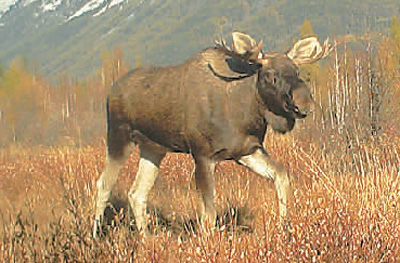
  Moose photographed in the wild in Altai Mountain. It is the largest deer in the world. Its protection level will be raised to the first level. Institute of Zoology,Chinese Academy of Sciences

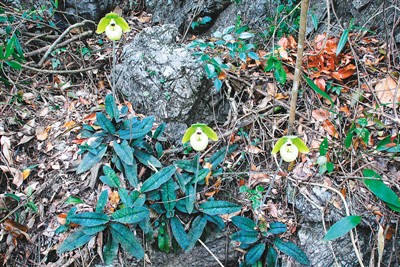
  Qingdao lily, also known as Laoshan lily, is a perennial monocotyledonous herb, native to Shandong Province, and is a newly added second-class protected species.

  Paphiopedilum Malipo is a newly recorded first-class protected species. institute of botany,the chinese academy of sciences

  A few days ago, the newly compiled List of National Key Protected Wild Animals (hereinafter referred to as the List of Animals) and List of National Key Protected Wild Plants (hereinafter referred to as the List of Plants) began to be publicized to the whole society and solicited opinions.

  Scientists believe that biodiversity includes animals, plants, microorganisms, ecosystems and their ecological processes, among which animals and plants are the most important part of the biological world and have the closest relationship with human beings. The protection of wild animals and plants is the basis of maintaining biodiversity and ecological balance, and is also closely related to the declaration of world heritage and the establishment of national parks, nature reserves and scenic spots.

  The number of listed species has increased significantly.

  "Overall, the updating of the directory will have a far-reaching impact on the protection of endangered wild animals and plants in China, and will also be conducive to the country’s ecological protection, biodiversity protection, heritage site protection and the restoration of the national ecological environment." Jiang Zhigang, a researcher at the Institute of Zoology, Chinese Academy of Sciences, participated in the research on mammals in the Catalogue of Animals. He said that the country’s work of updating the list of animals and plants has condensed brand-new scientific and technological wisdom. Scientific and technological workers absorb the latest zoological knowledge and research results at home and abroad, and comprehensively consider the living conditions, endangered conditions, protection levels and management needs of species; The opinions of experts, managers and the public were also widely solicited.

  The Animal Catalogue for this consultation involves 661 species of wild animals in 17 classes and 70 orders, which is more than twice as many as the first edition in 1989. "Scientists generally believe that the current endangered situation of species is still serious, and more and more species need to be protected. The main influencing factors are the change of species’ living conditions, endangered status, management needs and international factors. Recently, it was affected by the COVID-19 epidemic. " By clarifying the protection level of wild animals again, we are actually re-examining the relationship between people and wild animals. Jiang Zhigang thinks so.

  The newly compiled Catalogue of Plants contains 468 species and 25 species of wild plants. On the basis of the first batch of Catalogue of Plants, 55 species were deleted and 296 species and 17 species were added. The number of species listed in the two lists has increased significantly compared with before.

  Dr. Qin Haining from Institute of Botany, Chinese Academy of Sciences, has been involved in the tracking and revision of the Catalogue of Plants since it was first published in China in 1999. He said that the number of species newly compiled in the Catalogue of Plants has nearly doubled compared with before. "When the first batch of Plant Catalogue was published in 1999, many plant groups with high economic value and serious resource destruction were not included for various reasons. For example, Orchidaceae, Peony and Ginseng were not added until this time. " He emphasized that in recent years, the state has obviously strengthened the protection of the natural environment and enhanced its emphasis on ecological concepts; In addition, after the COVID-19 epidemic, the whole society paid more attention to animal and plant protection … … These social development backgrounds have given a "green light" to the expansion and publication of the directory.

  Respond to the global protection goal

  On July 9th, while the newly compiled Catalogue of Plants was publicly solicited for comments, the World Conservation Union (IUCN) also updated the latest data in 2020 for the IUCN Global Red List of Threatened Species (hereinafter referred to as the IUCN Red List).

  Qin Haining believes that the purpose of compiling these "lists" is to show the endangered status of species, provide a basis for the government to formulate protection policies, and attract public attention. In the process of updating the Catalogue of Plants, we not only refer to the management effect and growth and decline of protected species in China for more than 20 years, but also refer to the list of plants that should be given priority and priority protection listed in the Red List of IUCN and the Red List of Biodiversity in China compiled by China. However, these directories have their own characteristics. IUCN Red List and China Biodiversity Red List are expert systems compiled according to international common standards, which encourage "all assessments should be made". Only some species in the list are endangered. For example, the Red List of Biodiversity in China — — Volume of Higher Plants has assessed more than 34,000 species of plants in China, of which only 3,700 species are "threatened", accounting for about 11%. The Catalogue of Animals and the Catalogue of Plants are issued by the government and provide legal protection. The red list ranks the degree of endangerment in the first place; The protection list first considers the values of economy, scientific research and ecological culture.

  In December 2019, the Ministry of Natural Resources became a national member representative of the World Conservation Union (IUCN).

  "The state is the subject of threatened species protection. ‘ Red List of National Endangered Species ’ It reflects the living conditions of this species in this country, "Jiang Zhigang said: For example, moose has a large population and wide distribution in North America and Europe, and was rated as" non-dangerous "by the IUCN Red List. But it is completely different in China, which is only distributed in Aershan and Daxing ‘anling, so it was rated as "extremely dangerous" by the Red List of Biodiversity in China. This provides an important basis for China to formulate protection countermeasures.

  It is of great significance to the development of natural heritage.

  Experts agree that the gradual implementation of the newly compiled Catalogue of Animals and Catalogue of Plants is an important event for biodiversity protection in China and an important embodiment of the country’s emphasis on ecological civilization construction.

  Jiang Zhigang explained that the updating process of Animal Catalogue and Plant Catalogue is that the state constantly confirms and reminds people in the form of laws and regulations to restrain people’s behavior in nature reserves. "This will definitely have a positive impact on the protection of the world natural heritage." Qin Haining added: "When we talk about biodiversity in the world natural heritage standards, we will mention the quantity and value of endemic, endangered and protected species. 50% of the wild plants in China and 60% of the species on the protection list are endemic to China, which means that they are unique resources in the world. Therefore, protecting biodiversity in China means protecting global biodiversity. Therefore, the promotion of the new catalogue is conducive to the declaration of new heritage sites and the protection of the original natural heritage sites. "

  After the formal promulgation and implementation, the relevant management and law enforcement departments will implement protection measures according to the two new catalogues, delimit new protected areas, and use this as a basis to approve projects related to biodiversity protection and control exports. Qin Haining believes that the protection of animal and plant species still needs to be combined with the protection of ecosystems to produce the best results. He believes that after the official publication of the directory, the state needs to start supporting protection measures as soon as possible, and the management department should establish a long-term tracking and updating mechanism, such as formulating the principle of updating and withdrawing the directory, and regularly updating it every once in a while.

  Extended reading

  In the Catalogue of Animals for public consultation, giant pandas, red-crowned cranes, tigers, leopards and snow leopards are still under first-class protection. The familiar Tibetan antelope, Tibetan wild donkey and python are reduced to secondary protection. In addition, snakes and fish that were common in the wild were included in a large number this time. Among them, 20 species of Serpentidae are newly listed in the list, and the protection levels of Jinggangshan Ridge Snake, Sansuo Snake, Xizang Hot Spring Snake, Sichuan Hot Spring Snake and Shangri-La Hot Spring Snake are all Grade I; 29 species of CYPRINIDAE were newly listed, among which tong yu in the north and tong yu in the wild round mouth were added as the first-class protected species.

  (The photos in this article are from the Internet except the signature)

Summary of Science: What is Science of Science?

Original KATY B?RNER and other intelligence clubs.
introduction

With the progress of science, the research on citation network, research results, science policy and so on has attracted more and more attention, and gradually formed an interdisciplinary subject-the Science of Science. In 2018, many scholars led by Albert-László Barabási, a network scientist, published a heavy review in Science, which comprehensively introduced this "high-level discipline" from the interdisciplinary methods of scientology and the guidance of scientology to improve scientific research productivity.

Santo Fortunato, Carl T. Bergstrom, Katy Brner et al | Author

Chen Xi |

Cui Haochuan | proofreading

Wangyi Lin, Deng Yixue | Editor

catalogue

I. Structure Summary

1. Background

2. Progress

Step 3 look ahead

Second, the text

1. Summary

2. A network of scientists, scientific research institutions and scientific research ideas.

3. Selection of research questions

4. Innovation

5. Dynamics of scientists’ academic career

6. Team research

7. The dynamics behind the cited quantity

8. Outlook

Attachment: References

I. Structure Summary

1. Background

Nowadays, with the increasing digital access to the whole process of scientific research, including scientific research fund support, academic production, scientist cooperation, citation of articles and career movement of scientists, people have gained unprecedented opportunities to explore the structure and development of science. The science of science (hereinafter abbreviated as SciSci) provides a quantitative understanding of the interaction between scientific units with different space and time scales: it allows us to understand the conditions behind "creativity" and the process of scientific discovery, and its ultimate goal is to develop a series of policies and tools that can accelerate scientific research.

In the past ten years, science of science has attracted scientists from natural, computer and sociological research backgrounds. Together, they built scientific research big data for empirical analysis and generation model research to capture the productivity behind science and the development and changes of practitioners. Scientology hopes to understand and promote various factors in scientific research more deeply, so as to solve environmental, social and technical problems more effectively.

Science can be regarded as an expanding and evolving network of ideas, scholars and papers. Science of science explores the universal laws of universal or specific fields based on scientific structure and dynamics.

2. Progress

Science can be described as a complex, self-organizing and evolving network. It consists of scholars, papers and ideas. This method of describing the problem explains many potential models, for example, the study of cooperative networks and the study of citation networks explain the birth of new disciplines and the birth of major discoveries. The microscopic model tracks the dynamics of citation accumulation, which enables us to predict the influence of a single paper in the future.

Scientology reveals the choices and trade-offs that scientists face in expanding their careers and scientific horizons. For example, the analysis shows that scholars don’t like risks and prefer to study topics related to their current professional knowledge, which limits their potential for future discovery. Those who are willing to break this pattern will engage in higher-risk careers, but they are more likely to make major breakthroughs.

In a word, the most innovative science is based on the traditional combination of disciplines, but this combination is often unprecedented. Finally, with the shift of research work from individuals to teams, scientology pays more and more attention to the influence and significance of teams in scientific research. Some studies have found that revolutionary ideas are usually born in small teams. In contrast, large teams tend to advance research in frontier areas and gain high but usually short-term influence.

Step 3 look ahead

Scientology provides a quantitative understanding of the structural framework among scientists, research institutions and ideas. It helps to identify the basic mechanism behind scientific discovery. These interdisciplinary data-driven contents supplement the contents of scientometrics and related fields such as economics and sociology of science.

Although scientology is eager for long-term universal laws and mechanisms applicable to all scientific fields, it first needs to face the inevitable differences in culture, habits and preferences between different fields and countries. This change makes it difficult to understand some cross-disciplinary opinions and implement relevant scientific policies. The differences between scientific research problems and data are generally related to the field, which also implies that the research of science of science will change accordingly in the future because of "subject characteristics"

Densification of scientific boundaries is also a signal of interdisciplinary exploration, integration and innovation.

Second, the text

1. Summary

Identifying the driving force behind scientific development and constructing a model that can capture scientific development can guide people to design policies to promote scientific progress. For example, by strengthening the policy design of scientists’ career path, better scientific performance evaluation, more effective funding design, and even identifying the frontier research that will be born. Scientology uses large-scale data about scientific production to find the laws and patterns of universal and specific disciplines. Here, we review the latest development of the interdisciplinary field of science of science.

A large number of digital data about academic output provide an unprecedented opportunity for exploring the model to characterize the structure and evolution of science. Scientology puts the process of scientific development under a microscope and has a quantitative understanding of the origin of scientific discovery, creativity and practice. It can develop tools and policies to accelerate scientific progress.

The emergence of scientology is driven by two key factors.

The first is the availability of data. In addition to the proprietary Web of Science(WoS), it is the first citation index with a long history, and there are many data sources today (Scopus, PubMed, Google Scholar, Microsoft Academic, US Patent and Trademark Office, etc.). Some of these sources are provided free of charge, covering millions of data points related to scientists and their achievements, which come from all walks of life, north and south.

Secondly, scientology benefited from the influx and cooperation of natural, computational and social scientists, who developed data-based tools to enable key tests to run on generative models, aiming at revealing the phenomena discovered by science, their internal mechanisms and driving forces.

One of the highlights of this emerging field is the process of breaking the boundaries of disciplines. Scientology integrates research findings and theories from multiple disciplines and uses a wide range of data and methods.

From scientometrics, I learned the methods of analyzing and measuring large-scale data sets. From sociology of science, it learned some theoretical concepts and social processes; From innovation research, it explores ways from scientific discovery to invention and economic change.

Science of science depends on the integration of a wide range of quantitative methods, from descriptive statistics and data visualization to advanced econometric methods, network science methods, machine learning algorithms, mathematical analysis and computer simulation, including agent-based modeling.

The value proposition of scientology is based on the assumption that with the in-depth understanding of the factors behind successful scientific breakthroughs, we can grasp the scientific research progress as a whole, so as to solve social problems more effectively.

2. A network of scientists, research institutions and ideas.

Contemporary science is a dynamic system driven by the complex interaction among social structure, knowledge representa-tions and the natural world. Scientific knowledge consists of concepts and relationships in research papers, books, patents, software and other artificial products in academic fields. These contents are classified into disciplines and broader fields according to distance and closeness. These social, conceptual and material elements are interrelated through formal and informal information, ideas, scientific research practices, tools and case information flows.

Therefore, science can be described as a complex, self-organized and developing multiscale network.

Early research found that the number of scientific documents accumulated exponentially with time (2), and the number of documents would double in an average of 15 years (Figure 1). However, don’t think that scientific ideas have multiplied with the number of documents. The technology and economy of the publishing industry have also improved with time, and the production efficiency of published articles has also improved. In addition, newly published articles in the field of science tend to gather in different knowledge fields (3).

Through large-scale text analysis, researchers use phrases extracted from titles and abstracts to measure the cognitive degree of scientific literature. They found that the scope of scientific concepts expanded linearly with time. In other words, although the number of published articles increases exponentially, the new concept is that it increases linearly with the passage of time, as shown in Figure 1. (4)
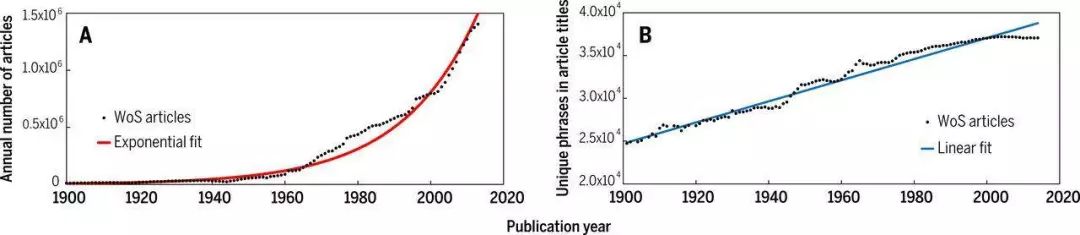
Figure 1 The growth of science. (a) Extract the relationship between the annual output of literature and time in WoS database. (b) The growth of new scientific discoveries covered by indexed documents in B)WoS. This is determined by counting the number of concepts in a fixed number of articles (4).

Words and phrases commonly used in article titles and abstracts spread through citation networks, forming a pattern, which will be replaced by new paradigms at some time (5). By applying the network science method to the citation network, researchers can identify the communities corresponding to the subsets of published articles that frequently quote each other (6). These communities usually correspond to groups of authors (7) who share a common position on specific issues or practitioners (8) who work on the same specialized scientific topics. Recently, an article focusing on biomedical science shows how the growth of publications has strengthened the "subject community" (9).

Once a new paper is published, the relationship between scientists, drugs, diseases and methods ("these things" are nodes in network analysis), that is, hyperedge in network analysis, will be updated and strengthened. Most newly established links are only one or two steps away from each other, which means that when scientists choose new research topics, they prefer to choose content directly related to the current professional knowledge or the professional knowledge of their collaborators. This densification shows that the existing scientific structure may limit people’s research content in the future.

Densification of scientific boundaries is also a signal of interdisciplinary exploration, integration and innovation.

The life cycle analysis of eight research fields (10) shows that successful fields have gone through the process of knowledge and social unification, which leads to a huge channel in the collaborative network (104), which can be compared with a large group of co-authors under normal conditions. The mathematical model in which a scientist random walks to choose a collaborator on the cooperative network successfully reproduces the productivity of the author, the number of authors in each discipline, and the interdisciplinary nature between the content of the paper and the author (11).

3. Selection of research questions

How do scientists decide which research problems to study? Scientific sociologists have long speculated that these choices are determined by the tense game between the risks of traditional research and innovation (12, 13). Scientists who adhere to the tradition of research in their fields will usually promote the research process of key topics by publishing a series of steady research results, thus appearing fruitful.

However, focusing too much on a topic may limit researchers’ ability to perceive and seize opportunities. These opportunities can find new ideas to promote the development of this field. For example, a case study on the relationship between biomedical scientists’ choice of new chemicals and existing chemicals shows that with the maturity of research field, researchers pay more and more attention to existing knowledge (3).

Although innovative articles often have a greater impact than conservative articles, high-risk and high-innovation strategies are rare, because extra rewards can’t make up for the risk of publishing failure. Awards and honors seem to be the main incentives to resist conservatism. They can break the tradition and give people new surprises. Although there are many factors that affect the work that scientists have to do, the macro-model of controlling the change of research interest in scientific undertakings is obviously traceable, and these laws are hidden in the career path of scientific research and scientists. (14)。

Scientists’ choice of research topics mainly affects their personal careers and the careers of those who depend on them. However, the decision-making of scientists sometimes plays a greater role in determining the direction of scientific discovery (Figure 2). Conservative research strategies mean that (15) personal career development has a stable and good prospect, but the promotion effect on the whole discipline is poor. This strategy is magnified by a phenomenon called file drawer problem (16): results inconsistent with established assumptions are rarely published, leading to systematic bias of published research. The untenable and false content is sometimes even regarded as a classic (17).

File drawer problem:

Refers to the researcher’s bias in selecting references, and the documents that do not meet the research purpose will stay in the drawer instead of taking them out for reference.

More bold hypotheses may have been tested by generations of scientists, but only those who are successful enough to produce articles can be known to us. One way to solve this conservative trap problem is to urge funding agencies to actively sponsor risk projects that test new hypotheses, so that special interest groups can undertake research on special diseases.

The results of quantitative analysis show that the distribution of biomedical resources in the United States is related to historical distribution and research, rather than to the severity of actual diseases (18), pointing out the systematic dislocation between biomedical needs and resources. This dislocation makes people wonder to what extent these funds run by scientists with solid habits can affect the development of science without additional supervision, encouragement and feedback.

4. Innovation

The analysis of articles and patents proves that the rare combination of scientific discovery and invention tends to get higher citation rate (3). Interdisciplinary research is a symbolic reorganization process (19); Therefore, the successful combination of historically irrelevant ideas and resources is very important for interdisciplinary research, which is often counterintuitive and leads to highly influential new ideas (20). However, the evidence from the fund application shows that when faced with truly novel (21-23) or interdisciplinary (24) research topics, the expert evaluation system usually gives lower scores.
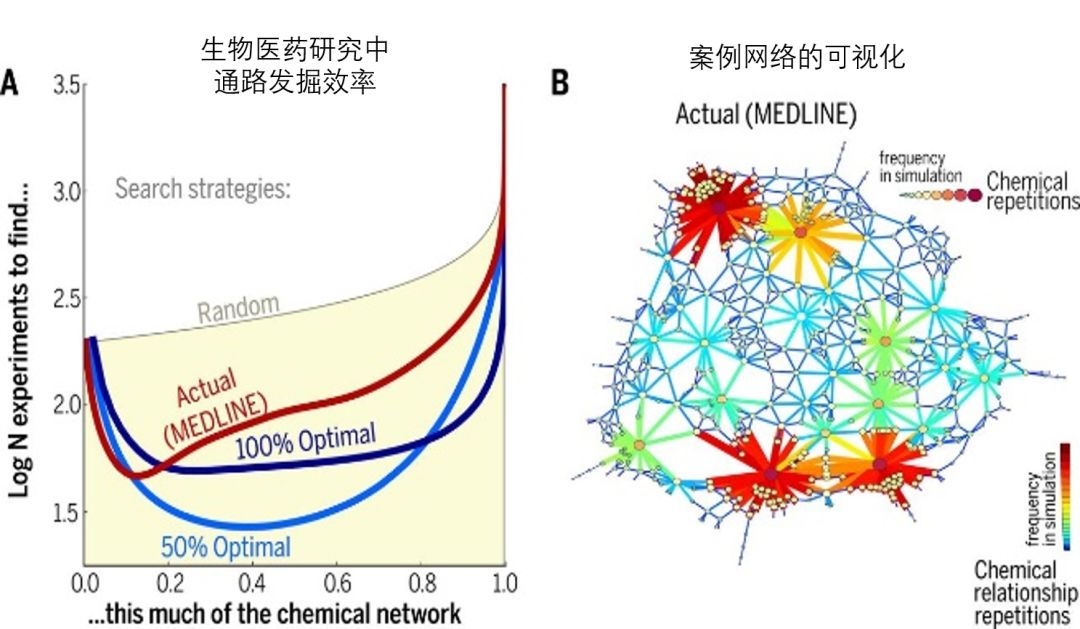
Figure 2 Choose the experiment to accelerate collective discovery.

(a) A study measured the discovery efficiency of all new drugs published in MEDLINE in 2010. The model does not consider the difference in difficulty or cost of specific experiments. The efficiency diagram of this global scientific strategy reflects the relationship between the newly published new biochemical pathway (horizontal axis) and the average number of experiments (vertical axis). Correspondingly, the network diagram between drugs can be made. The researchers used all kinds of hypothetical strategy efficiency to compare with the actual situation, and found the optimal strategy of the best network with complete randomness and 50% and 100%. A lower value on the vertical axis indicates a more effective strategy, and the mode of new discovery is not optimal. The actual strategy is most suitable for discovering 13% of chemical networks, while the 50% optimized strategy is effective for discovering 50% of chemical networks, but both of them are not as good as the 100% best strategy for revealing the whole network.

(b) In reality, drug discovery networks can be plotted in the form of charts. The new connection born by this strategy is the research around some "important" and highly related chemicals, such as the hot spots in the picture, but the 100% efficient research strategy shows a more uniform discovery law and is unlikely to "follow the crowd" in the space of scientific possibility. (15)

The most influential scientific work mainly comes from the combination of conventional content, but it also comes from the unusual combination (25-27). This type of paper is twice as likely to get a high citation rate (26). In other words, the mixture of new and existing elements is the safest way to succeed in scientific progress.

5. Dynamics of scientists’ academic career

Under the broad market background of knowledge production and utilization, various academic professions have emerged (28). Therefore, scientific professional achievements are not only studied in terms of individual motivation and marginal productivity (relative gain and energy) (29), but also tested in terms of institutional motivation (30,31) and competition (32). It is necessary to combine large-scale metadata)(33) of individuals, geography and time with high content resolution to construct a career trajectory that can be analyzed from different angles. For example, a study found that funding schemes that tolerate early failures (rewarding long-term success) are more likely to produce influential published articles than funding for short-term review cycles (31).

Competitive interactive system with time scale is a classic problem in complex system science. The multi-angle nature of science is the driving force to generate a model, which can highlight the unexpected consequences of policies. For example, the career development model shows that short-term contracts are an important reason for productivity fluctuations, because it usually leads to the sudden end of a career.

The difference in productivity and career length can explain the difference in cooperation mode (38) and recruitment rate (35) between male and female scientists. On the other hand, experimental evidence shows that prejudice against women occurs in the early stage of career. When gender is randomly assigned in the resumes of a group of applicants, the recruitment committee systematically belittles the achievements of female candidates (40).

Up to now, most studies have focused on relatively small samples. Improving and compiling large-scale scientists’ data sets and using information from different sources (for example, publishing records, funding applications and awards) will help to understand the causes of inequality more deeply. Establish a motivation model that can provide information for policy solutions.

The mobility of scientists is another important factor in providing diversified career opportunities. Most researches on talent mobility focus on quantifying the inflow and outflow of talents in countries or regions (41,42), especially after policy changes. However, there is still little research on personal mobility and its career impact, mainly because it is difficult to obtain longitudinal information about scientists’ migration and the explanation of the reasons behind the mobility decision.

According to the number of articles cited, it is found that scientists who have left their country of origin perform better in the number of articles cited than those who have not left. This may stem from a choice preference: a good scholar (who has the ability to go abroad) can easily get a better position (a stronger team). (43,44)。 In addition, scientists tend to move between institutions with equal reputations (45). However, when quantifying the impact of job-hopping by citing, no increase or decrease in the system is found, even if the scientist moves to a relatively high or low-level institution (46). In other words, it is not the institution but the individual researchers who make up the institution that have an impact.

Another potential factor affecting career is reputation, and the dilemma it brings to the starting point of reviewing literature, evaluating proposals and making decisions. The reputation of the author, measured by the total citation of its previous output, can significantly increase the number of citations of the paper in the first few years after publication (47). However, after this initial stage, the impact depends on the scientific community’s acceptance of the work. This discovery and the work in citation (46) show that reputation is not the primary productive force for fruitful scientific undertakings, but hard work, talent and advancing despite difficulties are the driving factors.

A policy-related question is whether creativity and innovation are related to age or career stage. After decades of research on outstanding researchers and innovators, it is believed that the major breakthrough occurred in a relatively early stage of career, with a median age of 35 (48).

However, recent work shows that this tendency of fully recording early career discovery is completely explained by the tendency of productivity, which is very high in the early stage of a scientist’s career and then declines (49). In other words, there is no age pattern in innovation: the paper most cited by a scholar can be any of his or her papers, regardless of the age or career stage at the time of publication (Figure 3). The stochastic model describing the development of influence also shows that the breakthrough is produced by the combination of scientists’ ability and the selection of problems with high potential, intuition and luck (49).
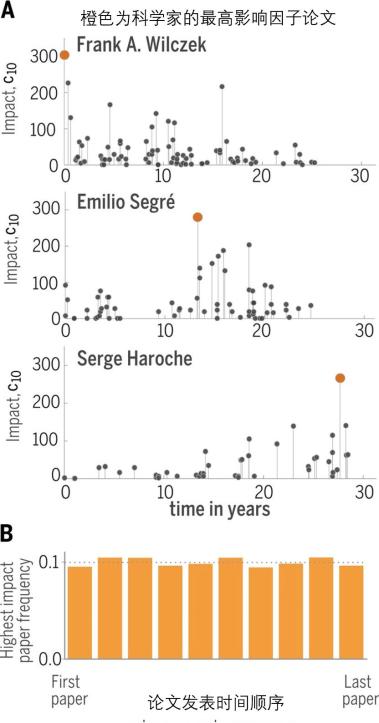
Fig. 3 The influence of science of science on science profession

(a) Publication records of three Nobel Prize winners in physics. The horizontal axis represents the number of years after the winners first published their articles, each circle corresponds to a research paper, and the height c10 of the circle represents the influence of the paper, which means the number of citations after 10 years. The highest impact papers of the winners are indicated by orange circles.

(b) Histograms of papers with the highest impact in the sequence of papers by scientists, calculated for 10,000 scientists. The flatness of the histogram shows that in the sequence of papers published by scientists, the time when the most influential work appears may have the same probability (49).

6. Team research

In the past decades, the dependence of scientific research on teamwork has increased day by day, which represents a fundamental change in the way of scientific research. A study of authors of 19.9 million research papers and 2.1 million patents found an almost universal trend of teamwork in scientific research (50) (Figure 4). For example, in 1955, the scientific and engineering team wrote the same number of papers as a single author. However, by 2013, the proportion of papers written by teams increased to 90% (51).

Nowadays, papers written by scientific and engineering teams are 6.3 times more likely to get more than 1,000 citations, or more citations than individual papers. This phenomenon cannot be explained by self-citations (50,52). One possible reason is that the team can come up with more novel combinations of ideas (26) or produce resources that other researchers can use later (for example, genomics).

The data shows that the team is 38% more likely to combine the scientific breakthrough content into the familiar knowledge field than the individual author, which proves the premise that the team can combine different majors together, thus effectively promoting the scientific breakthrough. Having more collaboration means increasing the visibility among scholars through more co-authors, so they may introduce each other’s work into the internal network of scientific research, which means that each researcher should share his reputation with his colleagues (29).
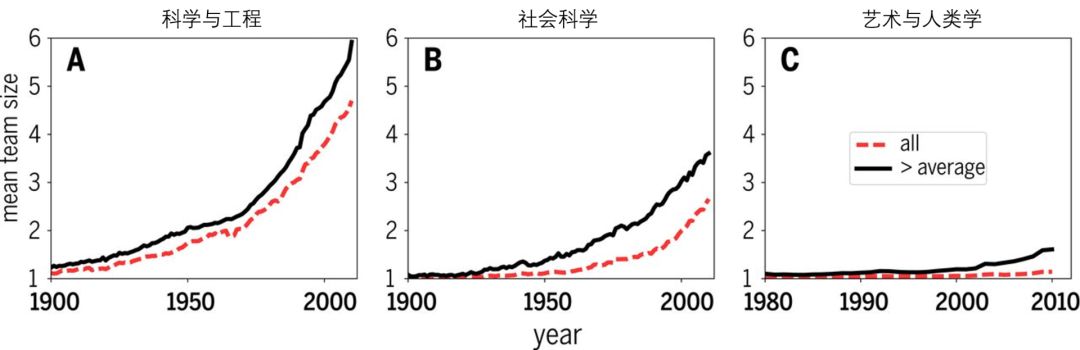
Figure 4 Team size and impact

In the past century, the average team size has been steadily expanding. The red dotted line represents the average number of co-authors in all papers; The black curve considers the average team size of articles with more citations than the average in the field. The black curve is systematically above the red dotted line, which means that large teams are more likely to produce high-impact work than small teams. Each chart corresponds to a discipline category specified by WoS (a) science and engineering, (b) social science, and (c) arts and humanities.

On average, researchers from large teams can get more citations in various fields. Research shows that small teams tend to change science and technology with new ideas and opportunities, while large teams promote the existing research process (53). Therefore, it may be important to finance and train teams of all sizes to ease the bureaucracy of science (28).

At the same time, the team size is increasing at an average rate of 17% every ten years (50, 54, 105). This trend has changed because of the underlying structure of the team. Scientific teams include small, stable "core" teams and large teams, and dynamically expanding teams (55). The increasing team size in most fields is produced by the continuous expansion of dynamic expansion teams, which start with small core teams, but then attract new members through the original accumulation based on productivity. Scale is the key determinant of team survival strategy: if small teams maintain a stable core, they will survive for a longer time, but large teams can survive for a longer time by showing the mechanism of member mobility (56).

With the acceleration and complexity of science, the tools needed to expand the frontier of knowledge are increasing in scale and accuracy. For most individual investigators, research tools are too valuable, but so are most institutions. Academic cooperation has always been a key solution to this problem, so that resources can be more concentrated on scientific research.

The Large Hadron Collider at CERN is the largest and most powerful particle collider in the world. Its birth cannot be ignored by academic cooperation. More than 10,000 scientists and engineers from more than 100 countries participated in the establishment of this collision. However, with the increase of scale, the balance between value and risk related to "big science" comes into being (2). Although it can solve a bigger problem, the problem of scientific repeatability requires you to repeat the experiment, which may not be feasible in practice or economy.

Collaborators will have a great influence on science. According to recent research (57,58), a scientist who loses a star collaborator will experience a sharp drop in productivity, especially if the scattered collaborator is an ordinary researcher. The average number of citations of published articles with strong cooperators will increase by 17%, which shows the value of professional cooperation (59).

In view of the increasing number of authors in research papers, who should and does get the most reputation? The classic theory of the misallocation of reputation in science is Matthew effect (60), in which scientists of higher status who participated in cooperative work gained excessive reputation for their contributions. It is difficult to assign credibility to collaborative participants because individual contributions cannot be easily distinguished (61). However, it is possible to check the common patterns of co-author papers to determine the reputation assigned by each co-author in the group (62).

7. The dynamics behind the cited quantity

Academic citation is still the mainstream way to measure academic achievements in science. In view of the long-term dependence on mainstream citation standards (63-66), the dynamic law of citation accumulation has been verified by several generations of scholars. According to the pioneering research of Price(67), the distribution of citations in scientific papers is highly biased: many papers have never been cited, but pioneering papers can accumulate 10,000 or more citations. This uneven citation distribution is a powerful, natural and innovative attribute of scientific change. When papers are grouped by institutions, it also holds (68). And if the number of citations of a paper is divided by the average citations of the same year of the paper’s classmates, the score distribution obtained is basically the same for all disciplines (69, 70) (Figure 5A).

This means that the influence of papers published by different disciplines can be compared by looking at the relative references. For example, a mathematics paper with 100 citations has a higher academic influence than a microbiology paper with 300 citations.
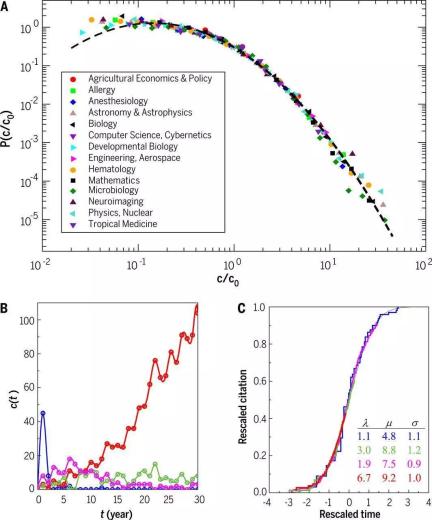
Fig. 5 universality of citation dynamics

(a) If the citation frequency c of each paper is divided by the average citation frequency c0 of all papers in this discipline, then the citation distribution of papers published in the same discipline and year is basically uniform in all disciplines. The dotted line is a lognormal fitting curve. (69)

(b) The citation history of four papers published in "Physical Review" in B)1964, according to its unique dynamic selection, shows "jumping decay" mode (blue), peak delay (purple), stable citation number mode (green) and rising citation index (red). (c) The citation of a single paper is determined by three parameters: fitness λ, immediacy μ, and longevity σ. The citation of each paper in (b) is readjusted by appropriate (λ, μ, σ) parameters, and the four papers are merged into a general function, which is the same for all disciplines. (77)

The tail information of distribution can capture the number of high-impact papers and reveal the mechanism that drives the accumulation of citation numbers. Recent analysis shows that it follows the power law distribution (71-73). The tail of power law can be generated by the process of accumulating advantages (74), which is called preferential attachment)(75) in network science, indicating that the probability of citing papers increases with the increase of the number of citations it has accumulated.

Such a model can be used together with other characteristics of citation dynamics, such as the obsolescence of knowledge, to enhance the descriptive nature of the model. The number of articles cited decreases with time (76, 79, 106), or a fitness parameter can be used to correspond to the attraction of each paper to the scientific community (77,78). Only a small number of papers can’t be described by the above hypothesis, and they are called "Sleeping Beauty" because they were ignored for a period of time after publication, but after a period of time, they suddenly received a lot of attention and quotations (80,81).

The above formation mechanism can be used to predict the citation dynamics of a single paper. A prediction model (77) assumes that the citation probability of a paper depends on the number of previous citations, and the number of citations of this article can be predicted by considering the obsolescence factor and fitness parameter of each article (Figure 5, B, C). The long-term impact of a scientific research work can be inferred (77). Other studies have identified predictive indicators related to paper impact factors (82), such as journal impact factors (72). Some studies show that a scientist’s h-index(83) can be accurately predicted (84). Although if the career stage of scientists and the accumulation and non-decline of h- index are taken into account, the prediction accuracy will be reduced (85).

Behind eliminating the inconsistency of quantitative evaluation indicators and commonly used statistical data in science, the internal mechanism of generating these data is a very important mechanism in scientific research.

8. Outlook

Although scientific research does have its universality, the differences in substantive subject background in culture, habits and preferences make it difficult to understand some cross-disciplinary opinions in some fields, and the corresponding policies are difficult to implement. The differences between the questions, data and skills required by each discipline indicate that further insights can be obtained from scientific research in specific fields. These research simulations and predictions are adapted to the needs and opportunities in each subject area. For young scientists, the research results of scientology provide effective insights from past scientific research and help guide them to foresee the future (Box1).

Box1: Lessons from Science of Science

Innovation and tradition: pure, truly innovative and highly interdisciplinary ideas may not reach the scientific influence they can achieve. In order to enhance its influence, new ideas should be published in the existing academic environment (26).

Persistence: As long as the research status is maintained, there will never be a case that a scientist is "too old" to make a major discovery (49).

Cooperation: Now the research mode is shifting to teams, so it is beneficial to participate in cooperation. The works of small teams are often more subversive, while those strong teams often have more resources to do more influential big work (4,50,53).

Reputation: Most reputations will belong to co-authors who have consistently worked in the field of literature publishing (62).

Funding: Although the judging panel promises to support innovation, they are actually more inclined to ignore innovation. Funding agencies should ask reviewers to evaluate innovation, not just the success they expected in their minds (24).

The contribution of science of science of science of science of science is that it begins to understand the relationship structure among scientists, institutions and ideas in detail, which is the key starting point to identify the operating mechanism behind it. In a word, these data-driven works supplement the contents lacking in related research fields, such as economics (30) and sociology of science (60,86).

Causal estimation is a typical example in economics. Econometrics research will collect and use comprehensive data sources to simulate the needs (31,42). Evaluating causality is one of the most needed future developments of science of science: many descriptive studies have revealed the strong correlation between scientific research structure and successful results, but the degree to which a specific structure "leads" to the results has not been explored-we don’t know the causality behind the correlation.

By establishing closer cooperation with researchers, scientology will be able to better identify the connections found from models and large-scale data, which have the potential to promote the birth of relevant policies. But the experiment of scientology may be the biggest challenge that scientology has not yet faced. Running randomized controlled trials will change the research process of individuals or scientific institutions supported by taxes, and such a high cost will inevitably lead to criticism and obstacles (87).

Therefore, in the near future, quasi-experimental approaches will be dominant in scientific investigation.

Most scientific research takes scientific research literature as the main data source, which means that the research objects of this discipline are those successful cases. However, most scientific research has failed, sometimes even a huge failure. In view of the fact that scientists fail more than they succeed, it is very important to understand when, where, why and how ideas fail. These studies can provide meaningful guidance for the recurring crisis and help us solve the file drawer problem. By revealing creative activities, these studies can also greatly promote the interpretation of human creativity.

Similar to the economic system, the scientific system is an economic system that uses one-dimensional "currency" quotations. This implies that classes also exist in the scientific research system, in which "the richer the rich" inhibits the spread of new ideas, especially those new scientists and those who do not conform to the traditional identity in a specific field.

The scientific system can be improved by expanding the number and scope of performance indicators. In this regard, it is very important to develop alternative indicators to measure the metrics covering web )(88), social media (89) activity and social impact (90). Other measurable dimensions include information (such as data) shared by scientists and competitors (91), the help they provide to their peers (92), and their reliability as peer reviewers (93).

However, due to the need for a large number of indicators, more work needs to be done to understand the role of each indicator and what it does not capture, so as to ensure meaningful interpretation and avoid abuse. Science of science can make various contributions by providing models, which can deeply understand the coverage of scientific performance indicators and the mechanism behind them. For example, the empirical model observed when using alternative indicators (for example, the distribution of document downloads) will enable us to explore their relationship with the measurement system based on the number of citations (94) and identify black-box operations.

Combining the index based on the number of citations with other indexes will promote the diversified development of scientific research and realize the division of scientific research productivity, so scientists can achieve achievements in different ways. Science is an ecosystem, which needs not only publication, but also disseminators, teachers and experts who pay attention to details. We need people who can ask novel and innovative questions and who can answer them. If curiosity, creativity and knowledge can be effectively exchanged-especially information about the application and social impact of science and technology-more diversified methods can reduce duplication and science can flourish (95).

One problem that science of science tries to solve is the allocation of scientific funds. The current peer review system is biased and contradictory (96). Several alternatives have been proposed, such as random allocation of funds (97), professionals-oriented funds (31) that do not involve proposal and review system, review mechanism (98) that is open to online people, review mechanism (99) that removes reviewers’ performance, and scientist crowdfunding (100) funds.

A key field of future research of SciSci is the integration with machine learning and artificial intelligence, so that objective machines can work with human beings. These new tools will have a pleasant far-reaching, because machines may broaden the horizons of scientists more than human collaborators. For example, self-driving vehicle is a machine learning technology, which is a successful combination of known driving technology and unknown driving habit information. The study of mind-machine partnership has provided a wide range of positive effects on decision-making in a wide range of fields such as health, economy, society and law (101-103). How to improve science through the relationship between machine and mind, and how to arrange it to make scientific development more effective? These questions help us to understand the future science.

references

1. E. Garfield, Citation indexes for science; a new dimension in documentation through association of ideas. Science 122, 108–111 (1955). doi: 10.1126/science.122.3159.108;

pmid: 14385826

2. D. J. S. Price, Little Science, Big Science (Columbia Univ. Press, 1963).

3. J. G. Foster, A. Rzhetsky, J. A. Evans, Tradition and innovation in scientists’ research strategies. Am. Sociol. Rev. 80, –908 (2015). 875doi: 10.1177/

0003122415601618

4. S. Milojevi?, Quantifying the cognitive extent of science. J. Informetr. 9, 962–973 (2015). doi: 10.1016/j.joi.2015.10.005

5. T. Kuhn, M. Perc, D. Helbing, Inheritance patterns in citation networks reveal scientific memes. Phys. Rev. X 4, 041036 (2014). doi: 10.1103/PhysRevX.4.041036

6. R. Klavans, K. W. Boyack, Which type of citation analysis generates the most accurate taxonomy of scientific and technical knowledge? J. Assoc. Inf. Sci. Technol. 68, 984–998 (2016). doi: 10.1002/asi.23734

7. U. Shwed, P. S. Bearman, The temporal structure of scientific consensus formation. Am. Sociol. Rev. 75, 817–840 (2010). doi: 10.1177/0003122410388488; pmid: 21886269

8. J. Bruggeman, V. A. Traag, J. Uitermark, Detecting communities through network data. Am. Sociol. Rev. 77, 1050–1063 (2012). doi: 10.1177/0003122412463574

9. F. Shi, J. G. Foster, J. A. Evans, Weaving the fabric of science:

Dynamic network models of science’s unfolding structure. Soc. Networks 43, 73–85 (2015). doi: 10.1016/j.socnet.2015.02.006

10. L. M. A. Bettencourt, D. I. Kaiser, J. Kaur, Scientific discovery and topological transitions in collaboration networks. J. Informetr. 3, 210–221 (2009). doi: 10.1016/

j.joi.2009.03.001

11. X. Sun, J. Kaur, S. Milojevi?, A. Flammini, F. Menczer, Social dynamics of science. Sci. Rep. 3, 1069 (2013). doi: 10.1038/srep01069; pmid: 23323212

12. T. S. Kuhn, The Essential Tension: Selected Studies in Scientific Tradition and Change (Univ. of Chicago Press, 1977).

13. P. Bourdieu, The specificity of the scientific field and the social conditions of the progress of reasons. Soc. Sci. Inf. (Paris) 14, 19–47 (1975). doi: 10.1177/

053901847501400602

14. T. Jia, D. Wang, B. K. Szymanski, Quantifying patterns of research-interest evolution. Nat. Hum. Behav. 1, 0078 (2017).doi: 10.1038/s41562-017-0078

15. A. Rzhetsky, J. G. Foster, I. T. Foster, J. A. Evans, Choosing experiments to accelerate collective discovery. Proc. Natl. Acad. Sci. U.S.A. 112, 14569–14574 (2015).

doi: 10.1073/pnas.1509757112; pmid: 26554009

16. R. Rosenthal, The file drawer problem and tolerance for null results. Psychol. Bull. 86, 638–641 (1979). doi: 10.1037/0033-2909.86.3.638

17. S. B. Nissen, T. Magidson, K. Gross, C. T. Bergstrom, Publication bias and the canonization of false facts. eLife 5, e21451 (2016). doi: 10.7554/eLife.21451; pmid: 27995896

18. L. Yao, Y. Li, S. Ghosh, J. A. Evans, A. Rzhetsky, Health ROI as a measure of misalignment of biomedical needs and resources. Nat. Biotechnol. 33, 807–811 (2015). doi: 10.1038/nbt.3276; pmid: 26252133

19. C. S. Wagner et al., Approaches to understanding and measuring interdisciplinary scientific research (IDR): A review of the literature. J. Informetr. 5, 14–26 (2011). doi: 10.1016/j.joi.2010.06.004

20. V. Larivière, S. Haustein, K. B?rner, Long-distance interdisciplinarity leads to higher scientific impact. PLOS ONE 10, e0122565 (2015). doi: 10.1371/journal.pone.0122565; pmid: 25822658

21. K. J. Boudreau, E. C. Guinan, K. R. Lakhani, C. Riedl, Looking across and looking beyond the knowledge frontier:

Intellectual distance, novelty, and resource allocation in science. Manage. Sci. 62, 2765–2783 (2016). doi: 10.1287/mnsc.2015.2285; pmid: 27746512

22. E. Leahey, J. Moody, Sociological innovation through subfield

integration. Soc. Currents 1, 228–256 (2014). doi: 10.1177/2329496514540131

23. A. Yegros-Yegros, I. Rafols, P. D’Este, Does interdisciplinary

research lead to higher citation impact? The different effect of proximal and distal interdisciplinarity. PLOS ONE 10, e0135095 (2015). doi:10.1371/journal.pone.0135095; pmid: 26266805

24. L. Bromham, R. Dinnage, X. Hua, Interdisciplinary research has consistently lower funding success. Nature 534, 684–687 (2016). doi: 10.1038/nature18315; pmid: 27357795

25. D. Kim, D. B. Cerigo, H. Jeong, H. Youn, Technological novelty profile and inventions future impact. EPJ Data Sci. 5, 8 (2016). doi: 10.1140/epjds/s13688-016-0069-1

26. B. Uzzi, S. Mukherjee, M. Stringer, B. Jones, Atypical combinations and scientific impact. Science 342, 468–472 (2013). doi: 10.1126/science.1240474; pmid: 24159044

27. J. Wang, R. Veugelers, P. Stephan, “Bias against novelty in science: A cautionary tale for users of bibliometric indicators” (NBER Working Paper No. 22180, National Bureau of Economic Research, 2016).

28. J. P. Walsh, Y.-N. Lee, The bureaucratization of science. Res. Policy 44, 1584–1600 (2015). doi: 10.1016/j.respol.2015.04.010

29. A. M. Petersen, M. Riccaboni, H. E. Stanley, F. Pammolli, Persistence and uncertainty in the academic career.Proc. Natl. Acad. Sci. U.S.A. 109, 5213–5218 (2012). doi: 10.1073/pnas.1121429109; pmid: 22431620

30. P. E. Stephan, How Economics Shapes Science (Harvard Univ.

Press, 2012).

31. P. Azoulay, J. S. Graff Zivin, G. Manso, Incentives and creativity: Evidence from the academic life sciences. Rand J. Econ. 42, 527–554 (2011). doi: 10.1111/

j.1756-2171.2011.00140.x

32. R. Freeman, E. Weinstein, E. Marincola, J. Rosenbaum, F. Solomon, Competition and careers in biosciences. Science

294, 2293–2294 (2001). doi: 10.1126/science.1067477; pmid: 11743184

33. J. A. Evans, J. G. Foster, Metaknowledge. Science 331, 721–725 (2011). doi: 10.1126/science.1201765; pmid: 21311014

34. V. Larivière, C. Ni, Y. Gingras, B. Cronin, C. R. Sugimoto, Bibliometrics: Global gender disparities in science. Nature 504, 211–213 (2013). doi: 10.1038/504211a;

pmid: 24350369

35. S. F. Way, D. B. Larremore, A. Clauset, in Proceedings of the 25th International Conference on World Wide Web (WWW ‘16) (ACM, 2016), pp. 1169–1179.

36. J. Duch et al., The possible role of resource requirements and academic career-choice risk on gender differences in publication rate and impact. PLOS ONE 7, e51332 (2012). doi: 10.1371/journal.pone.0051332; pmid: 23251502

37. J. D. West, J. Jacquet, M. M. King, S. J. Correll, C. T. Bergstrom, The role of gender in scholarly authorship. PLOS ONE 8, e66212 (2013). doi: 10.1371/journal.pone.0066212; pmid: 23894278

38. X. H. T. Zeng et al., Differences in collaboration patterns across discipline, career stage, and gender. PLOS Biol. 14, e1002573 (2016). doi: 10.1371/journal.pbio.1002573; pmid: 27814355

39. T. J. Ley, B. H. Hamilton, The gender gap in NIH grant applications. Science 322, 1472–1474 (2008). doi: 10.1126/ science.1165878; pmid: 19056961

40. C. A. Moss-Racusin, J. F. Dovidio, V. L. Brescoll, M. J. Graham, J. Handelsman, Science faculty’s subtle gender biases favor male students. Proc. Natl. Acad. Sci. U.S.A. 109, 16474–16479

(2012). doi: 10.1073/pnas.1211286109; pmid: 22988126

41. R. Van Noorden, Global mobility: Science on the move. Nature 490, 326–329 (2012). doi: 10.1038/490326a; pmid: 23075963

42. O. A. Doria Arrieta, F. Pammolli, A. M. Petersen, Quantifying

the negative impact of brain drain on the integration of European science. Sci. Adv. 3, e1602232 (2017). doi: 10.1126/

sciadv.1602232; pmid: 28439544

43. C. Franzoni, G. Scellato, P. Stephan, The mover’s advantage: The superior performance of migrant scientists. Econ. Lett. 122, 89–93 (2014). doi: 10.1016/j.econlet.2013.10.040

44. C. R. Sugimoto et al., Scientists have most impact when they’re free to move. Nature 550, 29–31 (2017). doi: 10.1038/550029a; pmid: 28980663

45. A. Clauset, S. Arbesman, D. B. Larremore, Systematic inequality and hierarchy in faculty hiring networks. Sci. Adv.1, e1400005 (2015). doi: 10.1126/sciadv.1400005; pmid: 26601125

46. P. Deville et al., Career on the move: Geography, stratification, and scientific impact. Sci. Rep. 4, 4770 (2014). pmid: 24759743

47. A. M. Petersen et al., Reputation and impact in academic careers. Proc. Natl. Acad. Sci. U.S.A. 111, 15316–15321 (2014). doi: 10.1073/pnas.1323111111; pmid: 25288774

48. D. K. Simonton, Creative productivity: A predictive and explanatory model of career trajectories and landmarks. Psychol. Rev. 104, 66–89 (1997). doi: 10.1037/

0033-295X.104.1.66

49. R. Sinatra, D. Wang, P. Deville, C. Song, A.-L. Barabási, Quantifying the evolution of individual scientific impact. Science 354, aaf5239 (2016). doi: 10.1126/science.aaf5239; pmid: 27811240

50. S. Wuchty, B. F. Jones, B. Uzzi, The increasing dominance of teams in production of knowledge. Science 316, 1036–1039 (2007). doi: 10.1126/science.1136099; pmid: 17431139

51. N. J. Cooke, M. L. Hilton, Eds., Enhancing the Effectiveness of Team Science (National Academies Press, 2015).

52. V. Larivière, Y. Gingras, C. R. Sugimoto, A. Tsou, Team size matters: Collaboration and scientific impact since 1900. J. Assoc. Inf. Sci. Technol. 66, 1323–1332 (2015).

doi: 10.1002/asi.23266

53. L. Wu, D. Wang, J. A. Evans, Large teams have developed science and technology; small teams have disrupted it. arXiv:1709.02445 [physics.soc-ph] (7 September 2017).

54. B. F. Jones, The burden of knowledge and the “death of the renaissance man”: Is innovation getting harder? Rev. Econ. Stud. 76, 283–317 (2009). doi: 10.1111/j.1467-937X.2008.00531.x

55. S. Milojevi?, Principles of scientific research team formation and evolution. Proc. Natl. Acad. Sci. U.S.A. 111, 3984–3989 (2014). doi: 10.1073/pnas.1309723111; pmid: 24591626

56. G. Palla, A.-L. Barabási, T. Vicsek, Quantifying social group evolution. Nature 446, 664–667 (2007). doi: 10.1038/nature05670; pmid: 17410175

57. G. J. Borjas, K. B. Doran, Which peers matter? The relative impacts of collaborators, colleagues, and competitors. Rev. Econ. Stat. 97, 1104–1117 (2015). doi: 10.1162/REST_a_00472

58. P. Azoulay, J. G. Zivin, J. Wang, Superstar extinction. Q. J. Econ. 125, 549–589 (2010). doi: 10.1162/qjec.2010.125.2.549

59. A. M. Petersen, Quantifying the impact of weak, strong, and super ties in scientific careers. Proc. Natl. Acad. Sci. U.S.A. 112, E4671–E4680 (2015). doi: 10.1073/pnas.1501444112; pmid: 26261301

60. R. K. Merton, The Matthew effect in science. Science 159, 56–63 (1968). doi: 10.1126/science.159.3810.56

61. L. Allen, J. Scott, A. Brand, M. Hlava, M. Altman, Publishing: Credit where credit is due. Nature 508, 312–313 (2014). doi: 10.1038/508312a; pmid: 24745070

62. H.-W. Shen, A.-L. Barabási, Collective credit allocation in science. Proc. Natl. Acad. Sci. U.S.A. 111, 12325–12330 (2014). doi: 10.1073/pnas.1401992111; pmid: 25114238

63. L. Waltman, A review of the literature on citation impact indicators. J. Informetr. 10, 365–391 (2016). doi: 10.1016/j.joi.2016.02.007

64. J. E. Hirsch, An index to quantify an individual’s scientific

research output. Proc. Natl. Acad. Sci. U.S.A. 102, 16569–16572 (2005). doi: 10.1073/pnas.0507655102; pmid: 16275915

65. H. F. Moed, Citation Analysis in Research Evaluation (Springer, 2010).

66. E. Garfield, Citation analysis as a tool in journal evaluation.

Science 178, 471–479 (1972). doi: 10.1126/science.178.4060.471; pmid: 5079701

67. D. J. de Solla Price, Networks of scientific papers. Science

149, 510–515 (1965). doi: 10.1126/science.149.3683.510; pmid: 14325149

68. Q. Zhang, N. Perra, B. Gon?alves, F. Ciulla, A. Vespignani,

Characterizing scientific production and consumption in physics. Sci. Rep. 3, 1640 (2013). doi: 10.1038/srep01640; pmid: 23571320

69. F. Radicchi, S. Fortunato, C. Castellano, Universality of citation distributions: Toward an objective measure of scientific impact. Proc. Natl. Acad. Sci. U.S.A. 105,

17268–17272 (2008). doi: 10.1073/pnas.0806977105;

pmid: 18978030

70. L. Waltman, N. J. van Eck, A. F. J. van Raan, Universality of citation distributions revisited. J. Assoc. Inf. Sci. Technol. 63, 72–77 (2012). doi: 10.1002/asi.21671

71. M. Golosovsky, S. Solomon, Runaway events dominate the heavy tail of citation distributions. Eur. Phys. J. Spec. Top. 205, 303–311 (2012). doi: 10.1140/epjst/e2012-01576-4

72. C. Stegehuis, N. Litvak, L. Waltman, Predicting the long-term citation impact of recent publications. J. Informetr. 9, 642–657 (2015). doi: 10.1016/j.joi.2015.06.005

73. M. Thelwall, The discretised lognormal and hooked power law distributions for complete citation data: Best options for modelling and regression. J. Informetr. 10, 336–346 (2016). doi: 10.1016/j.joi.2015.12.007

74. D. de Solla Price, A general theory of bibliometric and other cumulative advantage processes. J. Am. Soc. Inf. Sci. 27, 292–306 (1976). doi: 10.1002/asi.4630270505

75. A.-L. Barabási, R. Albert, Emergence of scaling in random networks. Science 286, 509–512 (1999). doi: 10.1126/science.286.5439.509; pmid: 10521342

76. P. D. B. Parolo et al., Attention decay in science. J. Informetr. 9, 734–745 (2015). doi: 10.1016/j.joi.2015.07.006

77. D. Wang, C. Song, A.-L. Barabási, Quantifying long-term scientific impact. Science 342, 127–132 (2013). doi: 10.1126/science.1237825; pmid: 24092745

78. Y.-H. Eom, S. Fortunato, Characterizing and modeling citation dynamics. PLOS ONE 6, e24926 (2011). doi: 10.1371/journal.pone.0024926; pmid: 21966387

79. M. Golosovsky, S. Solomon, Stochastic dynamical model of a growing citation network based on a self-exciting point process. Phys. Rev. Lett. 109, 098701 (2012). doi: 10.1103/PhysRevLett.109.098701; pmid: 23002894

80. A. F. J. van Raan, Sleeping Beauties in science. Scientometrics 59, 467–472 (2004). doi: 10.1023/B:SCIE.0000018543.82441.f1

81. Q. Ke, E. Ferrara, F. Radicchi, A. Flammini, Defining and

identifying Sleeping Beauties in science. Proc. Natl. Acad. Sci. U.S.A. 112, 7426–7431 (2015). doi: 10.1073/pnas.1424329112; pmid: 26015563

82. I. Tahamtan, A. Safipour Afshar, K. Ahamdzadeh, Factors affecting number of citations: A comprehensive review of the literature. Scientometrics 107, 1195–1225 (2016). doi: 10.1007/s11192-016-1889-2

83. J. E. Hirsch, Does the h index have predictive power? Proc. Natl. Acad. Sci. U.S.A. 104, 19193–19198 (2007). doi: 10.1073/pnas.0707962104; pmid: 18040045

84. D. E. Acuna, S. Allesina, K. P. Kording, Future impact: Predicting scientific success. Nature 489, 201–202 (2012). doi: 10.1038/489201a; pmid: 22972278

85. O. Penner, R. K. Pan, A. M. Petersen, K. Kaski, S. Fortunato, On the predictability of future impact in science. Sci. Rep. 3, 3052 (2013). doi: 10.1038/srep03052; pmid: 24165898

86. J. R. Cole, H. Zuckerman, in The Idea of Social Structure: Papers in Honor of Robert K. Merton, L. A. Coser, Ed. (Harcourt Brace Jovanovich, 1975), pp. 139–174.

87. P. Azoulay, Research efficiency: Turn the scientific method on

ourselves. Nature 484, 31–32 (2012). doi: 10.1038/484031a;

pmid: 22481340

88. M. Thelwall, K. Kousha, Web indicators for research evaluation. Part 1: Citations and links to academic articles from the Web. Prof. Inf. 24, 587–606 (2015). doi: 10.3145/epi.2015.sep.08

89. M. Thelwall, K. Kousha, Web indicators for research evaluation. Part 2: Social media metrics. Prof. Inf. 24, 607–620 (2015). doi: 10.3145/epi.2015.sep.09

90. L. Bornmann, What is societal impact of research and how can it be assessed? A literature survey. Adv. Inf. Sci. 64, 217–233 (2013).

91. C. Haeussler, L. Jiang, J. Thursby, M. Thursby, Specific and general information sharing among competing academic researchers. Res. Policy 43, 465–475 (2014). doi: 10.1016/j.respol.2013.08.017

92. A. Oettl, Sociology: Honour the helpful. Nature 489, 496–497(2012). doi: 10.1038/489496a; pmid: 23018949

93. S. Ravindran, “Getting credit for peer review,” Science, 8 February 2016; www.sciencemag.org/careers/2016/02/getting-credit-peer-review.

94. R. Costas, Z. Zahedi, P. Wouters, Do “altmetrics” correlate with citations? Extensive comparison of altmetric indicators with citations from a multidisciplinary perspective. J. Assoc. Inf. Sci. Technol. 66, 2003–2019 (2015). doi: 10.1002/asi.23309

75. A.-L. Barabási, R. Albert, Emergence of scaling in random networks. Science 286, 509–512 (1999). doi: 10.1126/science.286.5439.509; pmid: 10521342

76. P. D. B. Parolo et al., Attention decay in science. J. Informetr. 9, 734–745 (2015). doi: 10.1016/j.joi.2015.07.006

77. D. Wang, C. Song, A.-L. Barabási, Quantifying long-term scientific impact. Science 342, 127–132 (2013). doi: 10.1126/science.1237825; pmid: 24092745

78. Y.-H. Eom, S. Fortunato, Characterizing and modeling citation dynamics. PLOS ONE 6, e24926 (2011). doi: 10.1371/journal.pone.0024926; pmid: 21966387

79. M. Golosovsky, S. Solomon, Stochastic dynamical model of a growing citation network based on a self-exciting point process. Phys. Rev. Lett. 109, 098701 (2012). doi: 10.1103/PhysRevLett.109.098701; pmid: 23002894

80. A. F. J. van Raan, Sleeping Beauties in science. Scientometrics 59, 467–472 (2004). doi: 10.1023/B:SCIE.0000018543.82441.f1

81. Q. Ke, E. Ferrara, F. Radicchi, A. Flammini, Defining and identifying Sleeping Beauties in science. Proc. Natl. Acad. Sci. U.S.A. 112, 7426–7431 (2015). doi: 10.1073/pnas.1424329112; pmid: 26015563

82. I. Tahamtan, A. Safipour Afshar, K. Ahamdzadeh, Factors affecting number of citations: A comprehensive review of the literature. Scientometrics 107, 1195–1225 (2016). doi: 10.1007/s11192-016-1889-2

83. J. E. Hirsch, Does the h index have predictive power? Proc. Natl. Acad. Sci. U.S.A. 104, 19193–19198 (2007). doi: 10.1073/pnas.0707962104; pmid: 18040045

84. D. E. Acuna, S. Allesina, K. P. Kording, Future impact: Predicting scientific success. Nature 489, 201–202 (2012). doi: 10.1038/489201a; pmid: 22972278

85. O. Penner, R. K. Pan, A. M. Petersen, K. Kaski, S. Fortunato, On the predictability of future impact in science. Sci. Rep. 3, 3052 (2013). doi: 10.1038/srep03052;

pmid: 24165898

86. J. R. Cole, H. Zuckerman, in The Idea of Social Structure: Papers in Honor of Robert K. Merton, L. A. Coser, Ed. (Harcourt Brace Jovanovich, 1975), pp. 139–174.

87. P. Azoulay, Research efficiency: Turn the scientific method on ourselves. Nature 484, 31–32 (2012). doi: 10.1038/484031a; pmid: 22481340

88. M. Thelwall, K. Kousha, Web indicators for research evaluation. Part 1: Citations and links to academic articles from the Web. Prof. Inf. 24, 587–606 (2015). doi: 10.3145/epi.2015.sep.08

89. M. Thelwall, K. Kousha, Web indicators for research evaluation. Part 2: Social media metrics. Prof. Inf. 24, 607–620 (2015). doi: 10.3145/epi.2015.sep.09

90. L. Bornmann, What is societal impact of research and how can it be assessed? A literature survey. Adv. Inf. Sci. 64, 217–233 (2013).

91. C. Haeussler, L. Jiang, J. Thursby, M. Thursby, Specific and general information sharing among competing academic researchers. Res. Policy 43, 465–475 (2014). doi: 10.1016/j.respol.2013.08.017

92. A. Oettl, Sociology: Honour the helpful. Nature 489, 496–497 (2012). doi: 10.1038/489496a; pmid: 23018949

93. S. Ravindran, “Getting credit for peer review,” Science, 8

February 2016; www.sciencemag.org/careers/2016/02/

getting-credit-peer-review.

94. R. Costas, Z. Zahedi, P. Wouters, Do “altmetrics” correlate with citations? Extensive comparison of altmetric indicators with citations from a multidisciplinary perspective. J. Assoc. Inf. Sci. Technol. 66, 2003–2019 (2015). doi: 10.1002/asi.23309

Compilation: Translation Group of Jizhi Club

Source: science

Original title: science of science

Original address:

https://science.sciencemag.org/content/359/6379/eaao0185

Original title: "A Summary of Science Long Articles: What is Science of Science | New Year Special"

Read the original text
Some valuable experiences in 40 years of reform and opening up

  This year marks the 40th anniversary of China’s reform and opening up. 40 years of reform and opening up has made great achievements that attract worldwide attention, which has brought about earth-shaking changes in China. General Secretary of the Supreme Leader stressed that "great efforts should be made to sum up and apply the successful experience of China’s reform and opening up". It is of great theoretical and practical significance to sum up the valuable experience of China’s reform and opening up in the past 40 years to further accelerate the reform and opening up in the new era, uphold and develop Socialism with Chinese characteristics and realize the Chinese dream of the great rejuvenation of the Chinese nation.

  The Third Plenary Session of the Eleventh Central Committee of the Party held in 1978 opened the historical journey of China’s reform and opening up. Since then, our Party has United and led the people of all ethnic groups throughout the country to make unremitting efforts, wrote a magnificent epic of the Chinese nation’s unremitting efforts to strive for self-improvement, pushed China’s economic strength, scientific and technological strength, national defense strength and comprehensive national strength into the forefront of the world, and promoted China’s international status to an unprecedented level. The face of the Party, the face of the country, the face of the people, the face of the army and the face of the Chinese nation have undergone unprecedented changes. China has accumulated a lot of experience in the 40 years of reform and opening up, and the valuable experience of fundamental significance that deserves our firm grasp mainly includes the following aspects:

  We must adhere to the direction of Socialism with Chinese characteristics.

  Reform and opening up is a profound revolution, and we must adhere to the correct direction and advance along the right path. Over the past 40 years, the people of China have been working hard and tenaciously, greatly liberating and developing the social productive forces, and always striving for progress and forging ahead, opening up the road of Socialism with Chinese characteristics. Over the past 40 years, China’s economic strength and comprehensive national strength have been greatly improved, people’s lives have improved significantly, its international status has been unprecedentedly improved, and its economic aggregate has leapt to the second place in the world, successfully achieving a leap from a low-income country to a middle-income country. Practice has proved that the road of Socialism with Chinese characteristics is feasible, right and good. Reform is a reform that keeps advancing on the road of Socialism with Chinese characteristics, and adhering to the direction of Socialism with Chinese characteristics is the fundamental reason for the success of China’s 40 years of reform and opening up. General Secretary of the Supreme Leader pointed out, "Our reform and opening up has a direction, a position and principles." "If we don’t implement reform and opening up, we will die, and we will deny the socialist direction ‘ Reform and opening up ’ We say that Socialism with Chinese characteristics is socialism, that is, no matter how we reform and open up, we will always adhere to the Socialism with Chinese characteristics Road, Socialism with Chinese characteristics Theory System and Socialism with Chinese characteristics System. In the face of the actions of hostile forces in the west and some people with ulterior motives in spreading fallacies and confusing people on the reform issue, we must keep a clear head and maintain political firmness.As General Secretary of the Supreme Leader emphasized, to firmly grasp the correct direction of reform, we must stand firm and take a clear-cut stand on fundamental issues such as roads, theories and systems, and in the face of major issues.

  We must constantly promote the China of Marxism.

  Reform and opening up is an unprecedented innovative practice, and the process of promoting reform and opening up is a process of crossing the river by feeling the stones and constantly summarizing scientific theories in practice and guiding reform with scientific theories. In the past 40 years, China has made great achievements in reform and opening up. The key is that we not only adhere to the basic principles of Marxism, but also continue to promote the China of Marxism according to the practice of contemporary China and the development of the times, thus forming and developing the system of Socialism with Chinese characteristics Theory. Socialism with Chinese characteristics Thought of the Supreme Leader in the New Era is the latest achievement of Marxism in China and an important part of Socialism with Chinese characteristics’s theoretical system. In this thought, it is clear that the overall goal of comprehensively deepening reform is to improve and develop the Socialism with Chinese characteristics system, promote the modernization of the national governance system and governance capacity, and emphasize persisting in comprehensively deepening reform and promoting the building of a community of human destiny. An important experience of the success of China’s 40-year reform and opening-up is that it has neither lost its ancestors nor developed them, and guided the practice of China’s reform and opening-up with contemporary Marxist scientific theory in China.

  We must uphold and improve the Communist Party of China (CPC)’s leadership.

  The most essential feature of Socialism with Chinese characteristics is the Communist Party of China (CPC)’s leadership, and the greatest advantage of Socialism with Chinese characteristics system is the Communist Party of China (CPC)’s leadership. The Communist Party of China (CPC) is the leading core of Socialism with Chinese characteristics’s cause, and reform and opening up is a new great revolution led by the Party under the new era. China’s reform and opening-up is carried out under the condition that the productive forces are relatively backward, and there are many institutional drawbacks in the production relations and superstructure. It is the self-improvement and development of the socialist system and a profound and complicated revolution, which determines that the reform must be carried out in a planned, step-by-step and orderly manner under the leadership of the Party. Our party deeply understands that to realize the great rejuvenation of the Chinese nation, we must conform to the trend of the times, conform to the wishes of the people, be brave in reform and opening up, and make the cause of the party and the people always full of powerful motivation to forge ahead courageously. Our Party unites and leads the people to carry out the new great revolution of reform and opening up, breaks down all ideological and institutional obstacles that hinder the development of the country and the nation, opens up the road to Socialism with Chinese characteristics, and makes China catch up with the times in great strides. At the same time, with the deepening of China’s reform and opening up, party building needs to be strengthened. It is an important experience of China’s 40 years of reform and opening up to the outside world to promote the cause of China’s reform, opening up and socialist modernization by constantly strengthening and perfecting the Party’s leadership, so that the Party will always become the strong leadership core of Socialism with Chinese characteristics’s cause.

  We must adhere to the people-centered value orientation

  The people are the creators of history and the main force to promote reform and opening up. The General Secretary of the Supreme Leader pointed out that "reform and opening up is the cause of hundreds of millions of people, and we must persist in respecting the people’s initiative and promoting it under the leadership of the party" and "we must adhere to the unity of the people’s dominant position and the leadership of the party and rely on the people to promote reform and opening up". An important experience of China’s 40 years of reform and opening up is that our party has always adhered to taking the people as the center and respecting the people’s dominant position. Throughout the process of reform and opening up, the Party has always adhered to the basic principle of historical materialism that the people create history, represented the fundamental interests of the overwhelming majority of the people in China, and widely mobilized the enthusiasm, initiative and creativity of the people. It has always taken the people’s support or disapproval, approval or disapproval, happiness or unhappiness, and consent or disapproval as the test criteria, and has always insisted that development is for the people, development depends on the people, and development results are shared by the people. It is precisely because the party has always adhered to the people-centered political stance and value orientation, and has always regarded the people’s longing for a better life as an important goal to promote reform and opening up. Our reform and opening up has always broken through difficulties and made brilliant achievements that have attracted worldwide attention.

  We must persist in emancipating our minds, seeking truth from facts, advancing with the times and being pragmatic.

  The Third Plenary Session of the Eleventh Central Committee of the Party re-established the ideological line of emancipating the mind and seeking truth from facts, and opened a new era of China’s reform, opening up and socialist modernization. Since then, our Party has kept pace with the times and insisted on integrating the basic principles of Marxism with the concrete reality of China. Especially since the 18th National Congress of the Communist Party of China, the CPC Central Committee with the Supreme Leader as the core has persisted in emancipating the mind, seeking truth from facts, keeping pace with the times, seeking truth from facts and being pragmatic. With great political courage and strong responsibility, it has continuously made new breakthroughs in the journey of comprehensively deepening reform, and promoted the historic achievements and changes in the cause of the party and the country. The practice of 40 years has fully proved that China’s reform and opening-up has precisely defined the historical stage and fundamental task of China’s social development, scientifically formulated a series of principles and policies for reform, opening-up and modernization, and gradually explored a Socialism with Chinese characteristics road suitable for China’s national conditions, thus making the reform and opening-up achieve brilliant achievements.

  We must correctly handle the relationship between reform, development and stability.

  Reform, development and stability are inextricably linked, organically unified and indispensable. Reform is a powerful driving force for economic and social development and the foundation for achieving social stability; Development is the purpose of reform, and the key to solving all problems in China must rely on reform and development; Stability is an important prerequisite to ensure the success of reform and development. Therefore, we must make overall arrangements for reform, development and stability. Reform is the driving force, development is the goal, and stability is the premise. The relationship between reform, development and stability runs through the 40-year reform process. The experience of 40 years of reform and opening up has proved that only by correctly handling the dialectical unity relationship between reform, development and stability, consciously grasping the strength, speed and social affordability of reform, and taking continuous improvement of people’s lives as an important combination point to deal with the relationship between reform, development and stability, can we really promote reform and development while maintaining social stability, thus realizing the sustained and healthy development of China’s economy and society and continuously advancing the great process of reform, opening up and modernization.

  (Written by Han Zhenfeng)

Russian Ministry of Defence: Russian troops have paralyzed 3,593 military infrastructures in Ukraine.

  On the evening of the 12th local time, the Russian Ministry of Defence issued the latest war report, saying that since the beginning of the special military operation, the Russian army has paralyzed 3,593 Ukrainian military infrastructures. The Russian Defense Ministry said that in the past day, Russian troops shot down a Mi -24 helicopter gunship and three drones of the Ukrainian army.

  On the morning of the 12th, Russian troops attacked Ukrainian military infrastructure with long-range high-precision weapons, stopping the operation of the military airport in vasil Cove, 40km south of Kiev, and the radio and electronic intelligence center of Ukrainian armed forces in Brovolach.

  In addition, the General Staff of the Ukrainian Armed Forces announced on the 12th that since Russia launched military operations against Ukraine, Ukraine has destroyed 362 Russian tanks, 58 fixed-wing aircraft, 83 helicopters, 1,205 armored vehicles, 135 artillery systems, 62 multi-barrel rockets, 33 air defense systems, 585 cars, 3 warships and 7 tactical drones. (Headquarters reporter Xu Hongbo)

Reduce the social security rate by five insurances and one gold or change to "four insurances and one gold"

Reduce the social security rate more often. Did you get more salary?

  Data map. Xinhua News Agency issued Zhang Chunlei photo

  BEIJING, Beijing, March 23 (Reporter Li Jinlei) "Let enterprises lighten their burdens a little more, and let employees get more cash", which was Li Keqiang, Premier of the State Council of the People’s Republic of China’s statement when answering questions related to "five insurances and one gold" at a Chinese and foreign press conference on March 16. The reporter of Zhongxin. com (WeChat WeChat official account: cns2012) noticed that recently, Shanghai, Guangdong, Tianjin and other places announced the reduction of social security rates.

  In addition, streamlining the "five insurances and one gold" has also set the direction. The recently announced "Thirteenth Five-Year Plan" outlines that maternity insurance and basic medical insurance should be implemented together. This means that with the merger of maternity insurance and basic medical insurance in the future, the familiar "five insurances and one gold" will become "four insurances and one gold".

  Help enterprises reduce costs

  — — Reduce social security rates in many places

  Reducing costs is one of the main tasks of China’s economic work in 2016. Under the background of high social security burden, reducing social security burden has become a practical measure for local governments to reduce costs for enterprises.

  The reporter from Zhongxin. com found that recently, Shanghai, Guangdong, Tianjin, Yunnan, Gansu, Hangzhou, Zhejiang, Xiamen, Fujian and other regions have successively introduced new policies to reduce social security rates to varying degrees.

  Shanghai announced on March 21 that from January 1, 2016, the unit contribution rates of employee basic endowment insurance and employee basic medical insurance will be lowered by 1 percentage point, and the unemployment insurance unit contribution rate will be lowered by 0.5 percentage point.

  Guangdong reduced the unemployment insurance premium rate from 2% to 1% from March 1st this year, and demanded that the urban-rural integration of basic medical insurance should be promoted from the second half of 2016, and the unit premium rate should be gradually lowered to about 5.5%.

  In early February this year, Tianjin launched the first batch of 20 policy measures to reduce the cost of enterprises in the real economy, and proposed to reduce the payment rates of unemployment, maternity and work-related injury insurance. Among them, the rate of unemployment insurance paid by enterprises has dropped from 2% to 1%; The rate of paying maternity insurance was reduced from 0.8% to 0.5%; The minimum standard for payment of work-related injury insurance is reduced from 0.5% to 0.2%, and the maximum standard is reduced from 2% to 1.9%. After adjustment, the comprehensive rate level is lowered from 0.67% to 0.54%.

  In addition, Yunnan and Gansu have also lowered unemployment, work injury and maternity insurance rates; Hangzhou, Zhejiang Province, decided to reduce the basic medical insurance premium paid by enterprises by one month every year, the maternity insurance premium rate dropped by 0.2 percentage points, and the benchmark industrial injury insurance premium paid by enterprises dropped by 0.2 percentage points on average; Xiamen, Fujian Province also issued a notice to reduce the employer’s contribution rate of basic medical insurance for enterprise employees by 1 percentage point.

  Data map. Photo by Zhang Yun

  In some areas, the individual payment rate will be lowered.

  — — The salary you get may increase.

  It can be seen from observation that according to the local actual situation, the types of social security insurance, the rate decline and the implementation period are not consistent, and most of the downward adjustments are unit payment rates.

  Take Shanghai as an example. This adjustment in Shanghai involves three types of insurance: pension, medical care and unemployment insurance. The overall rate has dropped by 2.5 percentage points, but only the rate of unit contributions has been reduced. According to estimates, after this rate reduction, it is estimated that the burden on enterprises will be reduced by about 13.5 billion yuan in 2016.

  However, the reporter of Zhongxin. com noticed that Guangdong, Yunnan and other regions not only reduced the unit contribution rate, but also took into account the reduction of individual contribution rate.

  For example, the unemployment insurance rate in Guangdong has been reduced from 2% to 1%, of which the unit rate has been reduced from 1.5% to 0.8% and the individual rate has been reduced from 0.5% to 0.2%. According to estimates, in 2016, it is estimated that the insured enterprises in the province can pay less 5.3 billion yuan, and individuals will pay less premiums of 2.4 billion yuan.

  The payment rate of unemployment insurance in Yunnan was reduced from 3% to 2%, of which the employer’s payment rate was reduced from 2% to 1.4% and the individual’s payment rate was reduced from 1% to 0.6%.

  This means that employees in Guangdong, Yunnan and other places may get more wages. Take Yunnan as an example. Employees of enterprises with a monthly salary of 5,000 yuan were required to pay unemployment insurance premium at 1% and 50 yuan every month. After the personal rate is lowered to 0.6%, they only need to pay 30 yuan every month, so they can get more salary 240 yuan every year.

  On the other hand, people are generally worried about lowering the social security rate. After the social security rate is lowered, will the treatment level of the future insured also decline?

  In this regard, Shanghai said in the policy interpretation that at present, the income and expenditure of the social insurance fund for employees in this city is good, with a certain accumulation and an annual balance. The downward adjustment of the basic old-age insurance, medical insurance and unemployment insurance rates will not affect the overall treatment level of the insured.

  Data map. Xinhua News Agency, Fa Jing Wei, photo

  Maternity and medical insurance will be merged.

  — — "Five insurances and one gold" or "Four insurances and one gold"

  In addition to lowering the social security rate, some regions also proposed to merge maternity insurance and basic medical insurance.

  The Overall Plan for Supply-side Structural Reform in Guangdong Province (2016— In 2018), it is proposed to optimize the structure of social security insurance and promote the combined implementation of maternity insurance and basic medical insurance in accordance with the unified national deployment.

  "Several Opinions of Hangzhou Municipal People’s Government on Reducing Costs, Reducing Burden and Removing Capacity to Promote the Healthy Development of the Real Economy in an All-round Way" also requires that maternity insurance should be incorporated into the scope of medical insurance management in a timely manner according to the unified arrangements of the state.

  The reporter of Zhongxin. com noted that the recently announced "Thirteenth Five-Year Plan" clearly stated that maternity insurance and basic medical insurance should be combined.

  This means that with the merger of maternity insurance and basic medical insurance in the future, the familiar "five insurances and one gold" may become "four insurances and one gold". (End)

People’s Network Review: "Three Advocates" Promote the Construction of a Community of Cyberspace Destiny to a New Stage

  On November 8, 2023, world internet conference Wuzhen Summit kicked off. The Supreme Leader of president delivered a video address to the opening ceremony of the summit, focusing on jointly promoting the construction of a community of cyberspace destiny to a new stage, proposing "advocating development priority, building a more inclusive and prosperous cyberspace", "advocating safety and security, building a more peaceful and secure cyberspace" and "advocating mutual learning of civilizations and building a more equal and inclusive cyberspace". This speech clearly highlights the global vision and feelings of the big party and big country, and leads human society to take a solid step towards building a community of cyberspace destiny.

  At the opening ceremony of the second world internet conference in 2015, the Chairman of the Supreme Leader put forward the "four principles" and "five propositions" of global Internet development and governance, and advocated the construction of a community of cyberspace destiny, which was widely recognized and positively responded by the international community. World internet conference has now entered its tenth year. Facing the new situation and new tasks, the proposal of "Three Advocates" embodies a profound grasp of the development law of human society in the information age, and reflects the deepening of the concept of promoting the construction of a community of cyberspace destiny and the consolidation of its actions, which provides a Chinese plan for the development, governance and exchange of cyberspace and shows the wisdom of China.

  The wind is strong and the spring tide is strong. In the information revolution era, the internet is increasingly becoming a new kinetic energy to promote development, a new platform for maintaining security in Xinjiang and mutual learning among civilizations. Cyberspace bears the infinite vision of human beings for a better future. At the same time, today’s world is chaotic and intertwined, and the changes in the past 100 years have accelerated its evolution. Challenges are emerging one after another and risks are increasing day by day. The issues of the times faced by all mankind, such as reducing the development deficit, solving the security dilemma and strengthening mutual learning among civilizations, are increasingly prominent in cyberspace. Building a community of destiny in cyberspace is not only an inevitable choice to answer the topic of the times, but also the common voice of the international community. The "Three Advocates" have established the important principles of network governance, such as giving priority to development, sharing security and mutual learning among civilizations, opening the way for all parties to deepen exchanges and pragmatic cooperation, and pointing out the direction and path for jointly promoting the construction of a community of cyberspace destiny to a new stage.

  The power of doing is to know more, and the deeper you know, the more you can do. In terms of development, the digital divide between different countries, regions, industries, enterprises and communities is puzzling the sustainable development of the information age. The key to solving the bottleneck of development lies in advocating development priority and inclusive development, so that more countries and people can share the fruits of Internet development. In terms of security, we should respect network sovereignty, respect the Internet development path and governance mode of various countries, abide by the international rules of cyberspace, and consolidate the cornerstone of cyberspace security. Do not engage in cyber hegemony and camp confrontation, crack down on cyber crimes, strengthen data security and personal information protection, promote the safe development of artificial intelligence, and build a protective embankment for cyber security from all aspects. In terms of civilization, the exchange of civilizations and mutual learning is an important driving force to promote the richness of cyberspace. Strengthening online communication and dialogue and strengthening the construction of network civilization will help to better carry forward the common values of all mankind and build an online spiritual home.

  Work together to expand the route, and set sail after ten years. Cyberspace is the common activity space and spiritual home of mankind. Working together to build a more inclusive, peaceful, safe, equal and inclusive cyberspace is related to the sovereign security of all countries and the well-being of people, and to the process of human civilization and the future and destiny. Guided by the "Three Advocates" and joining hands with the international community to write a new chapter in network development and governance, China’s determination is firm and China’s actions are indomitable.

Noriko Sakai abandoned the 600 million AV comeback road and concentrated on accompanying his son to be a bookboy.


Nori-P

        After a year and a month of drug abuse, Noriko Sakai, a Japanese star, has been rumored to be returning to film to earn money, and the AV industry has offered her a price of 600 million yen to lure her into the sea. A reporter blocked someone in her residence a few days ago. She was carrying her primary school son’s schoolbag, wearing a hat and sunglasses, just like a bookboy. She was kind to the media and laughed and dismissed the rumor: "I won’t come back, and I don’t want to make a movie!"

        According to Taiwan Province news, Noriko Sakai was sentenced to one year and six months’ probation and three years’ probation for possession of drugs and taking drugs last year, which severely damaged her image. Many Japanese and China porn players waved to her and asked her to take off her clothes and come back. The highest price was about 600 million yen, and it was also reported that mainland filmmakers invited her to make a new film. At the end of June, Noriko Sakai divorced successfully, ending her 11-year marriage with Gao Xiangyou, a drug addict’s husband. Some media reported that she had suspended from school and planned to make a comeback.

I was blocked when I came home from shopping, revealing that I was still in college.

        "Tokyo Sports Daily" blocked her at her Tokyo residence at 2 pm on the 1st. She was shocked at first and then showed her trademark smile. The reporter repeatedly asked her: "Have you dropped out of school? Will you return to show business? I heard that you are going to be in a movie? " She said with a cheerful smile, "No, I’m still in college, I won’t come back, and I haven’t made a film!" " She was carrying a big bag and a small bag, carrying her 11-year-old son’s schoolbag, and was asked, "Do you usually pick your own buyer’s supplies?" She immediately held up her shopping bag and said, "As you can see!"

Ji ‘na | A Review of China Sports Delegation’s Wonderful Performance Series in Paris Olympic Games

  Brilliant interpretation of China spirit in the new era by Olympic Games

  At the Paris Olympic Games, China’s sports delegation won 40 gold medals, 27 silver and 24 bronze medals, which tied for the first place with the United States in the number of gold medals, creating the best record of overseas participation. China athletes have won gold medals in sports, morality and style, and won honors for the motherland and the people, with their childlike feelings of putting the motherland first and winning glory for the country, their indomitable fighting and self-improvement beliefs, their precious qualities of unity, cooperation and fighting side by side, and their self-confidence, optimism and warm and friendly sunshine temperament.

  When receiving the China sports delegation of the 33rd Olympic Games, General Secretary of the Supreme Leader pointed out that the outstanding achievements of the China sports delegation carried forward the Chinese sports spirit and the Olympic spirit, made the Chinese national spirit and the spirit of the times complement each other, and vividly interpreted the spirit of China in the new era.

  Olympic achievements highlight China’s strength in the new era

  Sports will flourish when the country is prosperous, and sports will be strong when the country is strong.

  Since the 1984 Los Angeles Olympic Games, the China sports delegation has won 303 gold medals in the Summer Olympic Games. It took us 20 years from the first gold to the 100th gold, and it also took us 20 years from the 100th gold to the 300th gold. The sudden speed increase corresponds to the acceleration of China’s development, and also highlights the boosting force brought by China’s development.

  At the just-concluded Paris Olympic Games, the China sports delegation won 91 medals, totaling 40 gold, 27 silver and 24 bronze, which was the best result in the history of overseas participation in the Summer Olympic Games in China, and tied for the first place with the United States in the number of gold medals. At the same time, it has made historic breakthroughs in a number of projects, fully demonstrating the strength of China as a world sports power and an Olympic power, and reflecting the achievements of building a sports power and a healthy China in the new era.

  When meeting all the members of the China sports delegation of the 33rd Summer Olympic Games, the Supreme Leader General Secretary pointed out that the outstanding achievements of the China sports delegation are not only a concentrated expression of the development and progress of China’s sports undertakings, but also a microcosm of the achievements of Chinese modernization, which fully demonstrates China’s strength in the new era.

  Olympic style reflects the image of China in the new era.

  Centennial Olympics is not only the quest of mankind to break through the limit of "faster, higher and stronger", but also a stage for global cultural integration and mutual learning of civilizations to show the hope of "more unity" in the world.

  At the just-concluded Paris Olympic Games, the China sports delegation won 40 gold medals, 27 silver medals and 24 bronze medals, which was the best result in the history of overseas participation in the Summer Olympic Games in China. While achieving excellent results, China Olympic athletes won gold medals in competition, morality and style, adding oriental elegance to the Olympics.

  When meeting with the China sports delegation of the 33rd Olympic Games, General Secretary of the Supreme Leader pointed out that the China sports delegation insisted on winning the gold medal of morality, style and cleanliness, promoted the sports ethics, won wide respect and recognition, and fully demonstrated the image of China in the new era.