"General-vocational separation" is facing severe challenges.
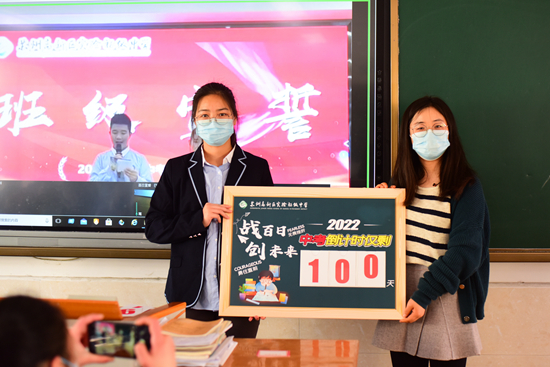
On March 14th, under the epidemic prevention and control, middle school students in Suzhou, Jiangsu Province ushered in the 100-day countdown to the senior high school entrance examination. The picture shows the 100-day countdown oath in the third grade of Suzhou High-tech Zone Experimental Junior High School. Photo courtesy of vision china
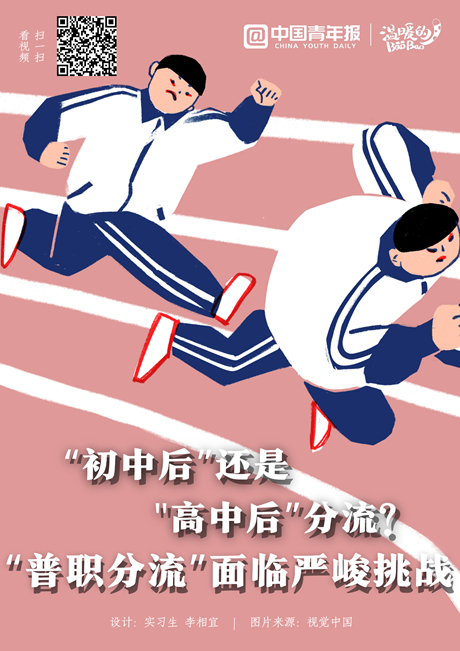
The topic of "general-vocational separation" has gone out of the circle, and it has also become one of the hot topics on education at the National People’s Congress this year.
China’s high school education began with the central government’s decision to deepen the reform of the education system in 1985. For decades, this policy has played an important role in popularizing high school education in China, establishing and perfecting the vocational education system and cultivating high-quality skilled workers.
However, due to the development of the times, economic transformation, social change and the development of education itself, the policy of "general-vocational separation", which has roughly the same enrollment ratio between ordinary high schools and vocational high schools in China, has been more and more severely challenged. Adjusting and perfecting this policy in time has become a major choice that our public education policy has to make.
In this year’s government work report, it is clearly pointed out that "improving the conditions for running vocational education and perfecting the system of running schools with integration of production and education" has put forward new requirements for vocational education.
In view of the problem of "general-vocational diversion", some deputies believe that the "general-vocational diversion" model of high school education is facing increasingly severe challenges. They suggested that the "separation of general education and vocational education" should not be roughly equal, but should strengthen publicity and guidance, enhance the acceptance and recognition of vocational education in society, actively explore a new development model of "integration of general education and vocational education", establish and improve the college entrance examination system for vocational education, and accelerate the development of vocational education at the undergraduate level.
"Separation of General Education from Vocational Education" cannot evolve into elimination education.
Speaking of the challenges faced by the policy of "separating general education from vocational education", Zhang Zhiyong, deputy to the National People’s Congress, director of the Central Education Committee of the Democratic Progressive Party and executive director of the China Institute of Education Policy of Beijing Normal University, said that after investigation, it was found that the policy of "separating general education from vocational education" in senior high school has become one of the important reasons for parents’ educational anxiety. "In the eyes of some parents, ‘ General-vocational diversion ’ The policy has led to the further downward pressure of competition for further studies to junior high schools and even primary schools. "
To this end, Zhang Zhiyong provided a set of data. According to a survey conducted by China Institute of Education and Social Development of Beijing Normal University, 30.2% of parents don’t want their children to attend vocational schools.
In the survey, Hu Wei, member of Chinese People’s Political Consultative Conference and deputy director of the Science and Technology Education Committee of the Shanghai Municipal Political Consultative Conference, also felt the anxiety of his parents.
He learned that "general-vocational diversion" was considered by many parents to be that children were "eliminated" to secondary vocational schools during the senior high school entrance examination, which made parents full of "general-vocational diversion panic". "This has intensified the competition for the senior high school entrance examination and seriously affected the compulsory education stage ‘ Double subtraction ’ The implementation of the goal. "
Zhang Zhiyong found in the survey that the people’s recognition of secondary vocational education is generally not high. Many parents have a strong "stereotype" about secondary vocational education. They think that compared with ordinary high schools, vocational schools often face problems such as small school scale, low investment and weak "double-qualified" teachers, which affect the quality of running vocational schools.
He said that parents’ recognition of the learning atmosphere, children’s growth environment and future prospects in vocational schools is low, and they think that attending vocational schools is a last resort to learn "underachievers" and "underachievers", and it is a kind of elimination education that ordinary high schools do not want.
Not only are parents’ recognition of vocational schools not high, but Hu Wei also found that because the "general-vocational diversion" has evolved into elimination education, the recognition of teachers and students in many secondary vocational schools is decreasing day by day, which directly affects the quality of running secondary vocational schools.
Hu Wei provided a set of data: 5,824,300 students enrolled in secondary vocational education in 2017 and 4,848,700 graduates in 2020. "This means that nearly 1 million secondary vocational students have not successfully completed their studies."
Through investigation, he found that fewer and fewer students entered the job market directly after graduation from secondary vocational schools. Over the years, the proportion of graduates from secondary vocational schools in China has been around half, and even exceeded 80% in some areas.
Zhang Zhiyong said that some parents think that the policy of "separating general education from vocational education" in high school deprives their children of the right to receive ordinary high schools equally. Junior high school students are young and immature, and their psychological tolerance for being eliminated from ordinary high school education is limited. Premature diversion will seriously undermine students’ self-confidence and is not conducive to healthy physical and mental growth. "After compulsory education, it is generally quite compulsory according to the ratio of general to post ‘ General post ’ Diversion limits the right of some children to receive ordinary high school education, which is unfair to these children. "
In fact, the current secondary vocational education has shifted from employment education to further education. "This has deviated from the orientation of employment-oriented vocational education."
Zhang Zhiyong also believes that economic and social development has put forward higher requirements for the quality of skilled talents. For economically developed areas, the development focus of secondary vocational education is no longer the expansion of scale, but the improvement of quality and the upward shift of levels. If we stick to the policy of "general-vocational separation" in senior high school for a long time, it will seriously restrict the rapid improvement of human resources development level in developed areas.
At the same time, Hu Wei said that from the perspective of China’s industrial development, the gap rate of skilled talents will reach 48% by 2025, and the gap of technical blue-collar workers will be as high as 30 million. Therefore, we must attach importance to the development of vocational education.
"It should be emphasized that under the background of popularization of higher education, the technical blue-collar workers needed by society are no longer skilled workers with only secondary vocational education, but basically those with higher vocational education or above." Hu Wei said that at this stage, it is not as meaningful as before to adopt the mode of "separating general education from vocational education" to specialize in secondary vocational education.
It is an inevitable choice to switch from "after junior high school" to "after high school"
Zhang Zhiyong told the reporter of China Youth Daily and China Youth Network that adjusting and perfecting China’s policy of "separating general education from vocational education" has become a major educational public policy issue that all sectors of society have called for and paid attention to.
Zhang Zhiyong suggested that parents’ choice between general education and vocational education should be respected. All localities should proceed from the needs of education and economic and social development and the people’s acceptance of vocational education, and do not engage in "one size fits all" in the enrollment ratio of ordinary high schools and vocational high schools.
It is necessary to incorporate the integration of production and education into the overall plan of economic and social development, accelerate the reform of vocational education, vigorously promote order training, deepen school-enterprise cooperation and integration of production and education, improve the level of running vocational education, and enhance the attractiveness of vocational education.
At the same time, it is necessary to strengthen publicity and guidance, reverse the stereotype of vocational education in society, and enhance the acceptance and recognition of vocational education in society.
"Actively support the implementation of intra-school diversion in ordinary high school education and explore the cooperation between senior three and higher vocational colleges." Zhang Zhiyong said, after high school students finished their compulsory courses in Grade Two and passed the college entrance examination, they met the academic requirements for graduating from high school. For those students who have difficulties in entering undergraduate colleges and universities to receive higher education, they can explore the cooperation between Grade Three and higher vocational colleges on the basis of the principle of voluntary participation of students and parents. In addition to professional basic cultural education, professional basic courses and vocational and technical courses should be offered with the support of higher vocational colleges.
With the continuous development of China’s economy and society, under the background of the transformation of manufacturing industry to high-end, the market has higher and higher requirements for the training level of technical talents, and it is an inevitable choice to shift from "after junior high school" to "after high school".
Zhang Zhiyong suggested that the focus of "general-vocational separation" should be shifted up gradually, and vocational education in higher education should be regarded as the main supplier of technical and skilled personnel. The state can try it first in areas where conditions permit, and then promote it nationwide when conditions are ripe.
Hu Wei believes that it is necessary to actively explore a new development model of "integration of general education and vocational education", gradually build more high schools into comprehensive high schools on the basis of pilot projects, and at the same time offer general high courses and skills courses in each high school, and explore the development of characteristic comprehensive high schools with special skills training as the main focus.
"Doing so will help to achieve mutual penetration and deep integration between general education and vocational education, greatly enrich the curriculum resources of senior high schools, and expand students’ choice of senior high schools, thus making ‘ Five educations at the same time ’ Mention a higher level. " He said.
He suggested that the credit system teaching in comprehensive high schools should be gradually implemented. In all kinds of comprehensive high schools, students can be required to take credits for general academic courses and skills courses, and at the same time, students are allowed to choose other general academic courses and skills courses according to their destination after graduation from high school.
"High school students can directly apply for higher vocational education institutions with skills course credits, and are exempted from taking corresponding course credits." On this basis, he said, in the future, the requirement of "general-vocational equivalence" for students in high schools can be changed to require comprehensive high schools to offer general academic courses and skills courses in roughly equal proportions.
Hu Wei suggested that the college entrance examination system for vocational education should be established and improved. While promoting the integration of general education and vocational education in senior high schools, colleges and universities should promote the enrollment of skilled talents through the college entrance examination for vocational education, and build the college entrance examination for vocational education into a college entrance examination type equal to the general college entrance examination, so as to fully expand the choice of the educated. "It is particularly important that the vocational college entrance examination should pay more attention to process evaluation and value-added evaluation, and establish and improve a multi-evaluation system."
In addition, he also believes that it is necessary to steadily promote the merger and reorganization of ordinary high schools and secondary vocational schools, encourage and support qualified areas (such as Shanghai, Jiangsu and Zhejiang) to try first, promote the merger and reorganization of existing ordinary high schools and secondary vocational schools, and accelerate the development of new comprehensive high schools. On the basis of promoting the balanced development of comprehensive high schools in various places, the relevant state departments have created conditions to bring high school education into compulsory education, and gradually abolished the senior high school entrance examination system and the "separation of general education and vocational education" mode, so as to realize the integrated development of general education and vocational education, thus improving the people’s sense of acquisition, happiness and security in educational services.
In recent years, the Democratic Progressive Party Central Committee has also paid great attention to the problem of "general and vocational diversion". In this year’s proposal, the Democratic Progressive Party Central Committee suggested that the difference between general and vocational education should be diluted, the concept of diversion should be blurred, and the multi-type development of high school education should be shifted from "two-track diversion of general and vocational education" to open up the conversion channel between general education and vocational education.
The Central Committee of the Democratic Progressive Party suggests that vocational application courses can be set up in addition to ordinary high school courses, and corresponding curriculum standards, graduation requirements and examination systems can be formulated to provide all students in high school with opportunities to study ordinary courses and vocational skills courses, so that students can choose courses according to their own interests.
On this basis, the talent training mode of mutual selection of courses, mutual recognition of credits, mutual transfer of student status and two-way flow between secondary vocational schools and ordinary high schools is realized, so that students can adjust and switch between secondary vocational schools and ordinary high schools in time. The DPP Central Committee encourages ordinary colleges and universities to incorporate vocational application courses into their enrollment requirements. In this way, we can comprehensively improve the scientific knowledge level and basic vocational skills of senior high school graduates in China.
The DPP Central Committee also suggested that vocational education should improve the rising channel, expand the enrollment ratio of vocational undergraduate education in national undergraduate education, and greatly increase the enrollment index of secondary vocational students in undergraduate higher education, especially in application-oriented undergraduate colleges.
Zhongqingbao Zhongqingwang reporter Li Huaxi Source: China Youth Daily